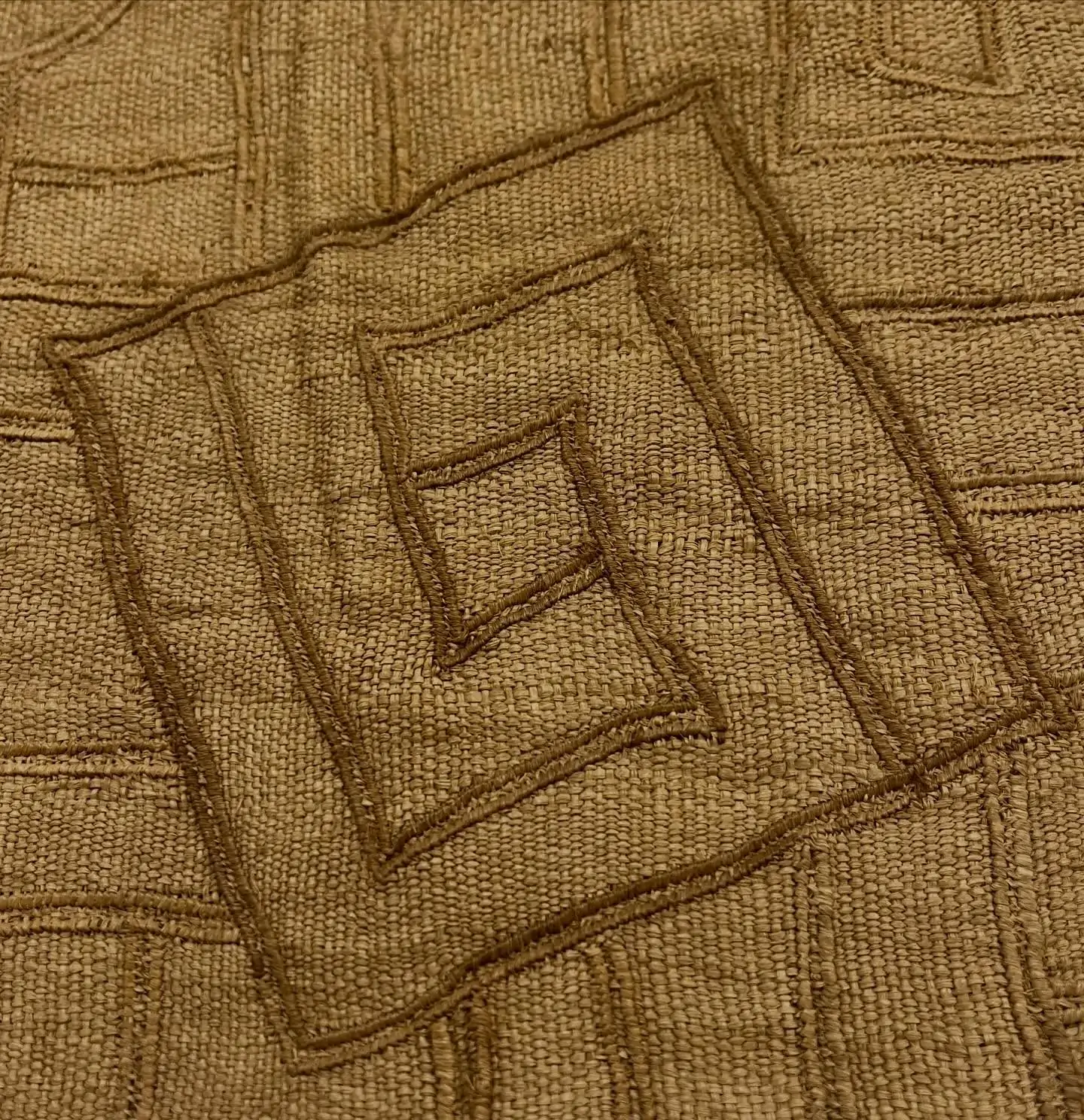
Kuba Cloth
In the heart of Central Africa, within the borders of the Democratic Republic of Congo (DRC), lies a textile tradition so intricate and mathematically complex that it famously captivated modern art masters like Henri Matisse and Pablo Picasso.
Kuba Cloth is not just fabric; it is a storied “living map” of the Kuba Kingdom, woven from palm fibers and steeped in centuries of cultural significance. In this guide, we explore the history, the labor-intensive craftsmanship, and the hidden meanings behind these extraordinary textiles.
Origins: The Kingdom of the Kuba
The Kuba Kingdom, a confederation of nearly 20 ethnic groups, rose to prominence in the 17th century. While the kingdom was known for its sophisticated political structure, it was their art specifically their textiles that served as the primary language of status and history.
For the Kuba people, these cloths weren’t just for decoration. They were used as currency, as ceremonial dowries, and as essential components of funeral rites, ensuring that the deceased entered the spirit world with the prestige they earned in life.
From Palm to Pattern: How It’s Made
One of the most fascinating aspects of Kuba cloth is the gender-specific division of labor. The creation of a single piece can take several weeks or even months.
- Men (The Weavers): Men are responsible for harvesting the leaves of the Raffia Vinifera palm. They strip the fibers, soften them by hand, and weave them on an upright single-heddle loom into a basic “flat” cloth known as mbal.
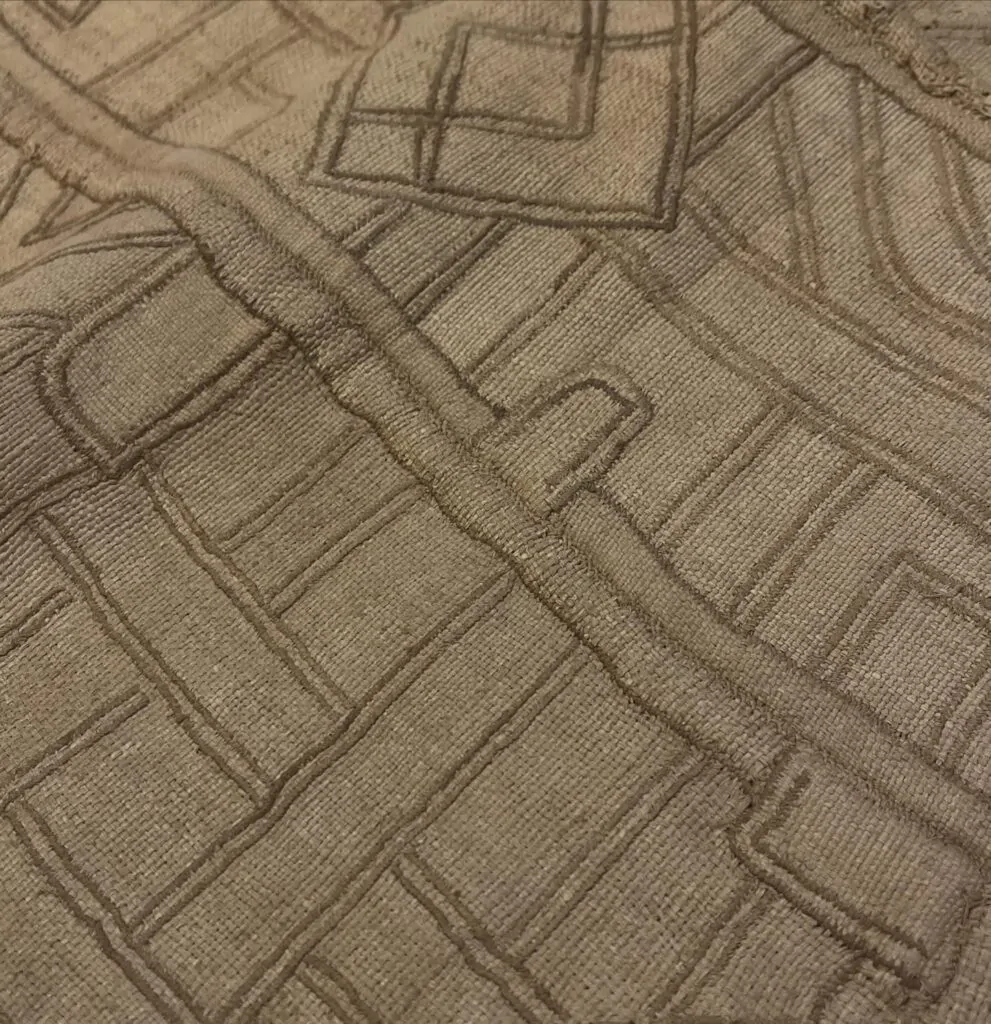
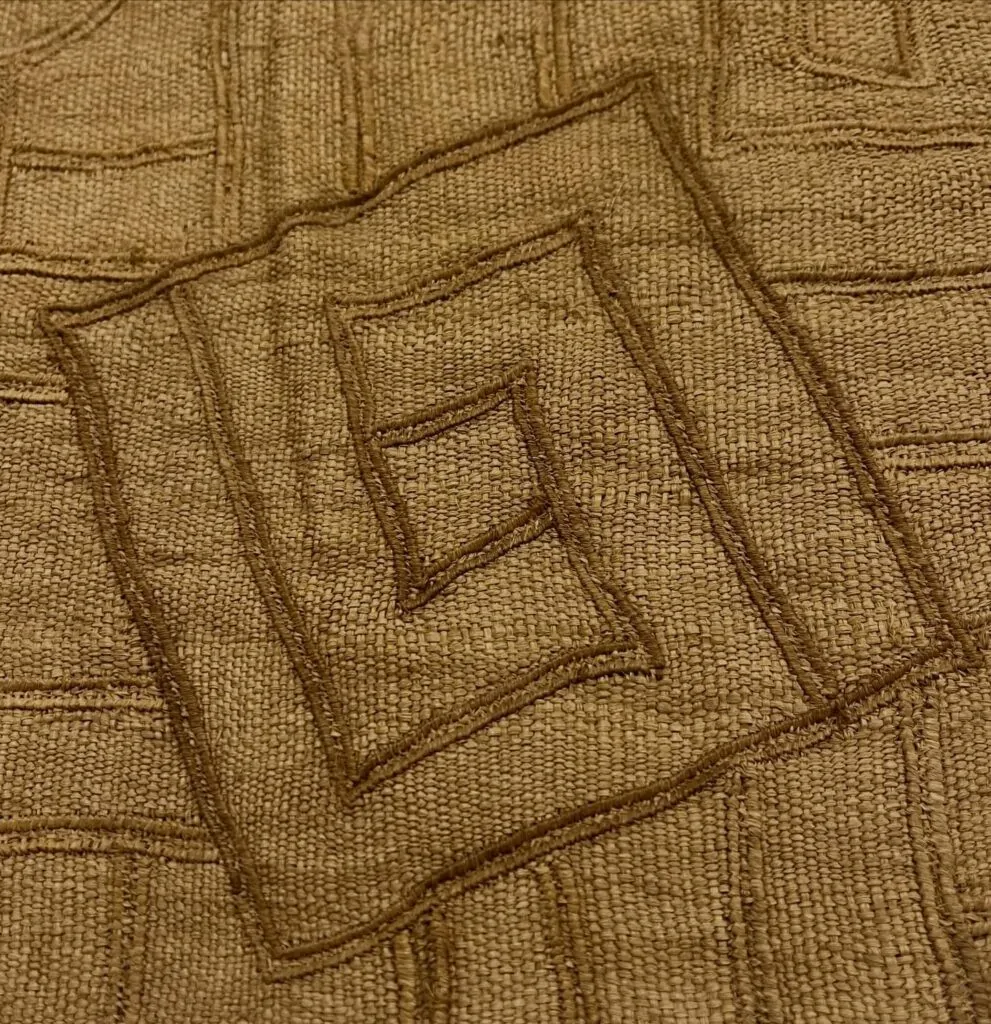
- Women (The Decorators): Once the base cloth is finished, women take over the artistic direction. They use various techniques including embroidery, appliqué, and “cut-pile” (which creates a velvet-like texture) to create the complex geometric designs.
“Velvet of the Kasai”
While there are many styles of Kuba cloth, the most famous is the Kasai Velvet.
To create this, the artist uses a needle to pull individual strands of dyed raffia through the cloth, then clips them extremely short with a small knife. This leaves a tiny tuft that, when repeated thousands of times, creates a lush, plush texture. Because the process is so tedious, a piece the size of a placemat can take over a month to complete.
Language of Geometry: Meaning in the Patterns
To the untrained eye, Kuba patterns might look like a beautiful jumble of shapes. However, they follow a logic often compared to jazz music.
- Intentional Asymmetry: Unlike Western textiles that value perfect repetition, Kuba artists often introduce “interruptions” or shifts in the pattern. This represents the idea that life is unpredictable and that beauty lies in the break of a rhythm.
- Mathematical Complexity: Researchers have noted that Kuba designs utilize all 17 “wallpaper groups” (mathematical classifications of repetitive patterns), showcasing a high level of geometric sophistication.
- Symbolism: Common motifs include “The Knee of the Tortoise” or “The Smoke of the Fire,” each conveying proverbs or historical events specific to the weaver’s clan.
Modern Interior Design Staple
Today, Kuba cloth has transcended the borders of the DRC to become a favorite in global interior design. Its neutral earth tones (blacks, tans, and terracottas derived from natural dyes like charcoal and camwood) make it incredibly versatile.
- Wall Art: Large pieces can be framed or hung on a rod as a textured focal point.
- Accents: Smaller fragments are often repurposed into high-end throw pillows or table runners.
- Inspiration: The influence of Kuba patterns can be seen in modern wallpapers and rug designs from brands like Phillip Jeffries.
Matisse Connection: Secret History
Did you know that the famous artist Henri Matisse was an avid collector of Kuba cloth? In his later years, when he began his famous “cut-outs” period, he kept several Kuba cloths pinned to the walls of his studio. He was fascinated by their “ordered chaos” and their use of negative space, which directly influenced some of the most famous works of 20th-century modernism.
Visual Gallery
Contact Us
- MESSAGE US ON FACEBOOK: https://www.facebook.com/rbsublimationsignage
- CALL/TEXT: +639460480491