
Ultimate Guide to Tracht: Men and Women
When many people think of “Tracht”, they immediately envision the lively atmosphere of Oktoberfest in Munich. However, Tracht is far more than a party outfit. Derived from the Old High German word tragt, meaning “that which is worn”, Tracht refers to the traditional garments of German-speaking countries, particularly in the Alpine regions of Bavaria, Austria, and South Tyrol.
Unlike fast fashion, Tracht is a symbol of regional identity, social status, and cultural pride. Whether it’s the rugged leather of the mountains or the fine silk of the valleys, every stitch tells a story.
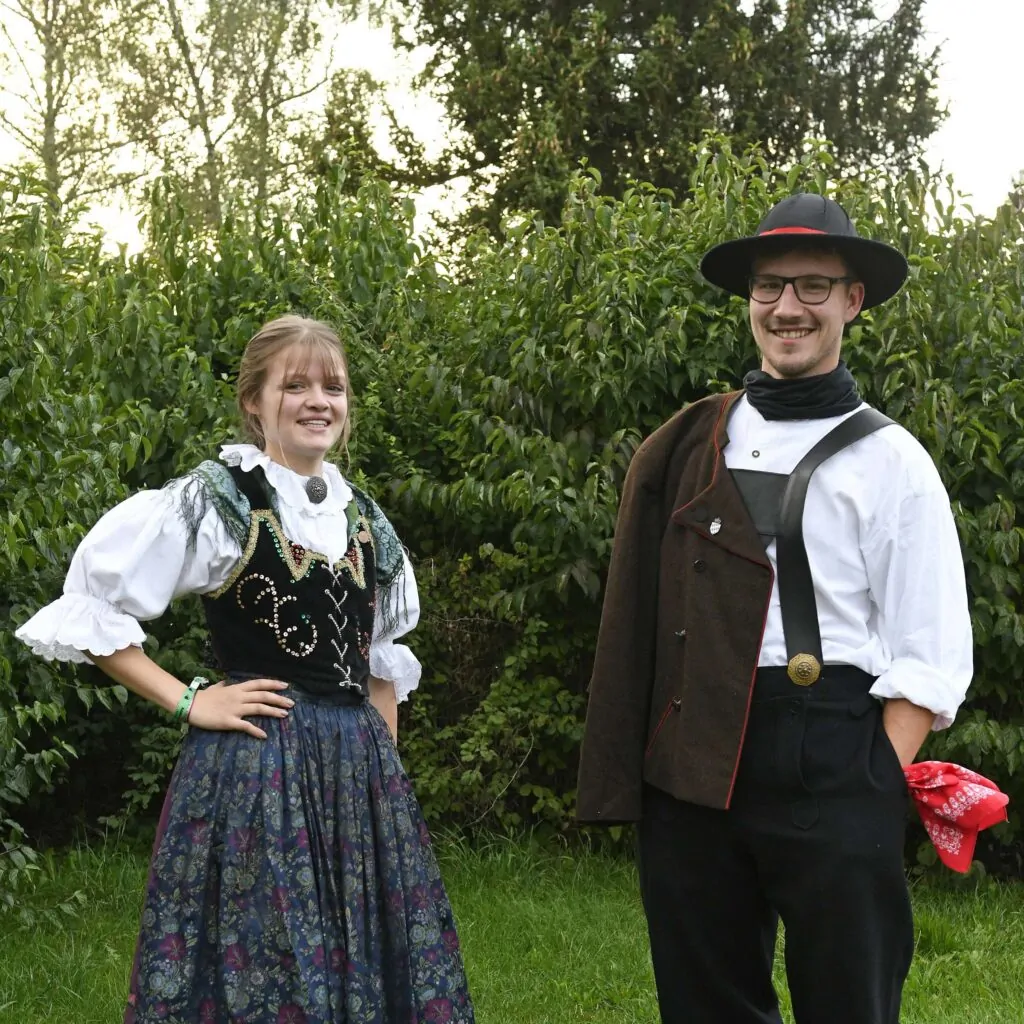
Anatomy of Style: For Her and For Him
The Dirndl: Elegance and Code
The Dirndl is the classic female Tracht, consisting of a bodice, a blouse, a full skirt, and an apron.
- Blouse: Usually white or cream, featuring lace or ruffles. The neckline can vary from high-collared to deep-cut “balconette” styles.
- Apron Bow (The Secret Language): One of the most important rules of wearing a Dirndl is where you tie your bow:
- Right side: Taken, engaged, or married.
- Left side: Single and ready to mingle.
- Middle: Traditionally signifies a virgin (though often used by children or sometimes just for symmetry).
- Back: Widows, waitresses, or children.
Lederhosen: The Soul of the Alps
For men, the centerpiece is the Lederhosen. Traditionally made from deer or goat skin, these trousers are built to last a lifetime.
- The Length: You will see Kurze (short, above the knee) or Kniebundhose (knickerbocker style, buckled below the knee).
- The Patina: A “real” pair of Lederhosen should never look brand new. The Speckige (greasy/shiny) look, earned through years of wear, is a badge of honor.
- Accessories: Don’t forget the Charivari (a silver chain with charms), Haferlschuhe (traditional side-laced shoes), and Loferl (two-part calf warmers).
Regional Diversity: From Styria to Tyrol
Tracht is not a monolith; it varies significantly by geography.
Steirische Tracht (Styria, Austria)
Styrian Tracht is world-renowned for its specific color palette. The Steireranzug (Styrian suit) is typically grey or green wool with dark green bottle-green facings. It is a symbol of understated elegance and is often worn at formal events across Austria.
Tyrolean Tracht (Tirol)
In Tyrol, Tracht is a deeply rooted expression of local history. You might see the “Tiroler Hut” (Tyrolean hat) adorned with a Gamsbart (a tuft of chamois hair). Each valley in Tyrol—from the Zillertal to the Ötztal—has its own specific embroidery patterns and colors that distinguish one village from the next.
Werdenfelser Tracht (Bavaria)
Originating near Garmisch-Partenkirchen, this style is famous for its elaborate festive wear (Festtracht). It often features intricate silk aprons and specific hat shapes that represent the rugged beauty of the Bavarian Alps.
How to Wear It Right: Dos and Don’ts
To avoid looking like you’re wearing a “cheap costume,” follow these tips:
- Invest in Quality: Avoid polyester “costume” sets. Real Tracht uses natural materials like linen, silk, wool, and leather.
- Length Matters: Traditionally, a Dirndl skirt should reach the “Maßkrug” height – about a beer mug’s length from the ground. Avoid “mini” Dirndls if you want to stay authentic.
- No Sneakers: While modern trends allow it, traditionalists insist on leather shoes or Tracht-ballerinas.
- The Shirt: For men, a plain white or subtle checkered linen shirt is the gold standard.
CONTACT US
- Message Us on Facebook: https://www.facebook.com/rbsublimationsignage
- Call/Text: +639460480491