Barangay Welcome Signage
In the Philippines, the first thing that greets a traveler entering a local community isn’t just a change in the scenery – it’s the Barangay Welcome Signage. More than just markers of territory, these signs serve as the “front door” of the community, representing local pride, hospitality, and governance.
Whether you are a local official planning a community project or a resident curious about the markers in your neighborhood, here is everything you need to know about the significance and variety of barangay welcome signs.
Why Welcome Signage Matters
Based on various community projects across the country – from Abuyog, Leyte to San Miguel, Bulacan – welcome signs serve several critical functions:
- Identity and Landmarks: They clearly define territorial boundaries. In areas like Balanga, Bataan, large highway signs help travelers identify their exact location along the Roman Highway.
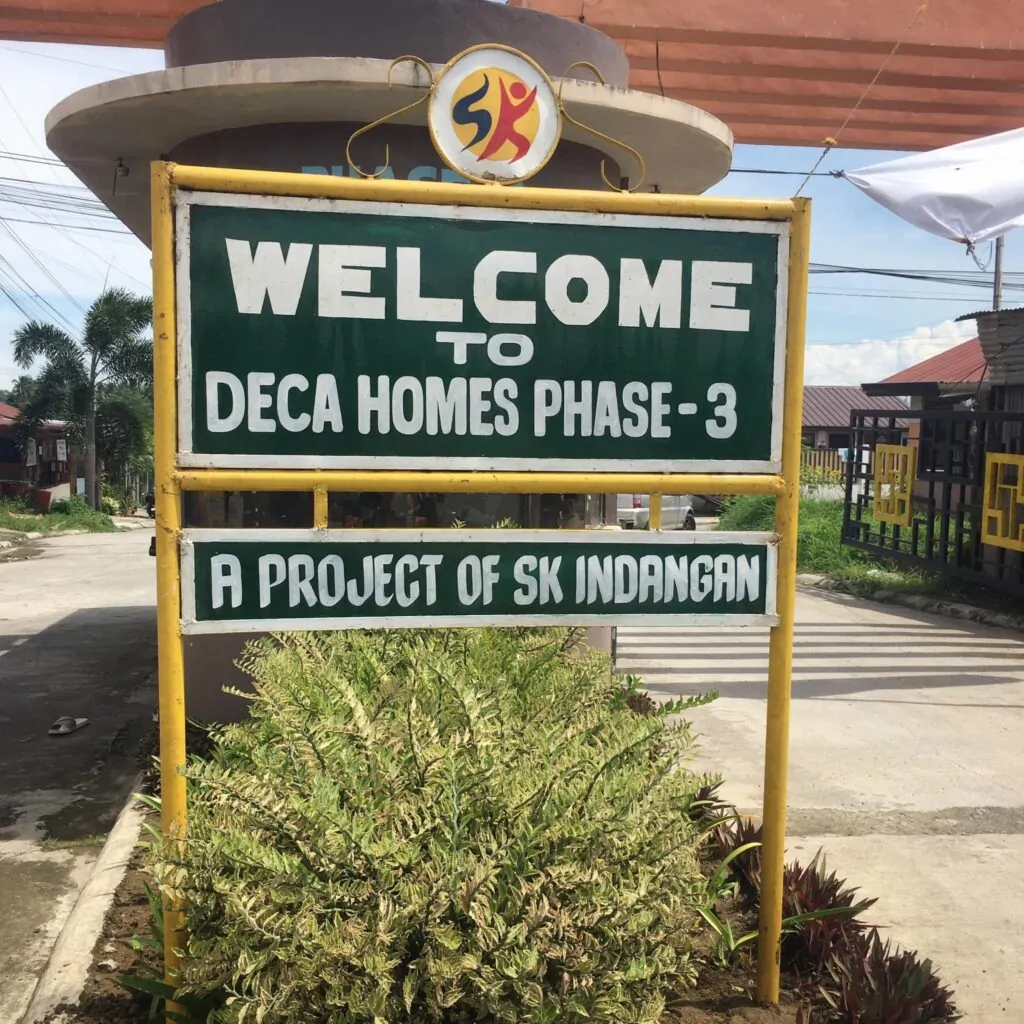
- Community Pride: Many signs are funded and initiated by groups like the Sangguniang Kabataan (SK) or local civic organizations (such as the Triskelion project in Brgy. Bito), showcasing active community involvement.
- Hospitality: A “Welcome” sign is the first gesture of hospitality a barangay offers to visitors and returning residents.
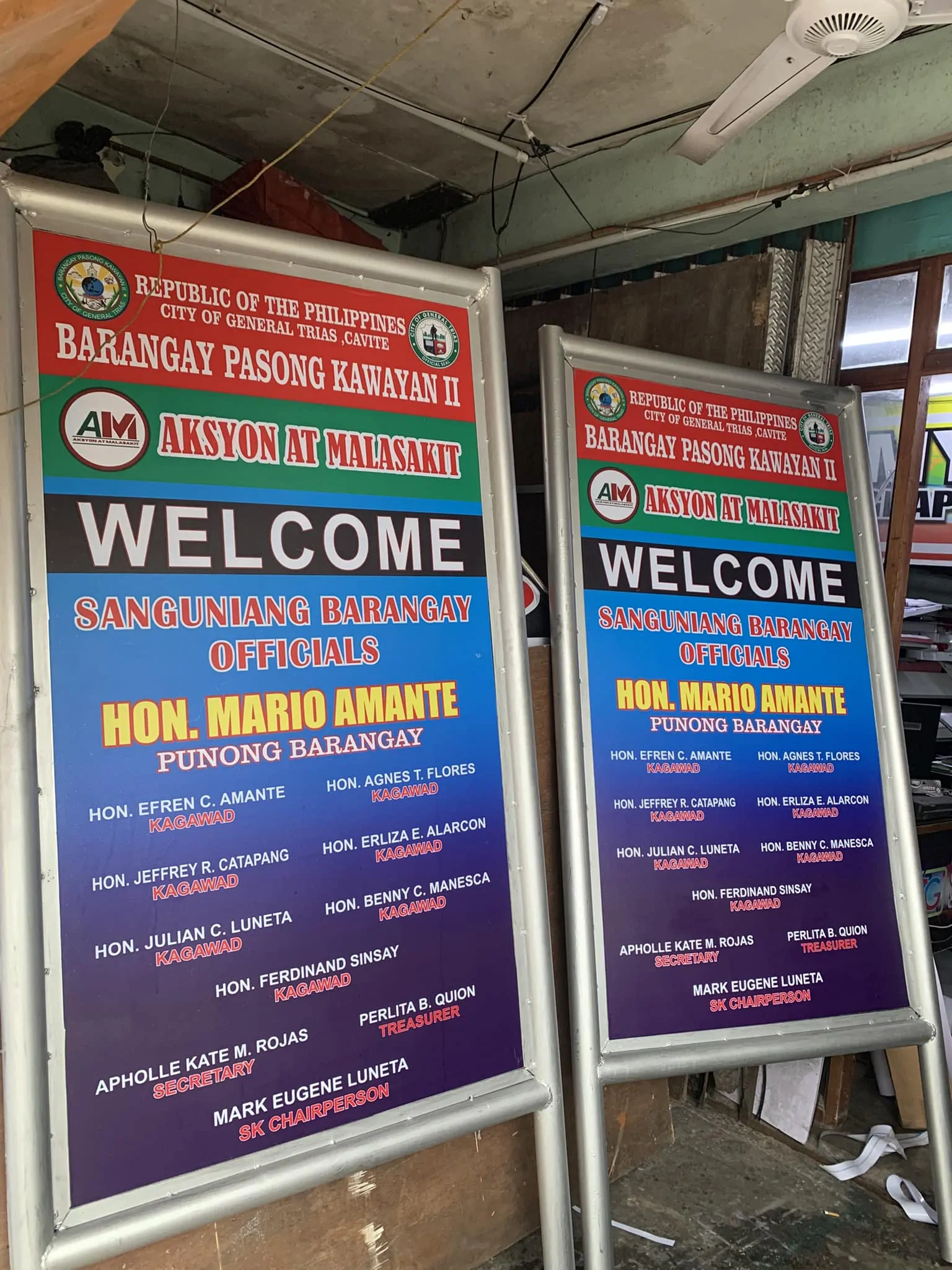
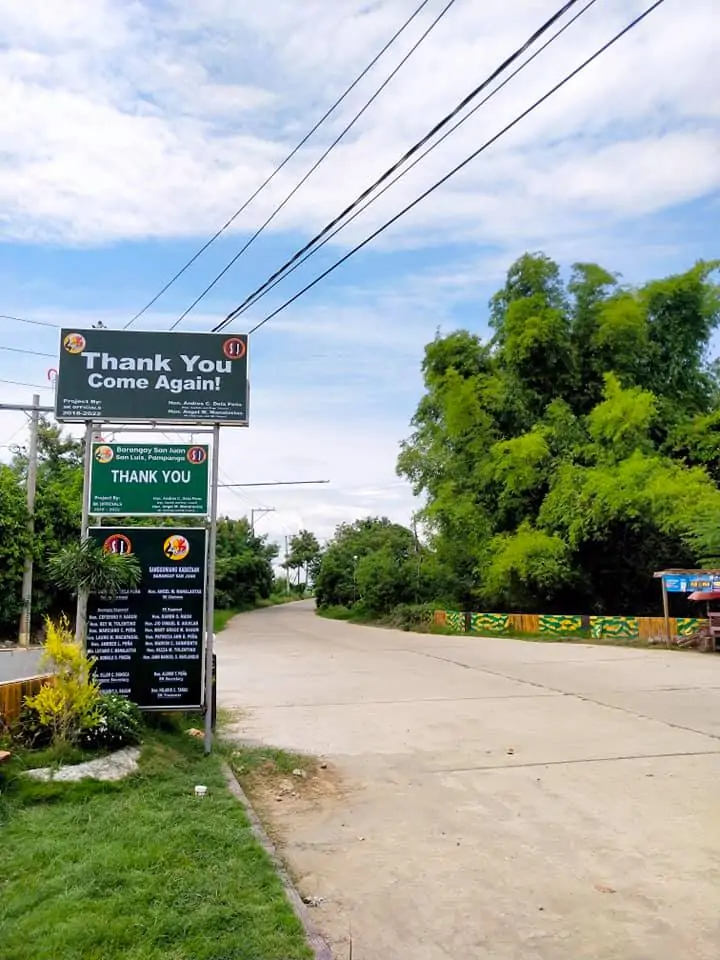
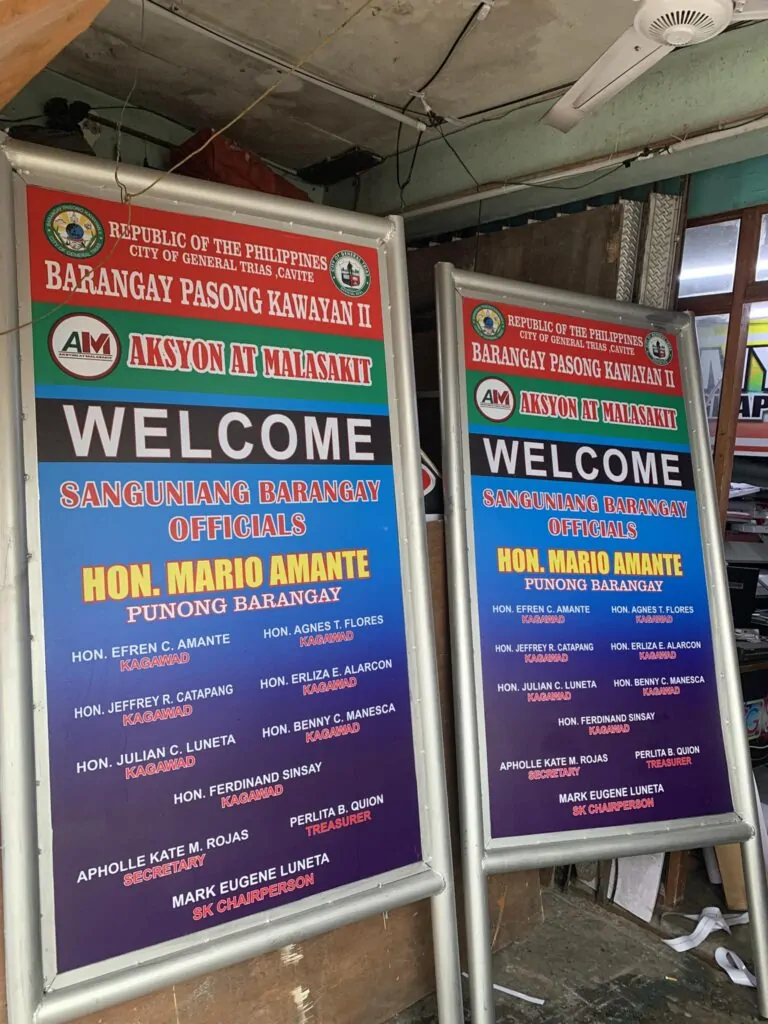
- Information: Modern signs often include the names of current officials, the barangay’s founding date, or local slogans.
Common Types of Barangay Signage
Looking at examples from across the archipelago, we can categorize welcome signage into three main styles:
Border Arch
Found frequently in provinces like Pampanga and Bulacan, these are large, permanent structures that span the width of the road. These arches often feature intricate masonry or metalwork and act as a grand entrance to the village.
Standalone Pillar or Post Signs
Commonly seen in Batangas and Nueva Ecija, these are vertical structures placed at the side of the road. A unique variation of this can be found at ports of entry, such as the welcome sign for boat passengers in Brgy. San Antonio, Verde Island, highlighting that welcome signs aren’t just for roads—they are for any point of arrival.
Purok-Level Signage
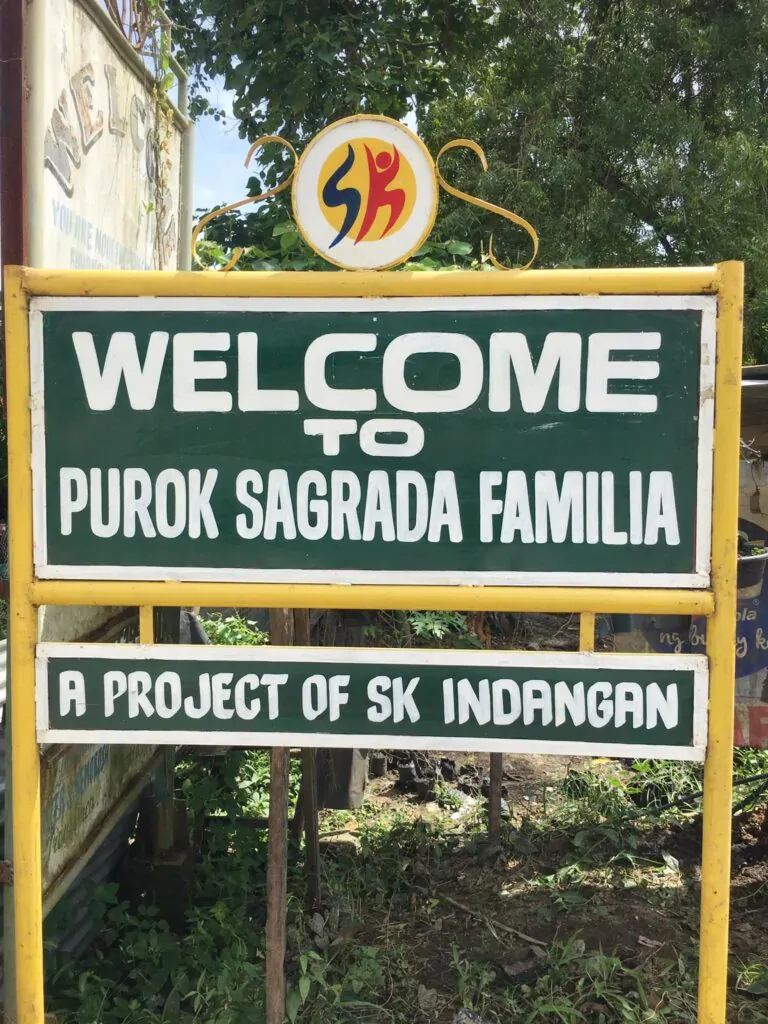
Recent projects by the SK in Brgy. Indangan and North Poblacion show a trend of installing uniform signs for every “Purok” (zone) within a barangay. These smaller signs help with internal navigation and ensure that even the smallest streets are well-identified.
Materials and Construction
Durability is key for outdoor signage. According to industry standards and local printing services, the most common materials used include:
- Galvanized Iron (GI) Sheets: For the sign face to prevent rusting.
- GI Pipes: Used for the frame and stand to ensure stability against wind and weather.
- Reflective Stickers/Digital Printing: To ensure the sign is visible at night and features vibrant, long-lasting colors.
Role of the Sangguniang Kabataan (SK)
Many of the most recent signage installations—such as those in San Juan, San Luis—are led by the youth council. These “SK Welcome Signage Projects” are often part of a broader effort to improve local infrastructure and make the community more “Instagrammable” and tourist-friendly.
Designing a Successful Barangay Sign
If your barangay is planning a new signage project, consider these tips:
- Standardization: Use a consistent color scheme and font that matches the official barangay seal.
- Sustainability: Choose materials that can withstand the Philippine climate (heavy rain and intense heat).
- Placement: Ensure the sign does not obstruct the view of drivers but is clearly visible to those entering the area.
Visual Gallery
Contact Us
- Call or text me at 09460480491
- Message us on Facebook at https://www.facebook.com/rbsublimationsignage/