
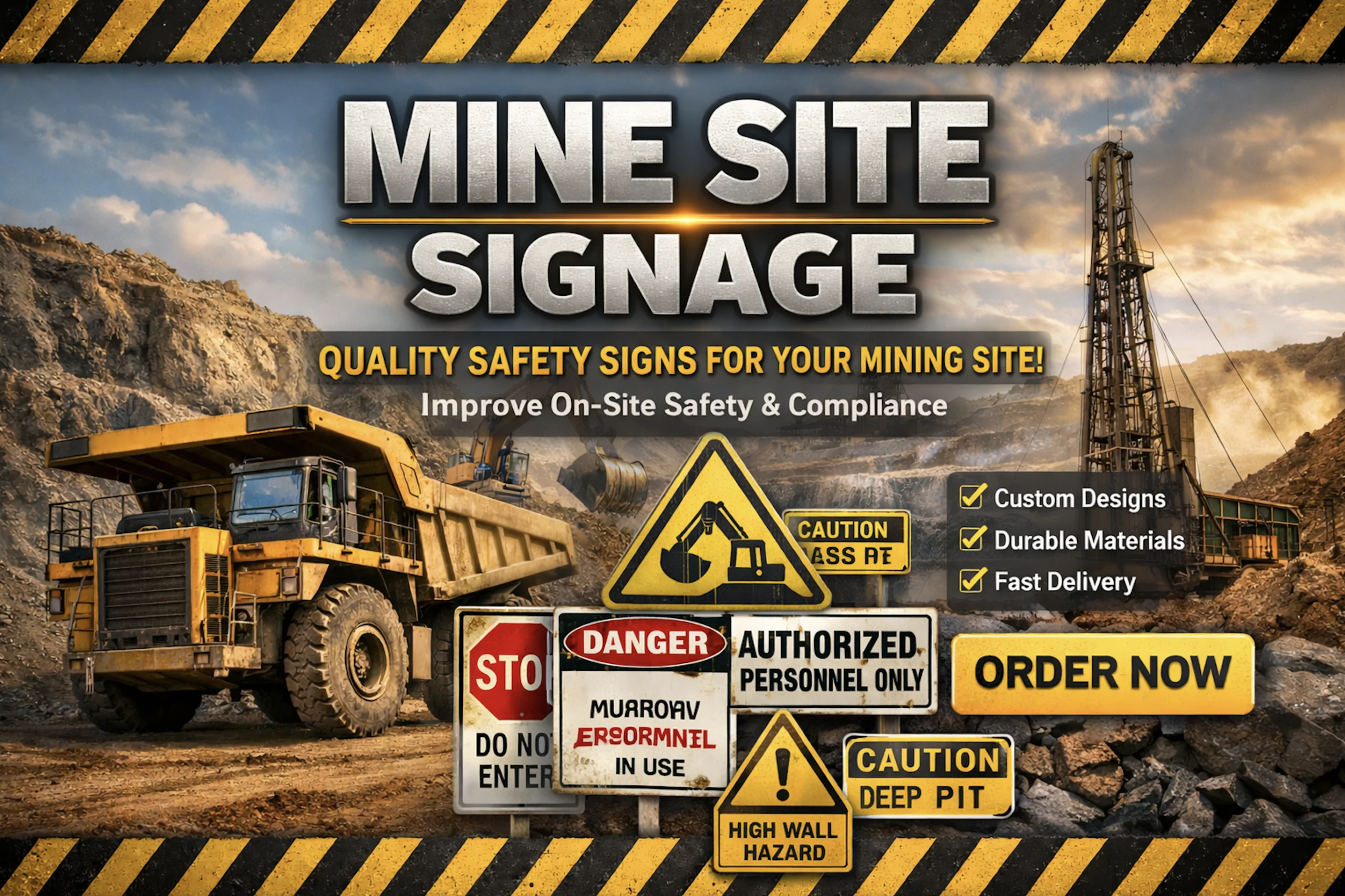
Mine Site Signage
In the mining industry, hazards are constant and often invisible. From heavy machinery traffic and underground blasting to hazardous chemical storage, the environment is high-risk by nature.
Mine site signage serves as a 24/7 safety supervisor. It doesn’t just fulfill a legal requirement; it provides the immediate, visual cues necessary to prevent accidents, guide personnel, and ensure that every worker returns home safely.
In this guide, we break down the essential types of mining signs, the standards they must meet, and why choosing the right materials is a matter of life and death.
Categories of Essential Mining Signs
According to industry safety standards (such as MSHA in the US or Australian Standards), mining signage is generally categorized by color and intent:
Danger Signs (Red, Black, and White)
These are used for life-threatening conditions. They warn of immediate hazards where death or serious injury will occur if the message is ignored.
- Examples: “Danger: Blasting Area”, “Danger: High Voltage”, or “Danger: Open Pit”.
Warning Signs (Yellow and Black)
These indicate a hazardous situation that could result in serious injury. They are often used for moving machinery or unstable ground.
- Examples: “Warning: Heavy Vehicle Crossing”, “Warning: Falling Rocks”, or “Warning: Deep Water”.
Mandatory PPE Signs (Blue and White)
In many areas of a mine, specific Personal Protective Equipment (PPE) is non-negotiable. These signs use blue circles with white icons.
- Examples: “Safety Helmets Must Be Worn”, “High-Visibility Clothing Required”, or “Hearing Protection Area”.
Prohibition Signs (Red Circle with Slash)
These tell personnel what they cannot do to ensure the safety of the site.
- Examples: “No Trespassing”, “No Smoking”, or “Authorized Personnel Only”.
Emergency & First Aid (Green and White)
In the event of an accident, these signs must be highly visible to guide workers to safety equipment.
- Examples: “Emergency Eye Wash”, “First Aid Kit”, and “Emergency Exit”.
Specialized Signage for Mining Operations
Mining requires unique signage that isn’t typically found in standard construction sites:
- Authorized Entry Only: High-security signage at site perimeters prevents unauthorized individuals from entering hazardous blasting or excavation zones.
- Underground Navigation: In low-light underground tunnels, signs must indicate shaft numbers, refuge chamber locations, and ventilation directions.
- Vehicle Identification: Large-scale, reflective numbering for haul trucks and light vehicles to ensure visibility from the operator’s cabin of massive machinery.
Built for the Elements: Durability and Materials
A sign is useless if it fades, cracks, or peels under the harsh conditions of a mine site. When sourcing signage, consider these material standards:
- UV-Resistant Coatings: Constant exposure to the sun can bleach a sign in months. Ensure signs are UV-stabilized.
- High-Intensity Reflectivity: For underground mines or night shifts, Class 1 or Class 2 reflective sheeting is vital so signs “pop” when hit by a cap lamp or vehicle headlight.
- Substrate Choice: * Aluminum: Best for permanent outdoor fixtures (rust-proof).
- PVC/Polypropylene: Great for indoor or temporary chemical-resistant signage.
- Metal Signs with Anti-Graffiti Film: Essential for perimeter fencing where vandalism might occur.
Compliance and Legal Standards
Using “any” sign isn’t enough. Mining companies must adhere to specific regional regulations:
- Visual Consistency: Using standardized icons ensures that workers – regardless of their primary language – can understand the hazard instantly.
- Placement: Signs must be placed at eye level and at a distance that allows a person or vehicle operator enough time to react before reaching the hazard.
- Customization: Many sites require custom signage that includes the company logo, specific site contact numbers, or unique “Radio Channel” instructions for haulage roads.
CONTACT US
- Message Us on Facebook: https://www.facebook.com/rbsublimationsignage
- Call/Text: +639460480491