
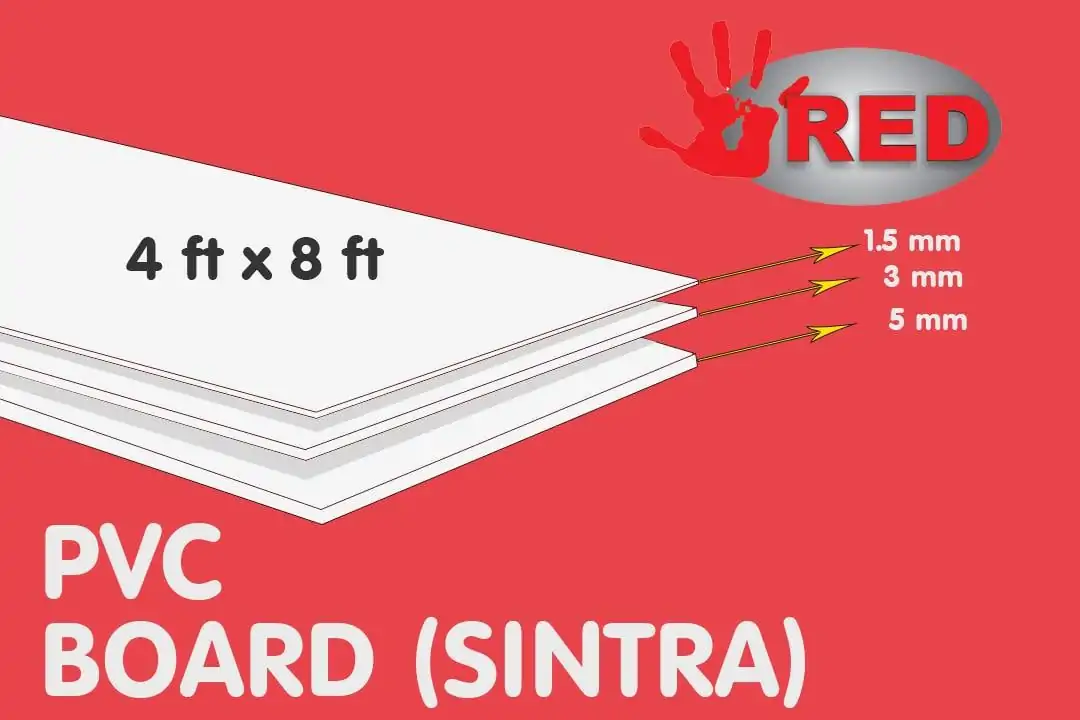
Sintra Board
If you’ve ever walked through a trade show, admired a sleek photo gallery, or seen a durable outdoor menu, you’ve likely encountered Sintra Board.
Often called the “MVP of the printing world”, Sintra (and its cousins like Forex and Komatex) is a lightweight yet rigid material that has revolutionized how we think about displays. But what exactly is it, and why should it be your go-to material for your next project?
What is Sintra Board?
Sintra is a premium brand of expanded PVC (polyvinyl chloride) foam board. Imagine a sheet of plastic that has been “puffed up” to create a rigid, lightweight core with a smooth, matte finish. It is engineered to be tough, durable, and resistant to the elements, making it a step above standard foam core or cardboard.
Key Characteristics:
- Rigid yet Flexible: It doesn’t bend easily, but it can be heat-formed into curved shapes.
- Moisture Resistant: Unlike wood or paper-based boards, Sintra won’t swell or warp when exposed to water.
- Chemical Resistant: It stands up to many cleaning agents and environmental pollutants.
- Lightweight: Easy to hang with simple double-sided mounting tape – no heavy drilling required.
Why Choose Sintra Over Other Materials?
With so many substrates available (like Acrylic, Foamcore, or Wood), Sintra stands out for several reasons:
- Durability: It is dent-resistant and scratch-resistant. While foamcore is easily crushed, Sintra maintains its integrity even in high-traffic areas.
- Low Glare: Its naturally matte surface is perfect for photography prints and indoor signage, as it doesn’t reflect harsh overhead lights.
- Ease of Customization: It can be easily cut into custom shapes (die-cutting), drilled, or even nailed.
- Professional Finish: Whether you are printing directly onto the board or mounting a canvas/vinyl print to it, the result looks high-end and professional.
Popular Applications
Home Decor & Photo Wall Tiles
The “Photo on Sintra” trend is exploding. Because the board is so light, people are printing high-definition photos on 3mm Sintra boards and using “stick-and-peel” backing to create gallery walls that can be rearranged without damaging the paint.
Business Signage & Branding
From “Point of Purchase” (POP) displays in retail stores to directional signage at events, Sintra is the industry standard. It’s professional enough for a boardroom but rugged enough for a warehouse.
Real Estate & Outdoor Menus
Because it is waterproof and weather-resistant, Sintra is frequently used for temporary outdoor signs, A-frame inserts, and garden markers.
Trade Show Displays
When traveling to conventions, weight matters. Sintra provides a massive visual impact without adding significant weight to your shipping crates.
Choosing the Right Thickness
Sintra boards typically come in various thicknesses, but the most common are:
- 2mm to 3mm: The “Sweet Spot.” Ideal for photo wall decor, indoor signs, and lightweight crafts.
- 5mm: Extra Rigidity. Best for larger signs that need to stand upright or be mounted on easels.
- 10mm and up: Heavy-duty structural use or architectural models.
Comparison: Sintra vs. The Competition
- Sintra vs. Foamcore: Foamcore is cheaper but fragile and prone to warping. Sintra is a long-term investment.
- Sintra vs. Acrylic: Acrylic is shiny and heavy. Sintra is matte, lighter, and much easier to transport without fear of shattering.
- Sintra vs. Forex/Komatex: These are essentially different brand names for the same expanded PVC material. While there are slight density variations, they are used interchangeably in most printing shops.
Maintenance Tips
To keep your Sintra board looking new:
- Cleaning: Use a damp microfiber cloth with mild soap and water. Avoid abrasive scrubbers.
- Storage: Store flat to prevent any long-term bowing.
- Heat: Avoid leaving it in a hot car for extended periods, as extreme heat (above 150°F) can cause the PVC to soften or warp.