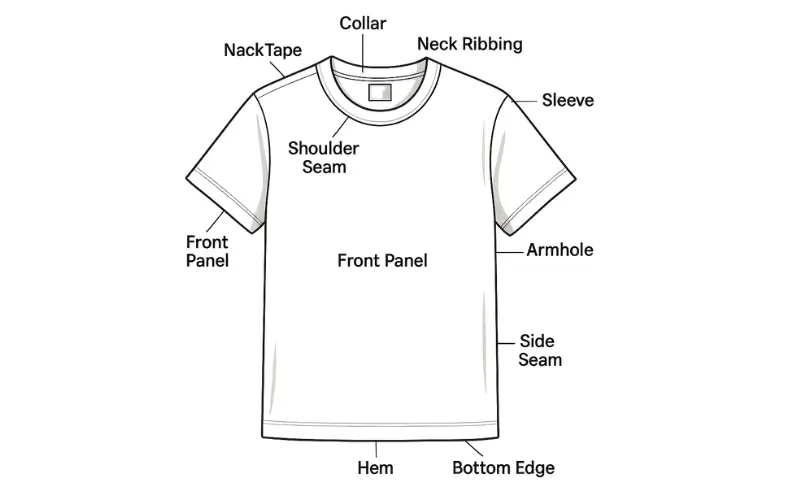
Understanding the individual components that compose a shirt transforms how buyers evaluate quality, communicate alterations to tailors, and care for their garments. A shirt may appear as a single unified piece of fabric, yet it consists of multiple distinct parts, each serving specific functional and aesthetic purposes.
Whether someone shops for business attire, casual wear, or custom printed uniforms, familiarity with shirt anatomy enables more informed purchasing decisions and better appreciation for garment construction.
The Collar: Defining Shirt Character
The collar stands as the most visible component of any shirt, framing the face and influencing the overall formality of an outfit. Collars vary dramatically in shape, size, and construction, with each style communicating different dress codes and personal preferences.
Common Collar Types and Their Features
Spread collars feature points that angle outward, accommodating wider neckties and creating a balanced silhouette for broader face shapes. Point collars position the collar points closer together, offering a traditional business appearance that pairs well with narrow to medium-width ties. Button-down collars fasten the points directly to the shirt body, creating a casual yet polished look that remains stable throughout wear. For more context on how collar construction influences versatility, our article on button down shirt styles and applications explores these variations in greater detail.
- Spread Collar: Wide distance between collar points; suits formal and business settings
- Point Collar: Narrower spread; the most common business shirt collar style
- Button-Down Collar: Points fastened to the shirt front; casual to semi-formal range
- Band Collar: Standing band without points; minimal and contemporary aesthetic
- Wing Collar: Small standing collar with folded points; reserved for formal evening wear
- Mandarin Collar: Short unfolded stand; popular in modern minimalist and Asian-inspired designs
Collar construction quality reveals itself through interfacing, the material fused between fabric layers to provide structure. Higher-quality shirts use thicker interfacing that maintains shape through repeated washing and pressing.
The Placket: Functional Front Center
The placket refers to the narrow strip of fabric that runs down the shirt front, housing the buttonholes and reinforcing the button attachment area. This component may appear as a separate piece sewn onto the shirt front or as a folded extension of the front panel itself. Plackets contribute both durability and visual structure, preventing stretching and distortion around the closure.
Standard plackets measure approximately one to one-and-a-half inches wide, with topstitching that adds strength and decorative definition. French plackets, conversely, fold the fabric inward without visible topstitching, producing a cleaner, more streamlined appearance favored in dress shirts. Concealed plackets hide buttons entirely behind an additional fabric flap, creating a smooth front surface seen in tuxedo and formal shirts.
Cuffs: Finishing the Sleeve
Cuffs terminate the sleeve opening and provide adjustable closures around the wrist. Like collars, cuffs come in several styles that signal different levels of formality and suit various personal preferences.
Barrel and French Cuff Variations
Barrel cuffs wrap around the wrist and fasten with one or two buttons, representing the standard closure for most dress and casual shirts. They offer convenience and security for everyday wear without requiring additional accessories. French cuffs, also called double cuffs, fold back on themselves and fasten with cufflinks rather than buttons. This style elevates formality and allows wearers to express personality through their choice of cufflink design.
Convertible cuffs provide button closures with an additional buttonhole that accommodates cufflinks, offering flexibility between casual and formal presentation. Adjustable cuffs feature two or three button positions, accommodating different wrist sizes and watch wearing preferences.
The Yoke: Shoulder Structure and Fit
The yoke spans the upper back and shoulders, connecting the front panels to the back panel. This component significantly influences how a shirt fits across the upper body and affects mobility during arm movement. Traditional yokes run horizontally across the back in a single piece, while split yokes divide into two panels joined at the center with an angled seam.
Split yoes cost more to produce but allow better contouring around the shoulders and upper back. They also create an opportunity for fabric pattern matching that indicates higher construction standards. The yoke distributes stress during movement, preventing seam failure and extending garment lifespan.
Front and Back Panels: The Shirt Body
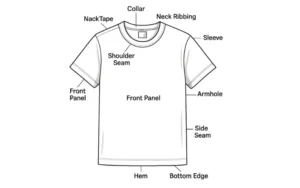
The largest fabric components, the front and back panels form the torso coverage of the shirt. Construction quality manifests in pattern alignment, seam straightness, and fabric grain orientation. Higher-quality shirts cut panels with careful attention to how patterns flow across seams, ensuring stripes and checks align at the shoulders and side seams.
Darts, small folded tucks sewn into the fabric, shape the shirt to follow body contours more closely. Tailored shirts for women frequently use waist darts to create fitted silhouettes, while men’s shirts may include subtle back darts for a more contoured fit without appearing overly tight. Proper care techniques help maintain these structural elements; our guide on how to iron shirts correctly explains methods that preserve dart placement and seam integrity.
Shoulder Seams and Armholes
Shoulder seams join the front and back panels at the top of the garment, with armholes defining the sleeve openings. The position and angle of these seams affect both appearance and comfort. Drop shoulders create a relaxed, casual silhouette by extending the seam past the natural shoulder line. Set-in shoulders align closer to the body’s actual shoulder point, producing a more structured and formal appearance.
Armhole size influences range of motion and how the shirt drapes around the torso. Smaller armholes keep the shirt body closer to the body and reduce fabric bunching under jackets. Larger armholes provide more ventilation and freedom of movement but may allow the shirt to shift during active use.
Pockets, Hems, and Additional Details
Chest pockets add utility and visual interest, though formal dress shirts typically omit them for cleaner lines. When present, pockets align with the front panel’s pattern and feature reinforced openings that resist tearing. Some casual shirts include dual chest pockets or pen slots for practical workwear applications.
- Tailored Hem: Curved bottom edge designed to be tucked in; longer at front and back than sides
- Straight Hem: Even bottom edge that works tucked or untucked; common in casual shirts
- Gussets: Small triangular fabric pieces reinforcing side hem seams, preventing splitting
- Side Seams: Join front and back panels; quality shirts use single-needle stitching for flat, strong joins
- Box Pleat: Fold at the center back that allows movement without pulling fabric taut
- Lock Stitching: Secures critical stress points at collar, cuffs, and placket ends against unraveling
Fabric and Construction Quality Indicators
Component quality extends beyond individual parts to encompass how manufacturers assemble and finish the garment. Single-needle stitching produces flatter, cleaner seams than double-needle alternatives. Gauntlet buttons, small buttons on sleeve plackets above the cuff, indicate attention to detail and prevent sleeve gaping. Collar stays, removable plastic or metal strips that slide into collar points, maintain crisp lines throughout the day.
Fabric weight and weave also determine how components perform. Lightweight cotton poplin creates crisp collars and smooth draping, while heavier oxford cloth provides more casual texture and increased durability. Linen shirts demonstrate how natural fiber characteristics influence component behavior, with linen’s inherent stiffness creating structured collars that soften beautifully with wear.
For readers interested in broader garment construction standards, dress shirt construction and terminology provides additional technical context recognized across the apparel industry.
Selecting Shirts Based on Component Quality
When evaluating shirts for personal use or custom printing projects, component construction predicts longevity and appearance retention. Check collar points for even stitching and consistent interfacing thickness. Examine placket alignment at the top and bottom to verify pattern matching and structural integrity. Test cuff buttonholes for clean cutting and reinforced stitching that resists tearing during fastening.
For businesses in Davao Region, Misamis Oriental, and throughout the Philippines ordering custom printed shirts, understanding these components helps communicate specifications to printing providers. Specifying collar style, cuff type, and placket construction ensures received garments meet intended use cases, whether for corporate uniforms, promotional events, or team apparel.
CONTACT US
For more information or to visit us, here are our branch addresses:
- Branch 1: Naungayan Building, Aala Road, Barangay Mankilam, Tagum City, Davao Del Norte
- Branch 2: Sobrecary Street (In front of Velox Gas Station), Tagum City, Davao Del Norte
- Email: sales@phshirt.com
- Phone: 09460480491
- Business Hours: Monday – Friday: 8:00 AM to 5:00 PM (PH Time)
- Facebook Page: Visit our Facebook Page
Need Custom Shirts, School Uniforms, or Workwear?
We manufacture PE uniforms, company polo shirts, sublimation jerseys, and event tees with official BIR invoices. Direct bus cargo to Cagayan De Oro, General Santos, and Davao within 24 hours, plus express nationwide courier delivery.