Chambray shirts occupy a unique position in menswear and womenswear, offering the visual depth of denim while maintaining a lighter weight and softer hand-feel that suits warm climates and layering situations.
Despite frequent confusion with denim, chambray follows a distinct weaving process that produces a uniform color surface rather than denim’s characteristic diagonal twill and contrasting interior. This textile heritage dates back centuries to Cambrai, France, where the fabric originated as a fine linen weave before evolving into the cotton chambray recognized today.
For anyone building a versatile wardrobe in the Philippines, particularly in warm regions like Davao del Norte and Misamis Oriental, chambray shirts deliver breathability, durability, and timeless style in a single garment.
What Distinguishes Chambray from Denim
The fundamental difference between chambray and denim lies in weave structure rather than color. Chambray uses a plain weave construction, with the warp and weft threads crossing in a simple over-under pattern. This creates an even, flat surface where both sides of the fabric appear similar. Denim, conversely, employs a twill weave that produces diagonal ribbing and leaves the underside predominantly white, creating the fading patterns associated with worn jeans.
- Plain Weave Structure: Chambray’s over-under pattern creates a smooth, breathable surface ideal for warm weather
- Weight Variation: Typically ranges from 3 to 5 ounces per square yard, lighter than most denim
- Color Uniformity: Both fabric faces share similar coloring, unlike denim’s contrasting white interior
- Drape Quality: Softer and more fluid than denim, allowing relaxed silhouettes that layer comfortably
- Historical Origin: Named after Cambrai, France, where the textile first emerged as a fine linen cloth
- Modern Cotton Versions: Contemporary production uses cotton for improved durability and easier care
This distinction matters practically. A chambray shirt feels cooler against the skin, resists wrinkling less stubbornly than linen, and transitions more easily between casual and semi-formal contexts than a denim shirt would. These qualities explain why chambray has remained a staple in workwear, military uniforms, and casual fashion across multiple decades.
Historical Use and Modern Revival
Chambray gained prominence in American workwear during the early twentieth century, when laborers required durable yet comfortable shirts for physically demanding tasks. The United States Navy adopted chambray as part of enlisted uniforms, pairing blue chambray shirts with denim trousers to create a distinctive working uniform. This military association cemented chambray’s reputation as reliable, no-nonsense apparel suited for active use.
By the mid-century, chambray had transitioned from purely functional workwear into mainstream casual fashion. Designers appreciated its ability to age gracefully, developing character through washing and wear rather than deteriorating. In recent decades, heritage-inspired brands and Japanese textile producers have revived traditional chambray production techniques, creating fabrics with subtle texture variations, nep yarns, and selvedge edges that appeal to enthusiasts seeking authenticity.
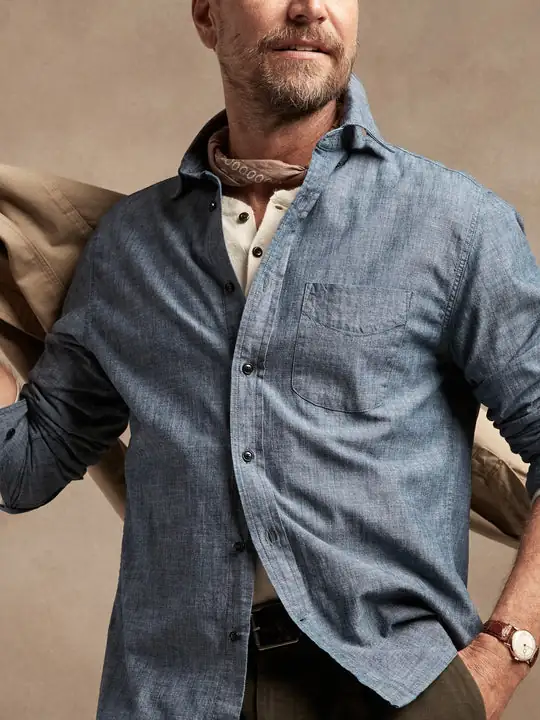
Chambray Shirt Styles and Construction
Contemporary chambray shirts appear across a spectrum of designs, from rugged work shirts to refined dress shirts. Understanding these variations helps buyers select options that align with their intended use and personal aesthetic preferences.
Workwear-Inspired Chambray Shirts
Workwear chambray shirts typically feature double-layer front panels, reinforced elbows, and ample chest pockets with button-through flaps. Triple-needle stitching along seams adds durability, while gusseted side vents improve range of motion. These shirts function as outer layers over t-shirts or as standalone pieces for manual labor, outdoor activities, or casual social occasions. Brands like Carhartt have built reputations on similar durable construction principles, applying comparable attention to garment longevity.
Slim-Fit and Tailored Options
More refined chambray shirts eliminate the heavy reinforcements of workwear versions, instead focusing on clean lines and closer fits. Single-layer fronts, minimal pocket configurations, and standard collar styles create shirts appropriate for smart-casual offices or dinner settings. Lighter-weight chambrays in this category drape elegantly and tuck neatly into trousers without excessive bulk at the waistline.
Details That Signal Quality
Several construction elements indicate higher manufacturing standards when evaluating chambray shirts. Chain stitching at the hem, a continuous looped stitch, provides stretch resistance that prevents hem distortion. Thread-count and yarn quality affect how the fabric feels against skin and how it responds to washing over time. Pattern matching at seams and pockets, where stripes or color variations align across joined fabric pieces, reflects careful cutting and assembly practices.
Collar construction deserves particular attention. Understanding how collars influence overall shirt character helps buyers choose between spread, point, or button-down styles that suit their face shape and typical dress code. Cuff construction similarly varies between single-button barrel cuffs and more formal French cuff configurations.
Styling Chambray Across Occasions
The adaptability of chambray shirts stems from their neutral color palette, typically ranging from pale sky blue through medium indigo to deep navy. This blue-centric spectrum coordinates naturally with earth tones, grays, whites, and even bolder accent colors.
For weekend wear, leave a medium-weight chambray shirt untucked over dark denim or chino trousers, sleeves rolled to the forearm. Add white leather sneakers and a canvas belt for an effortless casual uniform. In warmer Philippine climates, particularly during afternoons in Davao City or Cagayan de Oro, this combination provides sun protection and breathability simultaneously.
Office-appropriate styling begins with a lighter-weight chambray in a slimmer cut. Tuck the shirt into tailored wool or cotton trousers, add a woven leather belt, and layer under an unstructured blazer or cotton cardigan. The fabric’s matte texture contrasts nicely with smoother jacket materials, creating visual interest without pattern clashes. Similar lightweight layering strategies apply to linen shirts, though chambray offers slightly more structure and wrinkle resistance.
For evening occasions, darker indigo chambrays in refined cuts substitute acceptably for more formal dress shirts, particularly in settings where overt formality feels out of place. Pair with charcoal trousers, a knit tie in complementary tones, and brown leather dress shoes. The result reads as intentional and relaxed rather than underdressed.
Care and Longevity Practices
Chambray shirts reward proper care with improved appearance over time. Unlike delicate fabrics that deteriorate with washing, quality chambray develops enhanced character through repeated laundering, with subtle fading and softening that many wearers actively cultivate.
- Initial Wash: Machine wash cold with like colors to prevent dye transfer during the first few cycles
- Detergent Selection: Use mild liquid detergent rather than powder, which may leave residue in the plain weave
- Drying Method: Tumble dry on low heat or hang dry to minimize shrinkage and preserve seam integrity
- Ironing Approach: Iron while slightly damp using medium heat; steam works effectively for stubborn creases
- Stain Treatment: Address spills promptly with cold water; avoid hot water which may set organic stains
- Storage: Hang on wooden or padded hangers to maintain shoulder shape; avoid wire hangers that cause distortion
Over time, chambray develops a lived-in patina that many consider desirable. Some enthusiasts intentionally accelerate this process through saltwater soaking, sun drying, or repeated washing to achieve vintage character. Others prefer preserving the original color intensity by washing less frequently and avoiding harsh detergents.
Custom Printing on Chambray Shirts
Businesses and organizations occasionally request custom printing on chambray fabric for uniforms, promotional apparel, or branded merchandise. The fabric’s weave presents unique considerations compared to standard cotton jersey or polyester blends.
Screen printing works effectively on chambray when using water-based or discharge inks that penetrate the plain weave rather than sitting on top of the surface. The fabric’s slight texture adds visual depth to printed graphics, creating a more organic appearance than perfectly smooth substrates allow. For detailed designs, direct-to-garment printing may struggle with the weave’s texture, making screen printing or embroidery preferable alternatives.
Embroidery offers another excellent customization option for chambray, as the stable plain weave provides consistent support for stitched logos and text. Left-chest monograms, sleeve badges, or back shoulder embroidery all produce professional results on this substrate. For companies in Tagum City, Davao del Norte, or surrounding regions seeking branded workwear, chambray’s durability makes it a practical canvas that withstands daily use while presenting custom graphics attractively.
Selecting the Right Chambray Shirt
Several factors should guide purchasing decisions when adding chambray to a wardrobe or placing bulk orders for organizational use. Fabric weight determines seasonal appropriateness, with lighter options suiting Philippine tropical conditions and heavier weights providing year-round versatility in air-conditioned environments.
Color depth affects how formal the shirt appears. Pale blue chambrays read as casual and summery, while deep indigo versions approach the formality of lighter-weight denim shirts. Wash treatments also vary; garment-dyed chambrays offer saturated, uniform color, while rope-dyed or natural indigo versions develop unique fading patterns that enthusiasts prize.
Fit considerations mirror those for other button-front shirts. Shoulder seams should align with the body’s natural shoulder point, sleeve length should allow a slight break at the wrist bone when arms hang naturally, and torso fit should allow comfortable movement without excessive billowing. Evaluating button-down shirt fit standards provides applicable guidance that transfers directly to chambray selections.
Those interested in textile history and production may find additional context through chambray’s documented development as a woven fabric, which traces its evolution from European linen origins to contemporary cotton production methods.
CONTACT US
For more information or to visit us, here are our branch addresses:
- Branch 1: Naungayan Building, Aala Road, Barangay Mankilam, Tagum City, Davao Del Norte
- Branch 2: Sobrecary Street (In front of Velox Gas Station), Tagum City, Davao Del Norte
- Email: sales@phshirt.com
- Phone: 09460480491
- Business Hours: Monday – Friday: 8:00 AM to 5:00 PM (PH Time)
- Facebook Page: Visit our Facebook Page
Need Custom Shirts, School Uniforms, or Workwear?
We manufacture PE uniforms, company polo shirts, sublimation jerseys, and event tees with official BIR invoices. Direct bus cargo to Cagayan De Oro, General Santos, and Davao within 24 hours, plus express nationwide courier delivery.