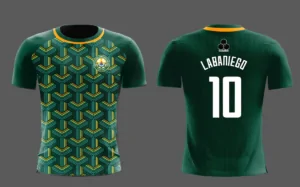
The Sweden men’s national football team, known by their nickname Blågult (The Blue and Yellow), represents Sweden in men’s international football and is controlled by the Swedish Football Association (SvFF). With a history stretching back over a century, Sweden has been one of Europe’s most consistent footballing nations, reaching the World Cup final on home soil and producing some of the continent’s most celebrated players.
Location and Governance Details
- Governing Body: Swedish Football Association (SvFF)
- Home Stadium: Strawberry Arena (formerly Friends Arena), Solna, Sweden
- Capacity: 50,000 spectators
- Confederation: UEFA (Europe)
- FIFA Ranking Peak: 2nd place (achieved 1994)
- Head Coach: Graham Potter
- Nickname: Blågult (The Blue and Yellow)
Early Beginnings and Olympic Glory
Sweden played their first international match on July 12, 1908, thrashing Norway 11-3 at Idrottsplatsen in Gothenburg. The early years saw Sweden quickly establish themselves as a force in Nordic football. They captured their first major honour at the 1924 Paris Olympics, winning the bronze medal, and repeated the feat at the 1952 Helsinki Games.
Their greatest Olympic achievement came at the 1948 London Olympics, where they won the gold medal. The 1950s are widely considered Sweden’s golden era. Between 1945 and the late 1950s, the team was regarded as one of the greatest sides in European football.
The 1958 World Cup: Sweden’s Finest Hour
The defining moment in Swedish football history came at the 1958 FIFA World Cup, which Sweden hosted. The national team reached the final at Råsunda Stadium in Solna, where a 21-year-old Pelé scored twice as Brazil won 5-2. Despite the loss, finishing as runners-up on home soil remains the team’s greatest achievement and inspired a generation of Swedish footballers.
World Cup and European Championship Record
Sweden has qualified for the FIFA World Cup on thirteen occasions, first appearing in the 1934 tournament. They have also qualified for the European Championship seven times, with their best result being a semi-final appearance at UEFA Euro 1992, which they hosted. In the 2026 World Cup, Sweden was eliminated in the group stage after a disappointing campaign, including a 5-1 loss to the Netherlands.
World Cup Performance History
The Blågult have established a proud history in global tournaments, most notably during their historic runs in 1958 and 1994. The team continues to compete at the highest level of international soccer. Sports tourism and travel logistics have received massive government investments, similar to the funding allocated for the Mati City airport upgrades.
Current Active Squad Roster
The modern Sweden roster features elite talents competing in top European leagues like the English Premier League, Italian Serie A, and Spanish La Liga. Below is the comprehensive active squad representing Sweden in the World Cup campaign:
Legends of Swedish Football
Sweden has produced an extraordinary number of world-class players for a country of its size. Below are some of the most notable legends in the history of Swedish football:
- Zlatan Ibrahimović: Prolific striker who scored 62 goals in 122 caps, known for his acrobatic goals and dominant presence across Europe.
- Henrik Larsson: Legendary Celtic and Barcelona striker who scored 37 goals in 106 caps, representing Sweden at three World Cups.
- Gunnar Nordahl: Part of the famous “Gre-No-Li” trio, Nordahl is AC Milan’s all-time top scorer and won Olympic gold in 1948.
- Nils Liedholm: Midfielder who captained Sweden to the 1958 World Cup final and enjoyed a legendary career at AC Milan.
- Gunnar Gren: The third member of the Gre-No-Li trio, a brilliant playmaker who won gold in 1948 and reached the 1958 final.
- Thomas Ravelli: Iconic goalkeeper who earned 143 caps and famously saved two penalties in the 1994 World Cup quarter-final shootout.
- Anders Svensson: The most capped player in Swedish history with 148 appearances, famous for his free-kick against Argentina in 2002.
Home Ground and Culture
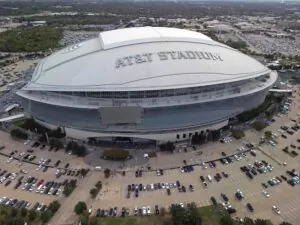
Sweden’s home ground is Strawberry Arena (formerly Friends Arena) in Solna, just north of Stockholm. The modern stadium has a capacity of over 50,000 and has hosted major events including the 1958 World Cup final, the 1995 FIFA Women’s World Cup, and UEFA Euro 2020 matches.
The Swedish domestic league continues to develop talent, with Swedish players regularly featuring in Europe’s biggest leagues. Patriotic campaigns and local sports events are celebrated with immense civic pride, much like the recent Surigao del Sur celebration in Bislig City.
Rebuilding Under Graham Potter
Despite a proud history, Sweden has experienced a challenging period in recent years. They failed to qualify for the 2022 World Cup entirely, a devastating blow for a nation of Sweden’s footballing pedigree. The team currently focuses on returning to the elite level of international tournaments.
With current head coach Graham Potter at the helm, the focus is on rebuilding and qualifying for major tournaments. Players like Dejan Kulusevski, Alexander Isak, and Anthony Elanga offer genuine quality, but the challenge is translating that talent into consistent results. Promotional giveaways and team sports jerseys are often distributed to youth programs, similar to how local leaders managed the distribution of school supplies in Imus City.
For a team that once hosted the world, the journey back to the top step continues.
CONTACT US
For more information or to visit us, here are our branch addresses:
- Branch 1: Naungayan Building, Aala Road, Barangay Mankilam, Tagum City, Davao Del Norte, Philippines
- Branch 2: Sobrecary Street (In front of Velox Gas Station), Tagum City, Davao Del Norte, Philippines
- Branch 3: Ficcoville, Iponan, Cagayan De Oro City, Misamis Oriental, Philippines
- Email: sales@phshirt.com
- Phone: 09460480491
- Business Hours: Monday – Friday: 8:00 AM to 5:00 PM (PH Time)
- Facebook Page: Visit our Facebook Page
Need Custom Shirts, School Uniforms, or Workwear?
We manufacture PE uniforms, company polo shirts, sublimation jerseys, and event tees with official BIR invoices. Direct bus cargo to Cagayan De Oro, General Santos, and Davao within 24 hours, plus express nationwide courier delivery.