
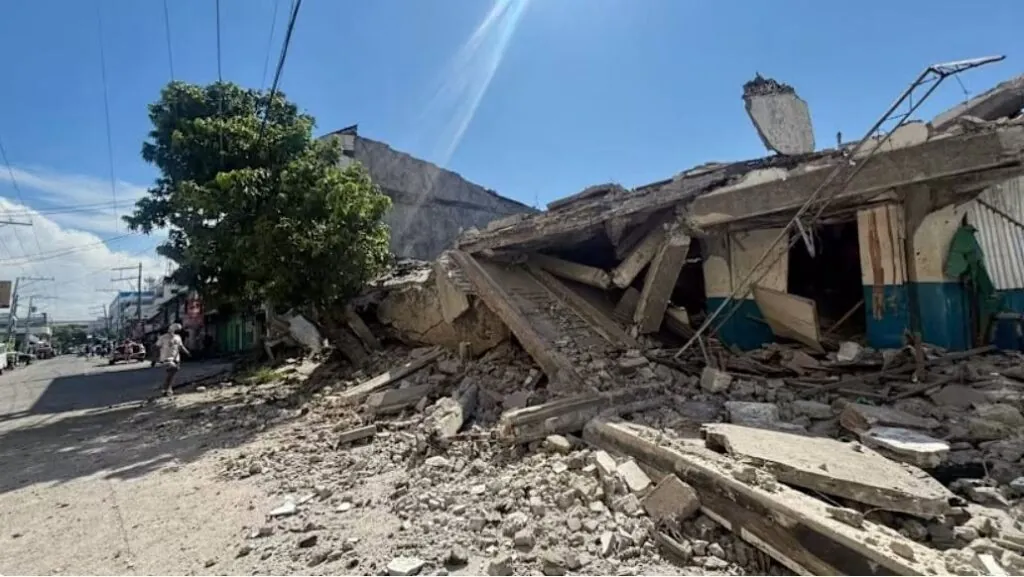
While many cities across the Caraga Region suspended classes after the magnitude 7.8 earthquake that struck off Sarangani on June 8, 2026, Bislig City in Surigao del Sur stood out – classes pushed through as scheduled on the first day of School Year 2026–2027.
According to Pedro Tecson, spokesperson of the Department of Education (DepEd) Caraga, the opening of classes across the region was marked by the powerful tremor that hit at 7:37 a.m. Local government units in Agusan del Sur, Butuan City, and Bayugan City ordered immediate class suspensions to ensure student safety. However, in Bislig City, no such suspension was declared, and classes continued smoothly.
“Malinawon ug malampuson sa kinatibuk-an ang pag-abli sa klase” Tecson said, noting that despite the earthquake, the overall class opening in Bislig was peaceful and successful.
The 7.8 magnitude earthquake, which originated near Maasim, Sarangani, was one of the strongest to hit Mindanao in recent years. It affected over 3.2 million students and 128,000 teachers across five regions including Caraga, according to DepEd. Despite the widespread disruption, Bislig’s schools demonstrated remarkable resilience.
DepEd reported that 31 classrooms in Agusan del Norte, Bayugan, and Cabadbaran sustained minor damage, but no major structural issues were flagged in Bislig City schools. The agency continues to monitor all schools across the region to ensure safe learning environments.
Tecson also credited the city’s regular implementation of earthquake drills and disaster preparedness protocols as a key factor in keeping both students and teachers calm and prepared during the quake.
“Dako ang nahimong tabang sa regular nga pag-implementar sa earthquake drills ug ubang disaster preparedness protocols matag quarter” he said, emphasizing that consistent practice helped schools and personnel respond appropriately during the emergency.
Bislig City, known for its famous Tinuy-an Falls and ecotourism attractions, showed that being disaster-ready doesn’t mean stopping everyday life. The city’s decision to continue classes reflected confidence in its infrastructure and preparedness systems.
The incident highlights the importance of school and community preparedness. Schools, organizations, and local government units can reinforce their disaster readiness through proper training and even customized identification and uniform systems. For communities looking to strengthen their identity and preparedness, custom school uniforms help build the discipline and organization needed for effective emergency response.
DepEd Caraga continues to assess schools across the region, prioritizing the safety of over 33,000 teachers and millions of students. Meanwhile, Bislig City has set an example of how local governments can balance safety with the continuity of essential services, even in the face of nature’s challenges.
As the Caraga Region recovers from the earthquake’s impact, lessons from Bislig’s experience will likely inform future disaster response strategies for schools across the country.
Need Custom Shirts, School Uniforms, or Workwear?
We manufacture PE uniforms, company polo shirts, sublimation jerseys, and event tees with official BIR invoices. Direct bus cargo to Cagayan De Oro, General Santos, and Davao within 24 hours, plus express nationwide courier delivery.