
Custom Triathlon Suits
One suit, three sports, and no time lost in transition. A practical guide to the fabrics, the chamois, the cut, and the custom ordering process behind a modern race suit, refreshed for the 2026 season.
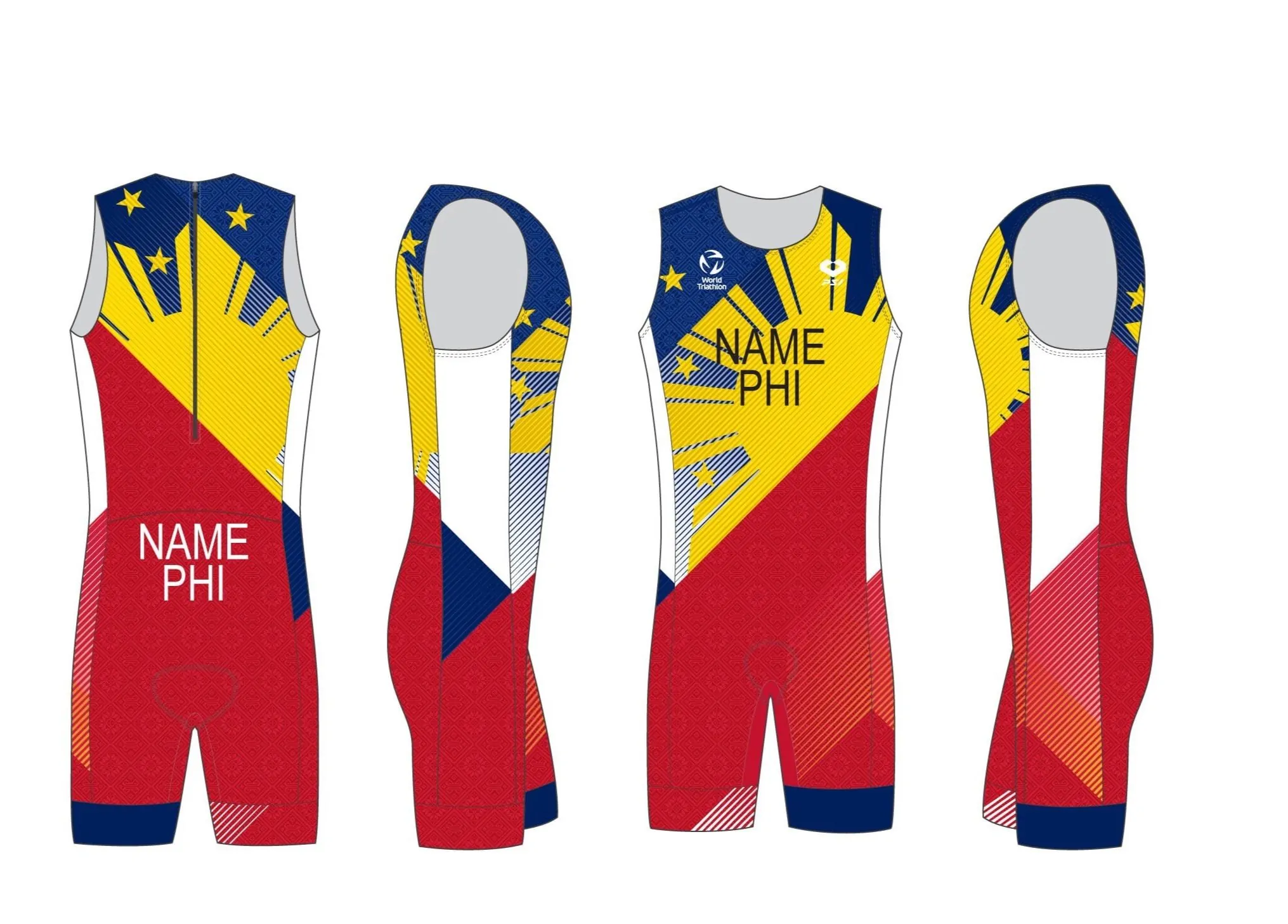
What a made to order trisuit at PHShirt starts from.
Why a trisuit is the one piece of gear you wear all day
In a triathlon you race the clock, but you also race friction, fatigue, and the transition. If you are still changing clothes between the swim, the bike, and the run, you are handing back minutes you already earned. A trisuit is the garment that removes that stopwatch leak: you wear it from the starting gun to the finish line, so the only thing you change in transition is your equipment, not your clothes.
That single requirement is what makes trisuit design its own discipline. A cycling jersey prioritizes pockets and wind protection. A running singlet prioritizes air movement. A swimming suit prioritizes glide. A trisuit has to do all three at once, in chlorinated pools, salt water, tropical heat, and long hours on the saddle, without tearing, bunching, or holding water. The result is a piece of technical equipment, not just apparel, and the difference between a good suit and a bad one is measured in seconds and in skin.
This guide walks through what a modern trisuit is built from, how the chamois and the cut are engineered for three sports, how to choose the right silhouette for your distance, and what the custom ordering process actually involves when you are outfitting an individual athlete or a full club roster.
What a modern trisuit is made of
Leading custom makers now publish real numbers instead of vague performance claims. Here is what the specifications on the current generation of race suits actually translate to on the course.
| Panel | Typical construction | What it does |
|---|---|---|
| Main body | about 140 gsm polyester and elastane compression knit | Holds muscle, recovers its shape, and stays opaque when wet. |
| Swim panels | Italian hydrophobic Lycra with a water repellent finish | Beads water off the surface so the suit drains fast on the bike. |
| Aero sleeves | Textured or dimpled fabric over shoulder and upper arm | Manages airflow over the leading edge at cycling speed. |
| Side and back | Open weave ventilation mesh | Dumps metabolic heat on climbs and in midday sun. |
| Seams | Flatlock stitch, or bonded and glued on premium models | Removes ridges that rub during the swim and the run. |
| UV protection | UPF 50+ across the complete suit on better models | Blocks sun on the back and shoulders during long rides. |
| Leg openings | Laser cut edges with wide silicone grippers | Stops the leg riding up without pinching the thigh. |
Hydrophobic, not just stretchy
The swim fabric carries a microscopic water repellent finish. It does not absorb lake or sea water, so you are not carrying extra weight onto the bike, and it dries quickly once you are out of the water.
Compression that holds a position
Graduated compression stabilizes the quads and hamstrings and reduces the vibration that builds fatigue over a long ride. The payoff is fresher legs when you dismount and start the run.
Breathable under tropical heat
Open mesh panels on the sides and back move heat and moisture away from the body. In a hot, humid climate that airflow matters more than any single fabric claim.
The chamois: thin for the run, dense enough for the ride
The single biggest difference between a trisuit and a cycling kit is the pad. It is the part most athletes ask about, and the part most brands get wrong.
Water leaves, it does not soak
A tri specific pad uses perforated, open cell foam that drains and dries. Within a minute or so of leaving the water it sheds the trapped moisture, so you are not sitting on a heavy, soggy pad for the bike leg.
Dense at the contact points
High density foam under the ischial bones shields the saddle contact area through a 90 km or 180 km ride. Better pads place the extra density exactly where the pelvis loads the saddle, instead of padding the whole area evenly.
Low profile so you forget it
A tri chamois is deliberately thin, in the 6 mm class, and tapers to nothing at the edges. That keeps the full leg turnover free and removes the inner thigh chafing that a bulky road pad causes once you start running.
Specifics you can ask a supplier
- Pad thickness quoted in millimetres, ideally in the 6 mm class for triathlon.
- Density quoted in kg/m3, with an anatomical perineal insert.
- A named, certified pad such as an Elastic Interface or CyTech tri model, not just "tri foam".
- Separate men's and women's patterns, not one pad in two sizes.
- Perforated or laminated construction for quick dry performance.
The most common complaint in the sport
Ask any triathlon forum and the same theme repeats: pads that are too thin for long course racing, and pads that are too bulky and chafe on the run. Real athletes rate durability and chamois comfort above almost everything else, and they notice the difference on the very first race.
For long distance racing, a longer rated pad makes sense. For sprint and Olympic distance, a lower profile pad is often the more comfortable choice. Match the pad to your distance before you match the color.
Aerodynamics, cut, and the details that decide comfort
Air is the biggest cost on the bike. The suit is the cheapest aero upgrade you can buy, because it removes the flapping fabric that costs you watts.
Sleeved or sleeveless
Sleeved suits manage airflow over the shoulders and arms and win on the bike, and they are now permitted in most non wetsuit races. Sleeveless suits win on shoulder freedom in the swim and on hot tropical sprint courses. Many clubs order both for different events.
Zip length and position
A full front zip opens wide for cooling on a climb and makes bathroom stops quick on long course. A quarter zip or rear zip suits shorter races. Better suits use concealed, auto locking zips so the puller stays put at speed.
Pockets and race belt
Low profile rear pockets carry nutrition without catching wind, and flat designs lie flush when empty. Look for a race belt loop or anchor points so your number stays readable without pins cutting through the fabric.
Three more details separate a suit that disappears on race day from one you fight all day. Silicone leg grippers hold the shorts in place without a tight elastic band that leaves marks. A low cut collar keeps the neck clear of the fabric during the swim and the run. And a gentle scoop or fully opening front reduces pressure on the chest during long hours in the aero position. Ask about each one by name when you compare suppliers.
Which trisuit suits your race
Match the cut to your distance and your priorities. This is the fastest way to narrow the choice before you look at design.
| Race | Priority | Recommended cut | Key features |
|---|---|---|---|
| Sprint | Speed and shoulder freedom | Sleeveless one piece | Low profile padShort zipMinimal pockets |
| Olympic | Balance of swim and bike | Sleeved or sleeveless one piece | Aero sleevesMedium padOne rear pocket |
| 70.3 | Saddle comfort and cooling | Sleeved one piece | Longer rated padFull front zipDual pockets |
| IRONMAN | Endurance and ventilation | Two piece or sleeved one piece | Max duration padHigh density foamNutrition storage |
| Relay or club | One design, many bodies | Mixed men and women patterns | Shared graphicsBroad size rangeBulk pricing |
A note on two piece suits: they are slightly slower than a one piece on the bike, but far easier for long course bathroom stops. If your race is IRONMAN distance and you value practicality over the last few seconds, a two piece is a rational choice.
What custom trisuit ordering actually involves
Custom does not mean slow or complicated when the process is clear. This is the sequence most specialist makers follow, including ours.
Choose the cut and the fabric
Decide sleeved or sleeveless, one piece or two piece, and the pad class for your distance. This is where you also lock the base fabric weight and the ventilation layout.
Send vector artwork and colors
Provide logos and graphics as vector files, normally .ai, .eps, or .pdf, and give spot colors as Pantone values. Raster logos have to be retraced, which can add a fee.
Approve the digital mockup
Your maker returns a design proof with your colors, names, and sponsor placement. Nothing goes to production until you approve it in writing, so this is the moment to check spelling and logo scale.
Confirm sizes with a fit kit
For a club order, a sample or fit kit lets everyone try the real garment before the full run. Skipping this step is the most common cause of size disputes later.
Production and quality check
The order is printed, cut, and sewn, then checked for color, stitching, and pad placement. Ask for the production window in writing so it can be scheduled against your race date.
Delivery and reorder
Your artwork is kept on file, so adding late teammates or reordering next season is a repeat of the same approved design rather than a fresh start.
Minimum order reality
Custom minimums vary widely across the market, from brands with no minimum at all to tiers of 5, 10, or 15 pieces. Small clubs often pay more per piece than full rosters, so confirm the tier before you commit.
Design fees
Some makers design for free when you adapt one of their existing designs, and charge a fee, sometimes a few hundred dollars, for a fully original layout. Ask which case applies to you before work starts.
Team stores
For clubs, a private team store lets each member pick their size, pay, and ship to their own address inside an ordering window. It removes the spreadsheet and the chasing.
What a custom trisuit costs, and how long it takes
Price tracks three things: the pad class, the fabric and panel count, and the order volume. Turnaround tracks the design stage far more than the sewing.
Training and entry racing
A simple one piece in a standard pad and fabric. Ideal for first timers, relay teams, and pool based training. It covers the whole race safely and looks sharp in club colors.
Aero sleeves and a better pad
The sweet spot for age groupers chasing a personal best. A textured sleeve fabric, a longer rated pad, and rear pockets. This is where most serious amateur orders land.
Wind tunnel and long course
The lightest, most technical fabrics, bonded seams, and the highest rated pad for IRONMAN distance. Premium fabrics and construction carry the highest unit price.
Typical turnaround
- 2 to 4 weeks for makers that keep production in house and move fast, once the design is approved.
- 6 to 8 weeks for fully bespoke designs, offshore production, and large club rosters.
- Add 1 to 2 weeks if your logos need retracing or your design needs a second proof.
How to get the best price
- Order as a batch. Unit price falls as the roster grows, so combine individuals and relay teams into one run.
- Send clean vector art. Ready files remove retracing fees and shorten the design stage.
- Reuse a proven design. Keeping one layout across seasons avoids a fresh design fee every year.
Fit and care tips from the race course
Most trisuit problems are fit problems, not fabric problems. These are the habits that keep a suit fast and comfortable for a full season.
Sizing should feel snug, not comfortable
A race fit feels almost like a struggle to put on the first time. If the fabric wrinkles across the back or the thighs, those wrinkles are where chafing starts. Err toward the tighter size within the range.
Wear it against the skin
Trisuits are designed to be worn as a single layer. Underwear traps moisture, bunches under the pad, and causes the irritation the pad exists to prevent.
Practice the zip before race day
If you choose a rear zip or a full front zip, rehearse opening and closing it while standing, and while breathing hard. A zip you cannot reach at speed is a zip you will not use.
Check the leg and arm openings
Loose leg openings cause the chafing complaints real athletes report most. Wide silicone grippers should sit flat against the skin, with no gap and no pinch.
Rinse after every salt or pool swim
Rinse in cool fresh water, skip the fabric softener and the dryer, and air dry away from direct sun. That protects the water repellent finish and the pad's foam far longer than any other habit.
Use a small amount of anti chafe product
On long course racing, a skin friendly lubricant at the neck, underarm, and inner thigh turns a good suit into a comfortable one, especially in humid conditions.
Frequently asked questions
Can I swim in a trisuit, and does it work under a wetsuit?
Yes. A trisuit is built to be worn from the swim start to the finish line. In a non wetsuit swim, the water repellent finish helps it glide and it drains fast once you exit. In a wetsuit legal race, the suit fits smoothly underneath without bunching, so there is nothing to change in transition.
How thin is a triathlon chamois compared with a cycling pad?
A road cycling pad is often 12 mm to 15 mm thick. A triathlon pad is in the 6 mm class, with tapered edges and a denser insert only at the saddle contact points. That keeps the cushioning for the bike while letting the leg move freely on the run.
Should I choose a sleeved or a sleeveless suit?
Sleeved suits manage airflow better on the bike and are now allowed in most age group races. Sleeveless suits give more shoulder freedom in the swim and run cooler, which suits hot tropical sprint courses. If your calendar mixes distances, many clubs order both cuts in the same base design.
What artwork do I need to send for a custom design?
Vector files such as .ai, .eps, or .pdf give the sharpest result, plus Pantone values for any spot color you want matched. Raster images like JPEG and PNG can usually be retraced for a fee. Send everything at once, including sponsor logos and athlete names, so the mockup stage does not stall.
What is the minimum order for custom triathlon suits?
Our minimum order is 5 pieces, and you can mix men's and women's patterns and sizes inside that batch. Minimums vary across the market, so if you are a solo athlete, ask a supplier directly before assuming you need a full team.
How much does a custom trisuit cost and how long does it take?
Price depends on the pad class, the fabric, the panel count, and the order volume, and it falls as the roster grows. Turnaround is typically 2 to 4 weeks for a ready production line and 6 to 8 weeks for a fully bespoke offshore run, measured after you approve the final design. Send your quantity and artwork for a written quotation.
Request a custom trisuit quotation
Send your club colors, your athlete roster, and your sponsor artwork. We will return a digital mockup direction and a written quotation with the unit cost and the lead time, so you can compare suppliers on the same specification.