
Bucharest Henri Coanda International Airport (OTP) Air Cargo Guide
Henri Coanda International Airport, still widely called Otopeni, is Romania's busiest international airport and the country's central air cargo gateway. It sits about 17 km north of Bucharest inside the European Union customs territory, so apparel arriving by air clears under one set of EU rules and then moves onward by road feeder across Romania and into neighbouring markets.
| Origin | IATA | Typical connecting leg to OTP |
|---|---|---|
| Manila, NAIA | MNL | Belly cargo via a European or Gulf hub |
| Clark | CRK | Belly cargo or freighter to a hub |
| Mactan Cebu | CEB | Regional uplift then linehaul |
| Davao | DVO | Domestic feed then international linehaul |
Romania's principal international air gateway
Named after the Romanian flight pioneer Henri Coanda and known as Otopeni before 2004, the airport is the base for the national carrier TAROM and a base for low cost and leisure operators. For an apparel importer it is the fastest way into Romania when a season launch, a sample set, or a restock cannot wait for sea freight.
A capital gateway
Henri Coanda International Airport handled about 17.0 million passengers in 2025, an increase of roughly 6.6 percent on 2024, and remains the busiest airport in Romania. It serves the capital region and the wider national market from a compact two runway site.
- IATA code OTP, ICAO code LROP
- About 17 km north of Bucharest city centre
- Inside the European Union customs territory
Bellyhold reality
Widebody freighter capacity into Romania is limited. Most apparel consignments arrive as bellyhold cargo on passenger aircraft into Otopeni, or fly into a larger European or Gulf hub and continue by bonded road feeder truck to the airport.
- Bellyhold uplift on passenger services
- Bonded road feeder from a larger hub
- Connection through the hub decides transit time
Two parallel runways
The airfield uses two parallel runways, both about 3,500 m long, across a site of roughly 605 hectares. The runway length supports widebody aircraft, while the commercial reality is that dedicated freighter slots are the constraint rather than the pavement.
- Two parallel runways, 3,500 m each
- Compact footprint, single terminal complex
- Road access to Bucharest and the motorway grid
The terminal complex and cargo areas
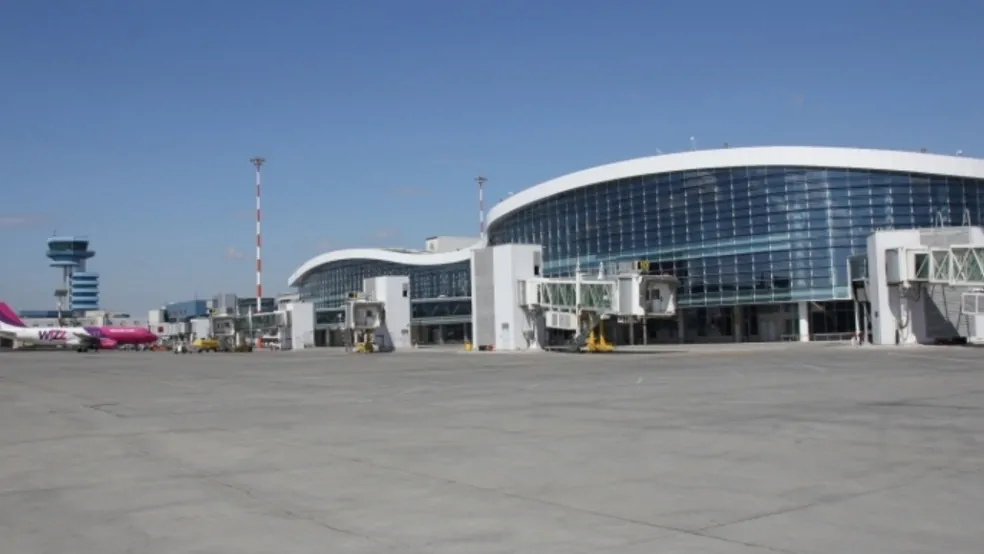
Otopeni operates as a single terminal complex with separate buildings for departures and arrivals and a joined airside concourse, alongside independent cargo warehouses and an on airport customs office. This ledger maps the areas that matter to an apparel air shipment.
| Area | Function | Relevance to apparel air freight |
|---|---|---|
| Departures Hall | Landside check in, security, and departure processing | Where courier and hand carried commercial samples join passenger services |
| Arrivals Hall | Inbound processing and baggage claim | Where small consignments on passenger aircraft are met and moved to clearance |
| Airside concourse | Shared concourse for domestic and international passenger flows | Boarding gates that carry bellyhold capacity for time sensitive freight |
| Airport cargo warehouses | Independent ground handler warehouses on airport | Acceptance, build up, storage, and release of consolidated apparel freight |
| On airport customs | Romanian Customs Authority office at the airport | Import declaration, inspection, and release under the EU Union Customs Code |
Air cargo handling at Otopeni
International ground handlers run the on airport cargo warehouses, including Menzies and Swissport facilities, and carrier cargo arms coordinate sale on passenger and road feeder networks. Because dedicated freighter capacity is limited, the booking strategy matters as much as the airport itself.
Ground handling and warehouses
On airport warehouses accept, build up, and release air freight under customs control. Ground handlers manage ramp services and the physical cargo warehouse, and each shipment is documented against the air waybill through to release.
- Menzies and Swissport warehouse operations
- Ramp handling and unit load device build up
- Secure storage under customs bond
Bellyhold uplift
Apparel is light relative to its value and volume, so bellyhold capacity on scheduled passenger aircraft suits season launches, pre production samples, and urgent restocks that would lose value sitting at sea.
- Frequent passenger services into the capital
- Suited to light, high value apparel
- Space confirmed per flight and season
Bonded road feeder
When no convenient bellyhold space is available, cargo can clear at a larger European airport and continue to Otopeni by bonded road feeder truck. The consignment stays under customs control until it reaches the Romanian import declaration.
- Road feeder from a larger European hub
- Freight stays bonded in transit
- Useful when freighter capacity is tight
Plan around the hub connection
Air transit itself is measured in days, but the door to door estimate depends on the hub connection window, the cargo warehouse cut off, customs hours, and the road feeder schedule. Confirm the cut off times for your chosen routing before the shipment is booked, and allow for a wider connection window during peak season.
Romanian customs and EU compliance
Apparel entering Romania by air is subject to the EU Union Customs Code, applied in Romania by the Romanian Customs Authority, together with EU product rules on fibre labelling, product safety, and restricted substances. These points are planning prompts, not a tariff ruling; confirm the exact product scope with a licensed broker before labels and packaging are approved.
Union Customs Code clearance
Import declarations are lodged electronically with the Romanian Customs Authority. Clearance confirms the tariff line and the duty and VAT position before the consignment leaves the cargo warehouse.
- Declaration under the EU Union Customs Code
- Import VAT and duty assessed on release
- Broker lodges on the importer's behalf
Origin preference and REX
Where the rules of origin are met, a registered exporter statement under the REX system can support a preferential duty position for shipments from the Philippines into the European Union. The applicable preference and rate should be confirmed with the broker for the specific order.
- Registered exporter statement under REX
- Preference depends on origin and product rules
- Broker confirms the rate on the tariff line
Labelling and product rules
Garments placed on the EU market must meet EU textile fibre labelling, general product safety, and chemical restriction rules. Labels, care instructions, and traceability details should be finalised before production.
- EU Regulation 1007/2011 fibre labelling
- EU GPSR 2023/988 traceability
- EU REACH Annex XVII restricted substances
Documentation to prepare
Air shipments clear fastest when the master and house air waybill, the commercial invoice with Incoterms and currency, the packing list with net and gross weights, and the certificate of origin or preference statement agree with one another. A mismatch between the manifest and the invoice is the most common cause of a customs hold.
Air freight routing from the Philippines to Otopeni
No direct scheduled service links the Philippines and Bucharest, so apparel moves on a connection through a major hub. The ladder below follows a typical booking from origin uplift to final delivery.
Origin uplift in the Philippines
Cargo departs from a Philippine gateway such as Manila NAIA (MNL), Clark (CRK), Mactan Cebu (CEB), or Davao (DVO), depending on where the goods are consolidated and which carrier has capacity.
Linehaul to a hub
The shipment connects through a European or Gulf hub that carries widebody passenger or freighter capacity toward Eastern Europe. The hub choice sets the connection window and the transit time.
Arrival at Otopeni (OTP)
The consignment arrives on a passenger bellyhold service or continues from a larger European airport by bonded road feeder truck to the Otopeni cargo warehouses.
On airport clearance
The importer or broker lodges the import declaration with the Romanian Customs Authority and settles duty and import VAT under the EU Union Customs Code before release.
Onward road feeder
Released freight moves by road across Romania or cross border toward Hungary and the wider region, feeding the capital region and the main commercial centres.
Onward distribution from Otopeni
Once released, apparel moves by road feeder. The airport road network links to Bucharest and the national motorway grid, feeding the main commercial centres and the Black Sea port complex for onward multimodal moves.
Bucharest and the capital region
The airport sits about 17 km from the city centre, so the capital region is the first delivery zone. Most importers clear at the airport and distribute into Bucharest the same day or the next working day.
The Black Sea sea corridor
For volume that switches between air and sea, the Port of Constanta handles containerized apparel on the Black Sea and links inland by rail and road. Air is used for the urgent portion while the balance sails.
Western Romania and Hungary
Road feeder services reach Cluj, Timisoara, and the western border, where the Curtici and Arad crossings link Romania with Hungary and the wider Central European market.
Frequently asked questions about Otopeni air cargo
Clear answers on codes, location, routing, freighter capacity, compliance, and documentation for apparel air freight through Bucharest Henri Coanda International Airport.
What are the official codes for Bucharest Henri Coanda International Airport?
The airport uses IATA code OTP and ICAO code LROP. It is also widely called Bucharest Otopeni Airport, and those identifiers appear on air waybills, booking confirmations, and customs declarations.
Where is the airport located?
Henri Coanda International Airport is in Otopeni, Ilfov County, about 17 km north of Bucharest city centre. It is inside the European Union customs territory, so imports clear under EU rules and then move by road across Romania and neighbouring markets.
How long does apparel air freight from the Philippines to Otopeni take?
Production normally takes 3 to 6 weeks after sample, artwork, and payment approval, and air transit is additional. Air leg time depends on the hub connection, the cargo cut off, and the road feeder schedule, so confirm a door to door estimate with the forwarder before booking.
Can apparel fly into Otopeni on dedicated freighters?
Widebody freighter capacity into Romania is limited. Most apparel consignments fly as bellyhold cargo on passenger aircraft into OTP, or clear at a larger European or Gulf hub and continue by bonded road feeder truck. The routing is planned around available capacity rather than a fixed freighter schedule.
Which customs and compliance rules apply to air imports into Romania?
Imports clear under the EU Union Customs Code through the Romanian Customs Authority, with import VAT and duty assessed on release. EU product rules also apply, including textile fibre labelling under Regulation 1007/2011, product safety and traceability under GPSR 2023/988, and restricted substances under REACH Annex XVII. A licensed broker should confirm the tariff line and any preference for the specific order.
What documents should accompany an air shipment to Otopeni?
Prepare the master and house air waybill, the commercial invoice with Incoterms and currency, the packing list with net and gross weights, and the certificate of origin or a registered exporter statement where a preference is claimed. Keeping these documents consistent avoids the customs holds that a manifest mismatch can trigger.
Discuss an air shipment to Otopeni
Send the garment type, quantity, sizes, decoration method, target delivery date, and destination city. Our export desk will confirm the air routing options from the Philippines and the documentation needed for Romania.