
Panabo City: Banana Capital of the Philippines & 40 Barangays Directory
Officially recognized as the Banana Capital of the Philippines, the City of Panabo is a first class component city in Davao del Norte and an integral economic anchor of Metropolitan Davao. Spanning 25,123 hectares between Davao City and Tagum City, Panabo combines the world’s largest contiguous Cavendish banana plantation (TADECO) with premier international maritime logistics at the Davao International Container Terminal (DICT) and the PEZA accredited Anflo Industrial Estate.
Geographic Profile, Etymology & Historical Heritage
From ancestral Ata-Manobo hunting grounds to Mindanao’s premier agro-industrial and export corridor.
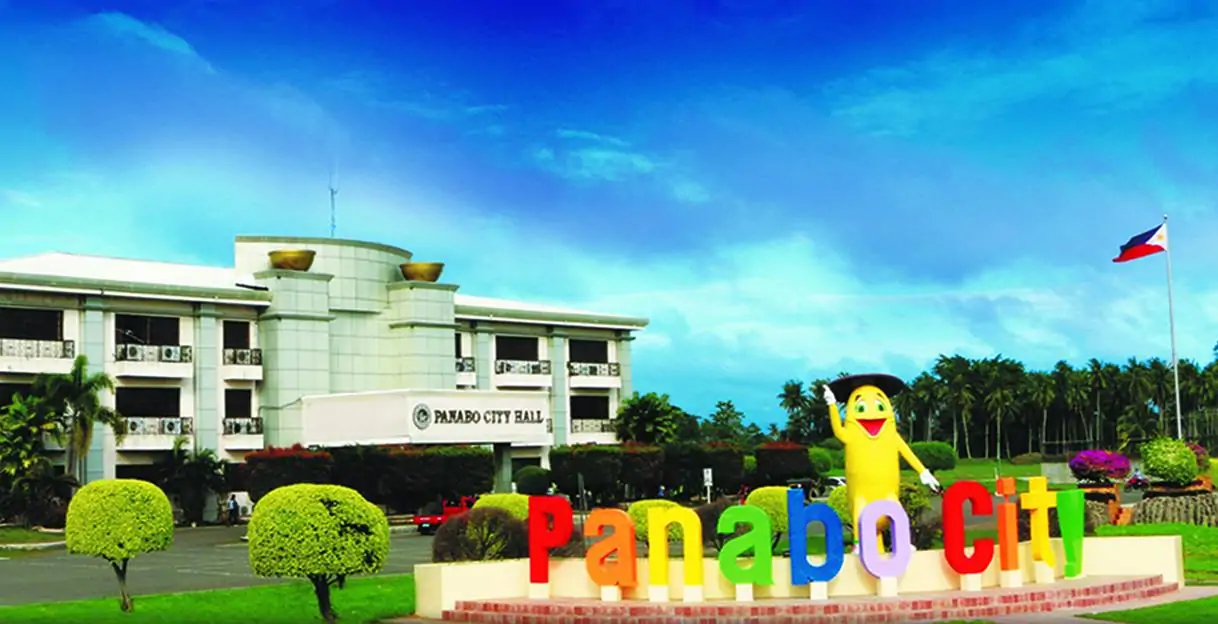
Panabo City, officially known in Cebuano as Dakbayan sa Panabo and in Tagalog as Lungsod ng Panabo, is strategically situated along the southwestern coast of Davao del Norte fronting the calm waters of the Davao Gulf. Positioned exactly 32 kilometers north of Davao City and 28 kilometers south of the provincial capital of Tagum City, Panabo functions as the pivotal southern gateway of Davao del Norte. In fact, Panabo City Hall in Barangay Gredu stands merely 2.23 kilometers from the territorial border of Davao City, making Panabo a core constituent of the Metropolitan Davao Development Authority (MDDA).
Etymology and Indigenous Heritage: Long before migrant settlers arrived, the fertile river basins and forested plains of the area were stewarded by nomadic indigenous groups, particularly the Ata-Manobo and indigenous Aetas. The early hunters relied primarily on bows and arrows to hunt wild boars, calling the essential tool “pana-sa-boboy” (where pana means arrow and boboy refers to wild game). Over generations of linguistic adaptation, the hunting term evolved into the proud city name Panabo. When pioneering migrants from the Visayas and Luzon arrived in the early 1900s, the bustling settlement was initially called Taboan (meaning trading meeting place) before adopting Panabo permanently.
Municipal Evolution and Cityhood: Panabo was historically an administrative district of Tagum (then called Magugpo). On July 19, 1949, President Elpidio Quirino issued Executive Proclamation No. 236, officially establishing Panabo as an independent municipality. The defining turning point in the city’s economic destiny occurred on December 20, 1950, when the Tagum Agricultural Development Company (TADECO) was established by Don Antonio O. Floirendo Sr. TADECO pioneered large-scale commercial Cavendish banana production, triggering extensive infrastructure development, population growth, and regional trade. Panabo officially achieved component city status on March 31, 2001, through the ratification of Republic Act No. 9015.
Topography and Land Allocation: Covering 251.23 square kilometers (25,123 hectares or 62,080 acres), the city’s terrain transitions gently from coastal mangroves and mariculture parks on the Davao Gulf through extensive alluvial agricultural lowlands to rolling upland plateaus in the west. Over 40 percent of the total land area (more than 10,000 hectares) is actively cultivated with export-grade Cavendish bananas, supported by the Lasang, Tuganay, and Bunawan river systems.
Complete Directory of the 40 Barangays of Panabo City
Official Philippine Statistics Authority demographic data, land classification, and geographic characteristics across all 40 local government units.
| Barangay Name | Zone / Land Type | 2020 Population | Population Share | 2015 Population | 5-Year Growth | Prominent Landmarks & Economic Profile |
|---|---|---|---|---|---|---|
| A. O. Floirendo | Agro-Lowland | 4,165 | 1.99% | 4,848 | -14.09% | Named after TADECO founder Don Antonio O. Floirendo Sr., plantation housing, school facilities |
| Buenavista | Upland | 794 | 0.38% | 800 | -0.75% | Upland agricultural farming, fruit tree agroforestry, scenic rural views |
| Cacao | Agro-Lowland | 1,304 | 0.62% | 1,196 | +9.03% | Cacao bean intercropping, smallholder banana production, agrarian community |
| Cagangohan | Coastal / Port | 13,224 | 6.32% | 13,776 | -4.01% | Major coastal commercial hub, Panabo Seawall Promenade, artisanal fish landing, coastal schools |
| Consolacion | Agro-Lowland | 1,509 | 0.72% | 1,747 | -13.62% | Lowland agricultural fields, coconut and banana groves, quiet residential cluster |
| Dapco | Agro-Lowland | 4,199 | 2.01% | 4,068 | +3.22% | Irrigated lowland rice paddies, commercial banana holdings, communal irrigation canal |
| Datu Abdul Dadia | Urban Core | 7,394 | 3.53% | 5,793 | +27.64% | Named in honor of local Muslim leadership, rapid residential subdivisions, educational centers |
| Gredu (Poblacion) | Urban Core | 16,252 | 7.77% | 16,543 | -1.76% | Civic heart of Panabo: Panabo City Hall, Freedom Park, Kublai Millan banana fountain, commercial center |
| J. P. Laurel | Urban Core | 9,458 | 4.52% | 6,561 | +44.15% | Fastest growing urban corridor (+8.0% annual growth), highway retail stores, suburban housing |
| Kasilak | Upland | 2,730 | 1.30% | 2,787 | -2.05% | Kasilak Agri-Tourism Park, hiking trails, agro-forestry cooperatives, freshwater springs |
| Katipunan | Agro-Lowland | 2,449 | 1.17% | 1,836 | +33.39% | Emerging farming community (+6.25% annual growth), high agricultural yield, rural schools |
| Katualan | Upland | 606 | 0.29% | 744 | -18.55% | Smallest barangay by population, peaceful highland agricultural setting, indigenous heritage |
| Kauswagan | Agro-Lowland | 1,799 | 0.86% | 1,419 | +26.78% | Progressive agricultural cooperatives, corn and banana crops, agrarian reform communities |
| Kiotoy | Agro-Lowland | 1,503 | 0.72% | 1,501 | +0.13% | Stable rural farming village, banana cultivation, farm-to-market road access |
| Little Panay | Agro-Lowland | 2,736 | 1.31% | 2,434 | +12.41% | Historical settlement founded by Ilonggo migrants from Panay Island, Little Panay NHS, rich rice fields |
| Lower Panaga | Agro-Lowland | 1,598 | 0.76% | 1,522 | +4.99% | Direct gateway to TADECO plantation packing facilities, banana export logistics corridor |
| Mabunao | Upland | 2,116 | 1.01% | 1,912 | +10.67% | Mabunao Eco-Park, natural forest canopy, natural freshwater swimming springs and picnic huts |
| Maduao | Coastal / Port | 3,720 | 1.78% | 3,114 | +19.46% | Coastal aquaculture, mangrove eco-sanctuary, brackish water fishponds, fishing cooperatives |
| Malativas | Agro-Lowland | 2,582 | 1.23% | 2,401 | +7.54% | Coconut intercropping, banana smallholders, Malativas National High School |
| Manay | Urban Core | 6,353 | 3.04% | 5,406 | +17.52% | Suburban residential expansions, highway connectivity, Manay National High School |
| Nanyo | Agro-Lowland | 3,979 | 1.90% | 3,847 | +3.43% | Historic agricultural barangay founded in 1954, Nanyo Central Elementary, banana estates |
| New Malaga | Agro-Lowland | 2,088 | 1.00% | 1,835 | +13.79% | Pioneer farming community named by early settlers, banana plantations, rural health center |
| New Malitbog | Urban Core | 4,236 | 2.02% | 3,276 | +29.30% | Rapidly growing residential sector (+5.56% annual growth), suburban housing complexes |
| New Pandan | Urban Core | 8,550 | 4.09% | 6,636 | +28.84% | Major commercial expansion zone, trade warehouses, commercial strips, subdivisions |
| New Visayas | Urban Core | 18,987 | 9.07% | 16,566 | +14.61% | Second most populous barangay in Panabo, major educational hub, commercial centers, public markets |
| Quezon | Urban Core | 6,933 | 3.31% | 4,649 | +49.13% | Highest percentage growth across the city (+8.78% annual), major suburban residential expansion |
| Salvacion | Urban Core | 10,748 | 5.14% | 9,521 | +12.89% | Core urban center along Daang Maharlika, Salvacion Elementary, automotive dealerships, retail centers |
| San Francisco | Urban Core | 13,953 | 6.67% | 12,832 | +8.74% | Major educational and transit hub, Panabo City National High School, commercial malls and centers |
| San Nicolas | Agro-Lowland | 2,948 | 1.41% | 2,071 | +42.35% | Suburbanizing agrarian community (+7.72% annual growth), agricultural border to Davao City |
| San Pedro | Coastal / Port | 3,408 | 1.63% | 4,193 | -18.72% | Strategic international logistics gateway: site of Davao International Container Terminal (DICT) & Anflo Industrial Estate |
| San Roque | Upland | 656 | 0.31% | 480 | +36.67% | Upland agricultural community, high percentage population increase, fruit tree farming |
| San Vicente | Urban Core | 19,334 | 9.24% | 14,449 | +33.81% | Most populous barangay in Panabo City, bustling urban residential center, markets, medical clinics |
| Santa Cruz | Agro-Lowland | 1,175 | 0.56% | 1,221 | -3.77% | Traditional farming community, coconut and Cavendish banana plantations, rural chapel |
| Santo Niño | Urban Core | 5,156 | 2.46% | 4,332 | +19.02% | Commercial expansion district, highway transport accessibility, residential communities |
| Sindaton | Agro-Lowland | 4,312 | 2.06% | 3,396 | +26.97% | Extensive commercial banana cultivation, irrigation canal systems, Sindaton National High School |
| Southern Davao | Agro-Lowland | 9,899 | 4.73% | 9,021 | +9.73% | Major plantation and residential barangay, Southern Davao National High School, farm logistics hub |
| Tagpore | Agro-Lowland | 1,773 | 0.85% | 1,643 | +7.91% | Fertile alluvial plains, diversified vegetable farming, banana contract growers |
| Tibungol | Agro-Lowland | 2,037 | 0.97% | 1,664 | +22.42% | Tibungol Elementary School, agricultural cooperatives, farm-to-market arterial roads |
| Upper Licanan | Urban Core | 1,598 | 0.76% | 1,588 | +0.63% | Southern frontier facing Davao City (Bunawan/Lasang), vital inter-city highway transit point |
| Waterfall | Upland | 969 | 0.46% | 971 | -0.21% | Named after scenic upland cascading waterfalls, eco-tourism destination, cool mountain climate |
| Panabo City Total | 40 Barangays | 209,230 | 100.00% | 184,599 | +13.34% | 2024 Projected Population: 211,242 across 43,123 households |
The Banana Capital of the Philippines: TADECO & Agro-Industrial Dominance
A global leader in export-grade Cavendish bananas, agricultural science, and modern plantation management.
Tagum Agricultural Development Company (TADECO)
Founded on December 20, 1950, by Don Antonio O. Floirendo Sr., TADECO stands as the flagship enterprise of the Anflocor Group of Companies and the world’s largest contiguous Cavendish banana plantation. Encompassing over 6,900 hectares of meticulously managed banana fields in Panabo and neighboring municipalities, TADECO yields tens of millions of boxes of fresh premium bananas each year for shipment across the globe.
- Major Export Markets: Japan, South Korea, China, Hong Kong, the Middle East, and the European Union.
- Packaging & Cold Chain: Modern automated packing stations located across plantation zones, with temperature controlled reefer logistics connecting directly to port terminals.
- Scientific Agriculture: World class tissue culture laboratories, sustainable drip irrigation systems, and integrated pest management practices.
Anflo Industrial Estate (AIE) Special Economic Zone
Located in Barangay San Pedro near the coastal shipping terminals, the Anflo Industrial Estate is a 63-hectare premier industrial subdivision registered with the Philippine Economic Zone Authority (PEZA). Specially engineered for agro-industrial processing, manufacturing, warehousing, and temperature-controlled cold storage, AIE provides fiscal incentives and customs-bonded facilities to multinational corporations and regional enterprises.
- Value-Added Agro-Processing: Banana flour processing, fruit purée plants, food packaging, and specialized manufacturing.
- Comprehensive Utilities: Dedicated industrial-grade power substations, high-capacity wastewater treatment plants, and fiber optic connectivity.
- Direct Highway & Port Link: Positioned adjacent to the Panabo Wharf Road and the Davao International Container Terminal for frictionless exports.
Maritime Port Logistics & Transport Infrastructure
Modern deepwater container berths, dedicated flyovers, and strategic highway corridors connecting Panabo to world trade.
Davao International Container Terminal (DICT)
Operated by the Anflocor Group, DICT is recognized as Mindanao’s most technologically advanced commercial container port. Featuring post-Panamax quay cranes, deep natural drafts capable of servicing large container vessels, and extensive reefer plug capacity, DICT processes the majority of Mindanao’s fresh fruit exports.
Panabo City Flyover (AH26)
Completed by the Department of Public Works and Highways (DPWH) in 2020, this 896-meter, two-lane grade separation flyover carries through traffic along the Pan-Philippine Highway (AH26) over the busy Panabo Wharf intersection, eliminating freight bottlenecks for port container trucks.
Francisco Bangoy International Airport Access
Panabo benefits from immediate overland access to Mindanao’s busiest airport terminal (DVO). Located roughly 35 to 45 minutes south via the widened 6-lane Maharlika Highway, travelers and air-cargo shipments enjoy direct domestic and international flights to Manila, Cebu, Clark, and Singapore.
City Governance & Sangguniang Panlungsod
Elected officials, legislative leadership, and local administrative governance serving the people of Panabo City.
Executive Leadership
Office of the City MayorCity Mayor (Elected Executive Leader of Panabo City)
City Vice Mayor and Acting City Mayor. Assumed the functions of the City Mayor during temporary executive transition, ensuring seamless continuity of city hall services, disaster coordination, and municipal projects.
Senior City Councilor, serving as Acting City Vice Mayor and Presiding Officer of the Sangguniang Panlungsod.
Sangguniang Panlungsod
10th City Council (2025 to 2028 Term)Duly elected City Councilors and ex-officio sector representatives enacting municipal ordinances, economic resolutions, and developmental budgets:
- Hon. JM "Boss" Relampagos
- Hon. Janno Paolo Gentiles
- Hon. Atty. Jamail Lunar Macla
- Hon. Omar Ranain
- Hon. Atty. Devona "Bona" Jumamil
- Hon. Emeterio Blase
- Hon. Ian Rolet Catalan
- Hon. Loloy Sumampong
- Hon. Jannet Tanong
- Hon. Ronald Ang
- Ex-Officio Councilors:
- Hon. Conrad Theodore Matutino (ABC)
- Hon. Bae Merlinda Aranar (IPMR)
- Hon. Julienne Angel Capuyan (SK Federation)
Culture, Festivals & Premier Civic Landmarks
Celebrated banana harvest festivals, iconic public sculptures, eco-tourism reserves, and coastal promenades.
Binulig Festival & Araw ng Panabo
The Binulig Festival celebrates Panabo’s identity as the Banana Capital. Named after a bunch or stalk of bananas (bulig), the festival features vibrant street dancing competitions in banana-leaf inspired costumes, agricultural trade fairs, culinary showcases, and the search for Mutya ng Panabo during the March 31 Charter Day.
Freedom Park & Kublai Millan Banana Fountain
The central public gathering plaza of Panabo features landscaped gardens, lighted walking promenades, outdoor stage pavilions, and an iconic monumental banana sculpture and water fountain crafted by internationally acclaimed Mindanao artist Kublai Ponce Millan.
Panabo Tourism, Cultural & Sports Complex
Known locally as the Panabo City Gymnasium, this state-of-the-art air-conditioned multi-purpose arena accommodates up to 10,000 spectators. It regularly hosts official Philippine Basketball Association (PBA) regular season games, national boxing tournaments, and regional athletic meets (PCAA and DAVRAA).
Panabo City Seawall Promenade & Coastal Park
A favorite coastal promenade overlooking the open waters of Davao Gulf with direct views of Samal Island. Locals gather during afternoons for refreshing sea breezes, fresh seafood barbecue stalls, and coastal recreation along the concrete seawall barrier.
Mabunao Eco-Park & Natural Springs
A serene forest eco-park sanctuary situated amidst rolling green hills. Natural cold spring water feeds clear bathing pools beneath a dense native canopy, providing a refreshing rural weekend escape with picnic sheds, nature trails, and environmental education programs.
Panabo Mariculture Park
Established in partnership with the Bureau of Fisheries and Aquatic Resources (BFAR), this sea-based mariculture park encompasses high-density fish cages for milkfish (bangus), groupers (lapu-lapu), and pompano, supporting sustainable marine aquaculture for regional food security.
Higher Education & Secondary School System
Academic centers shaping future agricultural scientists, technological leaders, and skilled professionals in Davao del Norte.
UP Professional School for Agriculture and the Environment (UP PSAE)
Established through a historic tripartite agreement between the University of the Philippines Los Baños (UPLB), ANFLOCOR, and the University of the Philippines Mindanao (UP Mindanao), UP PSAE serves as the premier postgraduate academic and scientific research institution in Panabo City. Situated within the Anflocor development corridor, the campus offers advanced degree programs in agronomy, plant pathology, agricultural economics, and environmental science tailored specifically to Mindanao’s export fruit industries.
- Degree Offerings: Master of Science and professional postgraduate degrees in tropical agriculture, biotechnology, and agribusiness.
- Industry Research: Direct collaboration with Cavendish banana growers on Fusarium wilt (Panama disease Tropical Race 4) resilience and sustainable soil health.
- Regional Impact: Equips agronomists, plantation superintendents, and agricultural policymakers across Region XI.
Colleges & Secondary Schools Network
Panabo City hosts a robust network of private tertiary colleges, technical institutes, and prominent public secondary schools serving thousands of students across the Davao-Tagum growth axis:
- Tertiary & Technical Institutions: Maryknoll College of Panabo, ACES Polytechnic College, Northlink Technological College, and North Davao Colleges.
- Panabo City National High School (PCNHS): The flagship public secondary school situated in Barangay San Francisco, known for excellence in academics, journalism, and athletics.
- Barangay Secondary Schools: Southern Davao National High School, Little Panay NHS, San Vicente NHS, Manay NHS, Sindaton NHS, Malativas NHS, and Mabunao NHS.
- Elementary SPED Centers: Panabo Central Elementary School SPED Center, Rizal Elementary School Panabo, and Nanyo Central Elementary.
Emergency Hotlines, Disaster Response & Healthcare Facilities
Direct telephone contacts for police, fire protection, emergency medical rescue, and government administrative assistance in Panabo City.
Panabo City in Motion: Video Feature & Landmark Gallery
Visual documentation showcasing urban infrastructure, plantation vistas, and municipal development across Panabo City.
Welcome to Panabo City: City Tour & Aerial Overview
Explore the city landmarks, coastal ports, commercial highway strips, and scenic agricultural landscapes that make Panabo City the Banana Capital of the Philippines.
Interactive Map & Inter-City Transit Distances
Cartographic location and overland travel times along the Pan-Philippine Highway (AH26) transit corridor.
Regional Travel Distances
- Davao City Center (Poblacion)
- Davao International Airport (DVO)
- Tagum City (Provincial Capital)
- Municipality of Carmen
- Island Garden City of Samal
- Digos City (Davao del Sur)
Frequently Asked Questions About Panabo City
Essential facts concerning cityhood, banana export industries, barangay divisions, and regional connectivity.
Why is Panabo City called the "Banana Capital of the Philippines"?
How many barangays comprise Panabo City and which are the largest?
When did Panabo become a city and what is its legal charter?
What is the significance of the Davao International Container Terminal (DICT)?
How far is Panabo City from Davao City and Francisco Bangoy International Airport?
Apparel Manufacturing, Event Shirts & Printing for Panabo City
Serving agricultural cooperatives, plantation management teams, educational institutions, barangay councils, and businesses across Panabo City. From full sublimation company uniforms and athletic jerseys for the PCAA to commemorative foundation day polo shirts, RB Advertising delivers premium apparel manufactured with commercial-grade Japanese sublimation technology.
Transparent Regional Pricing: Premium custom sublimation event shirts and polo shirts start from ₱320.00 (approximately $5.10 / €4.45 / £3.85), with tiered volume pricing for barangays, corporate agricultural accounts, and municipal events.
Production Facility: Naungayan Building, Aala Road, Barangay Mankilam, Tagum City. Business hours: Mon to Sat, 8:30 AM to 5:00 PM. Daily cargo delivery and courier transit across Panabo City, Davao City, Carmen, and the entire Davao Region.