
Ash Wednesday: Liturgical Origins, History, Traditions, and Observance Guide
Ash Wednesday marks the solemn portal to Lent across Western Christianity. Originating from ancient biblical acts of repentance and formalized over a millennium ago, the reception of blessed ashes and the call to fasting inaugurate a forty day spiritual journey toward Easter, centering the human heart upon mortality, reconciliation, and the mercy of God.
Forty fasting days, forty six calendar days total including Sundays, anticipating Easter Sunday.
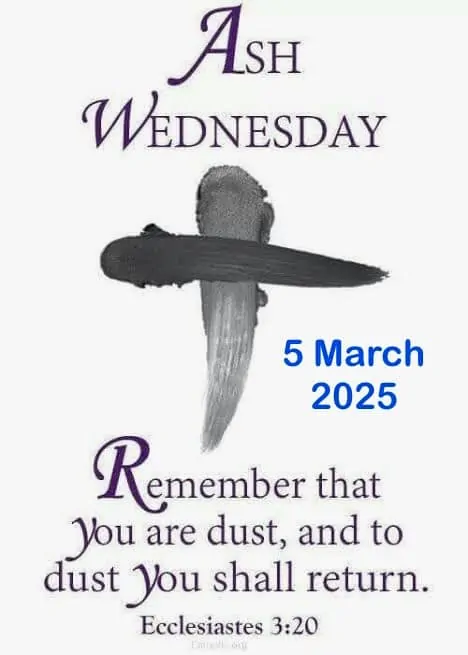
"Remember that you are dust, and to dust you shall return" or "Repent, and believe in the Gospel."
Symbolizes humility, interior sorrow, penance, and solemn preparation for the Passion of Christ.
In Catholic doctrine ashes are a sacramental, meaning non Catholics, catechumens, and inquirers may receive them.
The Spiritual Essence of Ash Wednesday and the Forty Days of Lent
Understanding the transition from Shrove Tuesday carnival celebrations to the penitential desert of prayer, fasting, and spiritual renewal.
Ash Wednesday occupies a sacred place in the Christian liturgical calendar as the inaugural day of Lent. Occurring exactly forty six calendar days prior to Easter Sunday, it establishes a dedicated season during which believers reflect upon personal mortality, examine conscience, practice intentional self denial, and prepare their hearts for the commemoration of the Passion, Death, and Resurrection of Jesus Christ.
The English word Lent originates from the Old English term lencten, signifying springtime or the lengthening of daylight hours. In ecclesiastical Latin, the season is titled Quadragesima, literally denoting the fortieth day. This numerical designation connects directly with biblical narratives where forty represents a consecrated period of trial, testing, purification, and divine preparation:
Christ in the Desert
Jesus fasted for forty days and forty nights in the Judean wilderness, overcoming the temptations of the devil before commencing public ministry (Matthew 4:1 to 11, Luke 4:1 to 13).
Moses on Mount Sinai
Moses remained on Mount Sinai forty days and forty nights neither eating bread nor drinking water while receiving the Law and Covenant from God (Exodus 34:28).
Elijah at Mount Horeb
Strengthened by miraculous hearth cakes and water, the prophet Elijah traveled forty days and forty nights across the desert to reach the mountain of God at Horeb (1 Kings 19:8).
A common point of inquiry concerns the mathematical count of Lent. While Lent is universally described as forty days, the elapsed time between Ash Wednesday and Holy Saturday spans forty six calendar days. In Western Christian tradition, every Sunday is a celebration of the Resurrection, a feast day regarded as a little Easter. Because feast days are not days of penitential fasting, the six Sundays of Lent are excluded from the rigorous fast count, yielding exactly forty days of penitential discipline: forty fast days plus six celebratory Sundays equals forty six days.
Ash Wednesday immediately succeeds Shrove Tuesday, known historically as Mardi Gras (Fat Tuesday) or Carnival (from the Latin carne levare, meaning the removal of meat). In early centuries, households cleared lard, sugar, butter, and meats before entering the strict Lenten fast. The vibrant, joyful revelry of Shrove Tuesday yields overnight to the quiet, introspective stillness of Ash Wednesday, marked by solemn liturgies and dark violet sanctuary banners.
Biblical Foundations of Ashes and Sackcloth
Tracing the profound Old and New Testament symbolism of dust, ashes, grief, and unreserved repentance before the Creator.
The ritual imposition of ashes on Ash Wednesday is not an arbitrary church invention, but a practice steeped in the ancient biblical narrative. Across the Old Testament scriptures, ashes and sackcloth (rough goat hair cloth) functioned as outward physical expressions of profound grief, personal unworthiness, national crisis, and genuine interior repentance.
Job 42:6: Contrition in the Dust
Following his confrontation with the transcendent glory and sovereignty of God, the patriarch Job exclaims: "Therefore I despise myself and repent in dust and ashes," acknowledging human frailty in contrast with divine majesty.
Daniel 9:3: National Intercession
During the Babylonian exile, Daniel pleaded for mercy on behalf of Jerusalem: "So I turned to the Lord God and pleaded with him in prayer and petition, in fasting, and in sackcloth and ashes."
Jonah 3:5 to 6: The Repentance of Nineveh
When the prophet Jonah announced impending judgment against Nineveh, the king rose from his throne, stripped off his royal robes, covered himself with sackcloth, and sat down in the ashes, calling a total civic fast that averted destruction.
Matthew 11:21: The Gospel Affirmation
Jesus confirmed the enduring theological weight of this Old Testament sign when rebuking the unrepentant cities: "For if the miracles that were performed in you had been performed in Tyre and Sidon, they would have repented long ago in sackcloth and ashes."
Beyond personal sorrow, dust represents the elemental composition of humanity. In Genesis 2:7, God formed man from the dust of the ground, and following the Fall, proclaimed in Genesis 3:19: "For dust you are, and to dust you shall return." The ashes placed upon the forehead thus evoke our creaturely origin, our physical mortality, and our total reliance on the breath of God for eternal life.
Historical Evolution: From Public Penitents to Universal Rite
How an ancient patristic discipline for public sinners matured into a universal liturgical milestone for all Christian believers.
In the early centuries of the Christian Church, the use of ashes was closely tied to the Order of Penitents (ordo paenitentium). Believers guilty of grave, notorious public sins such as apostasy, murder, or adultery sought formal reconciliation through public penance. Early Christian writers including Tertullian (circa 160 to 225 AD), Saint Cyprian of Carthage, and the church historian Eusebius documented how these penitents dressed in rough hair shirts, covered their heads with ashes, and wept at church entrances, asking the faithful for prayers.
By the sixth and seventh centuries in Rome, this public rite became structured around the opening day of Lent. On Ash Wednesday morning, canonical penitents presented themselves before the local bishop or priest. After confessing their transgressions, the bishop sprinkled blessed ashes over their heads and formally expelled them from the church sanctuary, mirroring the expulsion of Adam and Eve from the Garden of Eden in Genesis. These penitents spent the forty days of Lent in solitude, prayer, and rigorous fasting outside the Eucharistic assembly, only to be formally reconciled and readmitted to holy communion on Holy Thursday morning.
As private sacramental confession gradually replaced public canonical penance, a profound pastoral realization took hold: every Christian, including the priest and the bishop, is a sinner in need of the mercy of God. Devout believers who were not canonical penitents began voluntarily asking to receive ashes on the first day of Lent as a gesture of solidarity and personal humility.
The Anglo Saxon abbot Aelfric of Eynsham wrote circa 990 AD: "We read in the books both in the Old Law and in the New that the men who repented of their sins bestrewed themselves with ashes and clothed their bodies with sackcloth. Now let us do this little at the beginning of our Lent, that we strew ashes upon our heads, to signify that we ought to repent of our sins during the Lenten fast."
The transition achieved universal canonical standing under Pope Urban II at the Council of Benevento in 1091 AD. Pope Urban II formally decreed that on the Wednesday beginning Lent, ashes should be distributed to all the faithful, clergy and laity alike. The liturgical title for the day was formally established as Feria Quarta Cinerum, meaning the Wednesday of Ashes, cementing the tradition that continues to this day across the Christian world.
The Sacred Rite: Preparation, Theological Formulas, and Imposition
Examining where the ashes originate, the two profound liturgical formulas spoken by clergy, and the different physical methods of distribution.
Where Do the Ashes Come From?
In accord with ancient liturgical practice, the ashes used on Ash Wednesday are created by burning the blessed palm branches or fronds retained from the previous year Palm Sunday celebration. In parishes across the globe, families return their dried palms to the church during the days leading up to Shrove Tuesday. The palms are burned in a brazier, pulverized into fine charcoal powder, sifted, and occasionally scented with holy water or sweet aromatic chrism.
This custom embodies a profound theological symmetry: the very palm branches that were waved in joyful triumph to hail Christ as King as He rode into Jerusalem are reduced to powdery grey dust. It provides a visual and physical reminder of the fleeting nature of worldly adulation, human fickleness, and the sobering reality that the journey of faith passes directly through the Cross.
The Two Spoken Liturgical Formulas
During the distribution of ashes, the minister applies the ashes to each recipient while reciting one of two authorized liturgical invocations:
Memento Mori Formula
"Remember that you are dust, and to dust you shall return."
Derived directly from Genesis 3:19 (Latin: Memento, homo, quia pulvis es, et in pulverem reverteris). This traditional formula directs the soul toward human mortality, stripping away vanity, worldly arrogance, and self sufficiency.
Gospel Repentance Formula
"Repent, and believe in the Gospel."
Adapted from the words of Jesus Christ in Mark 1:15 (Latin: Paenitemini, et credite Evangelio) following the liturgical renewals of the Second Vatican Council. This formula highlights hope, conversion of life, and faith in the Good News.
Forehead Cross versus Crown Sprinkling
Christian communities worldwide utilize two distinct physical methods when receiving ashes, each possessing deep historic authenticity:
- The Forehead Sign of the Cross: Predominant in the Philippines, the United States, Great Britain, Canada, and English speaking Catholic, Anglican, and Lutheran parishes. The clergy dips a thumb into the dampened ashes and traces a visible cross upon the forehead. It serves as a visible public witness of faith, unashamedly proclaimed as worshippers proceed through their daily routines, schools, and offices.
- Sprinkling on the Crown of the Head: The traditional Latin rite custom preserved in Rome, the Vatican, Italy, Spain, and parts of Latin America. The priest silently sprinkles a pinch of dry ash over the top of the head without marking a cross. This echoes the biblical practice of heaping dust upon the head and aligns with Matthew 6:16 to 18, where Christ cautions believers not to look gloomy or disfigure their faces so that their fasting may be seen by men. When the Pope attends Ash Wednesday at the Basilica of Santa Sabina in Rome, he receives ashes via crown sprinkling.
In Roman Catholic sacramental theology, ashes are categorized as a sacramental rather than a sacrament. Sacraments (such as the Eucharist and Confirmation) are outward signs instituted by Christ that confer sanctifying grace and require full communion with the Catholic Church. Sacramentals are sacred signs instituted by the Church that dispose the soul to receive grace through prayer.
Consequently, the reception of ashes is open to all individuals: practicing Catholics, fallen away believers, Protestants, catechumens, infants, children, and respectful non Christian visitors. While Ash Wednesday is not a Holy Day of Obligation (attendance is not binding under church law), churches around the world consistently report standing room only attendance, exceeding attendance numbers on some obligatory feast days.
Denominational Observances Across the Christian World
A scholarly comparative study of how Roman Catholic, Anglican, Lutheran, Methodist, Reformed, and Evangelical traditions engage Ash Wednesday.
While many people associate Ash Wednesday exclusively with the Roman Catholic Church, the holy day is observed by a broad spectrum of Western Christian traditions. Over recent decades, an ecumenical renaissance has led numerous Protestant bodies to rediscover the pastoral and devotional riches of the Lenten liturgy.
| Christian Tradition | Liturgical Practice and Focus | Fasting & Obligation Status |
|---|---|---|
| Roman Catholic Church | Mass with solemn blessing and imposition of ashes. Violet vestments, suppression of the Gloria and Alleluia in the liturgy until the Easter Vigil. | Universal day of strict fasting and abstinence from meat. Receiving ashes is voluntary but deeply cherished. |
| Anglican & Episcopal | Eucharist with imposition of ashes. Historically celebrated with the solemn Commination Service from the Book of Common Prayer, calling people to contrition. | Day of fasting and prayer. Encourages self denial and spiritual reading throughout Lent. |
| Lutheran Church | Divine Service of Ash Wednesday featuring corporate confession of sins, pastoral absolution, scripture readings, and the imposition of ashes. | Fasting observed as a voluntary discipline of faith, emphasizing that salvation is by grace through faith alone. |
| Methodist / United Methodist (UMC) | Official liturgy revived in the 20th century (1965 and 1992 UMC Book of Worship). Dual focus on human frailty and the redeeming grace of Jesus Christ. | Voluntary spiritual discipline. John Wesley originally omitted the service, but modern Methodism strongly observes it. |
| Presbyterian & Reformed | Increasingly observed across mainstream Reformed churches (PCUSA, RCA) as a Christ centered season of prayer. Traditional conservative bodies (PCA, OPC) often abstain under the Regulative Principle of Worship. | Voluntary fasting. Emphasizes inward heart repentance rather than ritual necessity, referencing Joel 2:12 to 13. |
| Baptist & Evangelical | No formal ecclesiastical calendar requirement. Numerous congregations hold voluntary reflective evening services centering on the cross, humility, and the Gospel. | Celebrated under Christian liberty. Rejects any notion of earned merit, highlighting Christ perfect and finished atonement. |
| Eastern Orthodoxy & Byzantine | Does not observe Ash Wednesday. Great Lent begins on Clean Monday (Kathara Deftera), forty consecutive days before Palm Sunday and Holy Week. | Strict fast from meat, dairy, eggs, wine, and oil begins on Clean Monday without imposition of ashes. |
The United Methodist Liturgical Renewal
The historical trajectory of Ash Wednesday within Methodism offers an illuminating ecumenical case study. When John Wesley prepared The Sunday Service of the Methodists in North America in 1784, he omitted Ash Wednesday and Lent, wishing to strip away perceived medieval ceremonialism and keep worship streamlined. For nearly two centuries, American Methodists rarely held Ash Wednesday services.
During the liturgical renewal movement of the mid twentieth century, Methodist scholars recognized that recovering the historic liturgical calendar enriched congregational piety. Official orders for Ash Wednesday services were incorporated into the 1965 Book of Worship and solidified in the 1992 United Methodist Book of Worship. Today, UMC congregations gather for scripture, corporate confession, and the imposition of ashes, focusing on human sinfulness before God and our mortality redeemed by Christ.
Low Church Innovation: "Ashes to Go"
In 2007, Episcopal and Anglican clergy in Chicago and St. Louis initiated an innovative pastoral outreach termed Ashes to Go. Recognizing that many working individuals, commuters, health workers, and students could not attend midday or evening church services, clergy stood outside commuter rail stations, bus terminals, street intersections, and hospital plazas to offer brief prayers and impose ashes on passersby.
This initiative rapidly spread across the United States, the United Kingdom, and Australia. While drawing occasional debate regarding whether the rite is best preserved within the sacred walls of a Eucharistic liturgy, supporters point to the historic tradition of public witness, noting that bringing ashes into civic spaces encounters people directly in their daily pilgrimage.
The Three Pillars of Lent: Prayer, Fasting, and Almsgiving
Navigating the spiritual weapons outlined in Matthew 6 and the specific canonical rules governing fasting and abstinence.
Ash Wednesday does not exist in isolation. It opens a consecrated four week and forty day school of Christian discipleship built upon three foundational spiritual disciplines established by Jesus Christ in the Sermon on the Mount (Matthew 6:1 to 18):
1. Prayer
Deepening interior communion with God through daily personal scripture reading, attending the Stations of the Cross, reciting the Psalms, and examination of conscience.
2. Fasting & Abstinence
Voluntary self restraint and physical discipline. Denying the appetites of the flesh creates spiritual hunger and frees the heart from reliance on material luxuries.
3. Almsgiving
Concrete acts of mercy, financial solidarity with the poor, support for orphanages and shelters, and generous donation of time to those who suffer in silence.
Specific Rules for Catholic Fasting and Abstinence
For Roman Catholics, canon law (Canons 1249 to 1253) outlines clear norms that apply specifically to Ash Wednesday and Good Friday:
- The Law of Fasting: Obligatory for all Catholics between the ages of 18 and 59. On a fasting day, believers are permitted one full meal, as well as two smaller portions (collations) that together do not equal a full meal. Snacking between meals is prohibited, though drinking liquids (water, coffee, tea, and fruit juices) is permitted.
- The Law of Abstinence: Obligatory for all Catholics who have reached the age of 14 and continues throughout life. Abstinence forbids eating the meat of warm blooded land animals (beef, pork, chicken, turkey, lamb, and game). The consumption of fish, seafood, crustaceans, eggs, milk products, and broths flavored with animal fat is canonically permissible.
- Pastoral Health Exemptions: The Church emphasizes that positive church laws do not endanger human life. Those who are physically frail, sick, suffering from chronic metabolic conditions (such as diabetes), pregnant women, nursing mothers, and manual laborers whose livelihood requires intense physical exertion are completely exempt from fasting obligations.
Liturgical Computation and Multi Year Calendar Table
How the lunar paschal cycle fixes the date of Ash Wednesday, ranging between February 4 and March 11.
Because Easter Sunday is a moveable feast determined by the lunar calendar (fixed by the Council of Nicaea in 325 AD as the first Sunday after the first ecclesiastical full moon on or after the spring equinox), Ash Wednesday moves in unison with Easter. Counting backward forty six days from Easter Sunday establishes the exact date of Ash Wednesday.
The earliest possible calendar date for Ash Wednesday is February 4, which occurs when Easter falls on its earliest possible date of March 22 (historical occurrences include 1573, 1668, 1761, and 1818, with the next occurrence projected for 2285). The latest possible calendar date is March 10 in common years and March 11 in leap years, corresponding to Easter on April 25 (occurrences include 1666, 1734, 1886, and 1943, with the next occurrence projected for 2038).
| Year | Ash Wednesday Date | Palm Sunday | Good Friday | Easter Sunday |
|---|---|---|---|---|
| 2024 | February 14, 2024 | March 24, 2024 | March 29, 2024 | March 31, 2024 |
| 2025 | March 5, 2025 | April 13, 2025 | April 18, 2025 | April 20, 2025 |
| 2026 | February 18, 2026 | March 29, 2026 | April 3, 2026 | April 5, 2026 |
| 2027 | February 10, 2027 | March 21, 2027 | March 26, 2027 | March 28, 2027 |
| 2028 (Leap Year) | March 1, 2028 | April 9, 2028 | April 14, 2028 | April 16, 2028 |
| 2029 | February 14, 2029 | March 25, 2029 | March 30, 2029 | April 1, 2029 |
| 2030 | March 6, 2030 | April 14, 2030 | April 19, 2030 | April 21, 2030 |
Ash Wednesday in the Philippines and Global Civic Traditions
From bustling Manila and Tagum parish lines to international health observances, how the day transforms community life.
In the Philippines, known affectionately as Miyerkules ng Abo, Ash Wednesday is observed with extraordinary national fervor. Although a standard working day on the national labor calendar, churches across the archipelago from the Manila Cathedral, Quiapo Church, and Baclaran Redemptorist Church in the National Capital Region to the Cathedral of Christ the King and parish communities in Tagum City and Mindanao overflow with hundreds of thousands of the faithful.
Parishes celebrate Masses hourly from 5:00 AM until late into the evening. Auxiliary distribution services take place inside commercial shopping mall chapels (such as SM, Ayala, and Robinsons), university auditoriums, public government lobbies, and barangay halls. Commuters, university students, corporate executives, police officers, and tricycle drivers wear the cross of ash upon their foreheads without embarrassment throughout their workday, serving as a quiet yet powerful communal testimony of shared faith.
Filipino households and neighborhood eateries (carinderias) honor the meat abstinence rule through traditional seafood and vegetable cuisine. Dishes such as tinolang isda, grilled tuna, ginataang gulay, sautéed monggo beans, and dried fish (daing and danggit) become standard family fare, turning dining tables into sites of shared recollection and solidarity.
In civic society abroad, particularly within the United Kingdom and Ireland, Ash Wednesday historically coincided with National No Smoking Day. Recognizing that millions of citizens embrace intentional Lenten resolutions to renounce harmful personal habits, public health organizations partnered with civic institutions to encourage smokers to quit tobacco on Ash Wednesday, harnessing the spiritual momentum of repentance and self discipline to foster physical wellness.
Frequently Asked Questions About Ash Wednesday
Detailed, authoritative answers to the most common theological, practical, and liturgical inquiries.
Is Ash Wednesday a Holy Day of Obligation?
No. Ash Wednesday is not a Holy Day of Obligation in the Roman Catholic Church, nor is it an obligatory attendance day in Anglican, Lutheran, or Protestant polities. Missing an Ash Wednesday service is not a sin. However, attending service and receiving ashes remains one of the most widely practiced voluntary devotions in Christendom, with millions attending Mass or prayer services out of genuine spiritual desire.
Can non Catholics and non Christians receive ashes?
Yes. In Catholic sacramental theology, blessed ashes are a sacramental, not a sacrament. Unlike holy communion, which requires full sacramental communion with the Catholic Church, ashes are available to anyone who approaches with reverence. This includes Protestants, non Christians, inquirers, and children of all ages.
Where do the ashes used on Ash Wednesday come from?
The ashes are created by burning the blessed palm branches saved from the previous year Palm Sunday liturgy. Parishes collect the palms, burn them, and grind them into a fine dark powder. This creates a theological link between Christ triumphant entrance into Jerusalem and His sacrificial death on Calvary.
Should you wash the ashes off your forehead immediately or keep them on?
There is no formal church rule governing how long ashes must remain on your forehead. Many believers wear them throughout the entire day as a quiet public witness of faith and mortality, washing them off before bed. Others, mindful of Matthew 6:16 where Christ warns against displaying one fasting to be admired by men, wash them off soon after church. Both approaches are legitimate when guided by sincere faith rather than vanity.
What are the exact fasting and abstinence rules for the day?
Catholics between ages 18 and 59 must observe fasting: one full meal plus two smaller collations that combined do not equal a full meal, with no snacks between meals. Catholics aged 14 and older must abstain from the meat of land animals (beef, pork, poultry). Water and non meat liquids are permitted throughout the day.
Why do Eastern Orthodox Christians not celebrate Ash Wednesday?
Eastern Orthodox and Byzantine rite churches follow a distinct liturgical calendar. Their Great Lent begins on Clean Monday (Kathara Deftera), two days prior to Western Ash Wednesday. Eastern Christianity counts forty consecutive days directly leading up to Lazarus Saturday and Palm Sunday, maintaining a severe fast without an Ash Wednesday service or the imposition of ashes.
Why do some clergy sprinkle ashes on top of the head instead of drawing a cross?
Sprinkling ashes on the crown of the head is the ancient Roman Latin rite practice, commonly practiced in Italy, Spain, and the Vatican. Tracing an ash cross upon the forehead developed primarily in English speaking Anglo Saxon, American, and Philippine territories. Both customs are fully approved and authentic expressions of biblical contrition.
Who is exempt from Ash Wednesday fasting?
Individuals who are physically frail, the elderly, sick or chronic patients, pregnant women, nursing mothers, and manual laborers who perform heavy physical labor are canonically exempt from fasting. The Catholic Church teaches that health and life must never be compromised by positive church laws.
Custom Parish Ministry Shirts, Choir Uniforms, and Commemorative Event Banners
Parishes, Catholic action youth organizations, choir ministries, lector guilds, and religious educational communities frequently prepare for Lenten retreats, diocesan conventions, and Easter outreach events. RB Advertising provides premium custom apparel and visual printing solutions tailored specifically for churches, non profit institutions, and community organizations.