
IATA: GYD | ICAO: UBBB | Baku, Azerbaijan

Heydar Aliyev International Airport (GYD): Baku Air Cargo Guide

Heydar Aliyev International Airport is the main international gateway of Azerbaijan and the busiest airport in the South Caucasus. It sits about 20 km northeast of central Baku and is the base of the Silk Way West Airlines freighter fleet, which makes it the natural air cargo entry point for apparel moving from the Philippines into Azerbaijan. This guide covers the two terminals, the cargo apron and freighter network, the runways, Azerbaijani customs, and how a garment shipment reaches Baku.

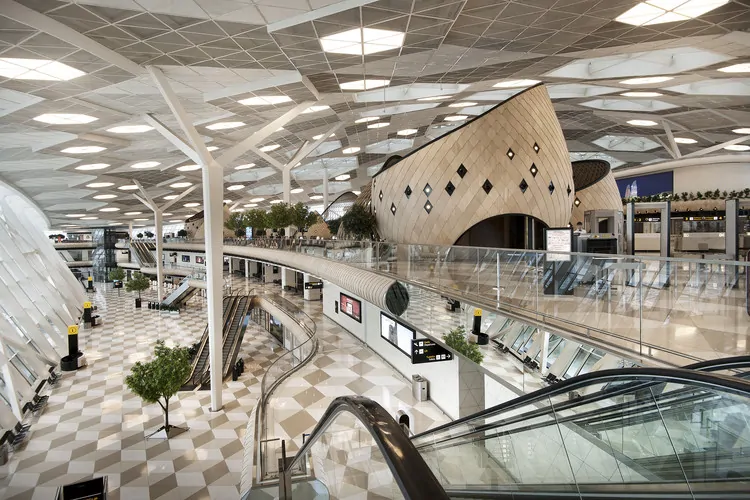
Terminal complex at Heydar Aliyev International Airport in Baku, Azerbaijan
GYD / UBBB, Baku
  • 7.54MPassengers in 2024, up 31 percent
  • 59,238Aircraft movements in 2024
  • 2 runways4,000 m and 3,200 m
  • 9 x 747Cargo apron capacity for widebody freighters
  • HubAzerbaijan Airlines and Silk Way West
Gateway Overview

Why apparel importers fly into Baku

Baku Airport opened in 1933 and grew into the principal international gateway of Azerbaijan. It was renamed after Heydar Aliyev in 2004, having earlier been known as Bina International Airport. Today it is the busiest airport in the South Caucasus and one of the busiest in the countries of the former Soviet Union. For an apparel buyer its importance is the cargo side: the airport hosts the Silk Way West Airlines freighter fleet and a cargo apron built for widebody aircraft, so a time sensitive garment order can reach Baku in days rather than weeks.

7,537,000Passengers in 2024, up 31 percent on 2023
65,000 sq mTerminal 1 area, sized for 6 million a year
4,000 mRunway 16/34, with a parallel 3,200 m runway
3 mElevation, at 40.4675 N and 50.0467 E
South Caucasus hub

The busiest gateway in the region

Baku is the busiest airport in the South Caucasus and a base for Azerbaijan Airlines and AZAL Avia Cargo. It holds Skytrax awards as the best regional airport in Central Asia and the CIS, and in 2023 it became the first airport in the world to move its systems fully to the cloud.

Middle Corridor node

A bridge between Europe and Central Asia

The airport sits at the eastern edge of the Middle Corridor, the trade route that links Europe, the South Caucasus, and Central Asia without crossing Russia. Freight that lands in Baku can continue by road or rail toward Georgia, Turkiye, the Caspian, and onward destinations.

Terminals

Two passenger terminals, one international core

Terminal 1, the newer building, carries most of the international traffic. Terminal 2 handles domestic services and low cost international flights, and sits about 200 metres from Terminal 1.

Terminal 1

Opened April 2014, the international terminal

Terminal 1 was commissioned in April 2014 with 65,000 square metres of floor space and a design capacity of 6 million passengers a year. The structure was engineered by Arup with a tricorn shape and a semi transparent roof, and the interior by the Turkish studio Autoban uses a series of oak veneer cocoons that echo the arches of the building.

Boarding bridges
12, two A380 capable
Gates
15
Check in desks
40
Baggage carousels
4

Terminal 2

In service since 1989, domestic and low cost

Terminal 2 was designed by Viktor Denisov and put into service in 1989, about 200 metres from Terminal 1. Its south entrance serves domestic flights and its north entrance serves international low cost carriers, which keeps the older building useful alongside the newer one.

Gates
4
Check in desks
48
Passport desks
10
Baggage carousels
4
Passenger terminals are not the whole story. Air cargo at Baku runs from its own terminal and freighter apron, separate from the passenger halls. The next section covers how a garment shipment is handled on the cargo side.
Air Cargo

The freighter deck at Baku

Air cargo at Baku is built around the Baku Cargo Terminal and a freighter apron sized for the largest widebody aircraft. The terminal opened in 2005 and joined IATA ground handling, and it hosts operators including Silk Way Airlines and international carriers. On the apron the airport reports it can serve up to nine Boeing 747 class aircraft at once, or a mix such as an Antonov An-124 or fifteen Ilyushin Il-76 freighters.

Based at Baku

Silk Way West Airlines

Founded in Baku in 2012 and based at Heydar Aliyev International Airport, Silk Way West is the largest cargo airline in the Caspian region. Its fleet of widebody Boeing 777F, 747-8F, and 747-400F freighters flies roughly 350 services a month to around 40 destinations across Europe, Asia, and the Americas, with an annual cargo turnover above 420,000 tonnes.

Freighter capability

Apron built for widebody aircraft

The apron is made for widebody freighters, including the Boeing 747 and the Antonov An-124, and can park several at once. That capacity is what lets Baku act as a regional transshipment point for garments, not only as a point to point destination for a single buyer.

Planned development

A separate cargo airport in the plan

A new air cargo airport is planned near the Port of Baku at Alat, with an initial capacity of 500,000 tonnes a year rising toward 1.5 million tonnes. It is a future development, so current freighter traffic continues to use the existing airport at Baku. Confirm the live schedule with the forwarder.

Fleet, destination, and capacity figures are planning references drawn from airline and airport publications, not a live schedule. Confirm uplift, cut off time, and transit for the actual order before the shipment is committed.

The Route

From the Philippines to Baku by air

Air freight suits urgent season launches, pre production samples, and time sensitive restocks. Garments leave Philippine international airports and arrive at Heydar Aliyev International Airport, usually by way of a Middle East or European hub.

  1. Philippine origin airports

    Cargo departs Ninoy Aquino International Airport in Manila, or Clark, Mactan Cebu, or Davao, depending on the factory location and the carrier.

  2. Hub connection

    A widebody freighter or a bellyhold service connects through a Middle East or European hub on the way to Baku, subject to carrier space and schedule.

  3. Arrival at GYD

    The shipment lands at Heydar Aliyev International Airport and is taken to the Baku Cargo Terminal for handling and documentation.

  4. Customs clearance

    The State Customs Committee of Azerbaijan clears the entry, with customs duty and value added tax settled before the goods are released.

  5. Onward delivery

    A road feeder carries the goods from Baku to the buyer's city, or into the wider region by road and rail.

Air transit is typically 2 to 4 days airport to airport, while custom production normally takes 3 to 6 weeks after sample, artwork, and payment approval, and that time is separate from the flight. For routing on a specific order, contact the air transport desk or the road feeder desk.

Where Baku connects

Baku is a transshipment point as much as a destination. The Silk Way West network reaches across Europe, Asia, and the Americas, and the airport also handles bellyhold cargo on passenger routes. Country coverage is a planning reference and changes with the schedule.

  • Turkiye
  • Georgia
  • United Kingdom
  • Germany
  • China
  • Uzbekistan
  • Kazakhstan
  • United Arab Emirates
  • Saudi Arabia
  • United States
  • Japan

Transit times, cut off times, and uplift are subject to carrier space, hub connection times, and customs. Confirm the booking details with the export desk before the order is committed.

Customs and Compliance

Azerbaijan customs, duty, and documents

Imports into Azerbaijan are controlled by the State Customs Committee. Clothing and textiles typically attract a customs duty of about 15 percent, and value added tax of 18 percent is charged on the CIF value plus the duty. Azerbaijan is not in the European Union, so EU preferences such as the REX statement on origin and the EU GSP do not apply to a Baku entry.

Authority
The State Customs Committee of the Republic of Azerbaijan is the releasing authority for an import entry.
Customs duty
About 15 percent on clothing and textiles, set by the tariff line for the specific garment.
Import VAT
18 percent, calculated on the CIF value plus the customs duty.
Classification
The TN VED code drives the rate, so an advance ruling is worth considering for a new product line.
Preferences
Azerbaijan is not in the EU, so the EU GSP and the REX statement on origin do not apply here.

Documents normally requested

  • Signed import contract with a contract number
  • Customs declaration
  • Air waybill
  • Sales invoice and packing list
  • Certificate of origin
  • Certificate of quality
  • Permissions from the relevant state body where a product type needs approval

These notes are planning prompts, not a binding tariff ruling. Confirm the exact product scope, TN VED line, and duty with a licensed customs broker before production labels and packaging are approved. Rules change, and the responsible importer holds the final classification.

Frequently Asked Questions

Flying apparel into Baku

What are the airport codes for Baku airport?

The IATA code is GYD and the ICAO code is UBBB. Heydar Aliyev International Airport serves Baku and is located about 20 km northeast of the city, in the Khazar district.

How long does air freight take from the Philippines to Baku?

The airport to airport flight time is typically 2 to 4 days, depending on the hub connection and carrier space. Custom production normally takes 3 to 6 weeks after sample, artwork, and payment approval, and that time is separate from the flight. Add customs clearance and inland delivery on arrival.

What duty and VAT apply to apparel imported into Azerbaijan?

Clothing and textiles typically attract a customs duty of about 15 percent, and value added tax of 18 percent is charged on the CIF value plus the duty. Azerbaijan is not in the European Union, so EU preferences do not apply. The exact rate depends on the TN VED classification, which the importer's customs broker confirms at the time of clearance.

Does Baku airport handle cargo freighters?

Yes. The Baku Cargo Terminal opened in 2005 and the freighter apron is built for widebody aircraft. The airport reports it can serve up to nine Boeing 747 class aircraft at once, or a mix such as an Antonov An-124 or fifteen Ilyushin Il-76 freighters.

Which airlines carry air cargo to Baku?

Silk Way West Airlines is the largest freighter operator based at Baku, flying widebody Boeing 777F, 747-8F, and 747-400F aircraft. Its sister company Silk Way Airlines, AZAL Avia Cargo, and international carriers also move freight through the airport.

Can cargo continue from Baku into Central Asia or Turkiye?

Yes. Baku sits on the Middle Corridor, so goods can continue by road and rail toward Georgia and Turkiye on the Baku Tbilisi Kars railway, or across the Caspian toward Central Asia. Which service is used depends on the destination and the carrier schedule, and the forwarder books the through movement.

Can PHShirt arrange labels and packaging for an air shipment to Azerbaijan?

Yes. OEM and ODM orders can include buyer approved size labels, care labels, brand labels, hangtags, folding, polybags, and carton marks, subject to the current labelling and packaging rules of Azerbaijan. Air freight is arranged with the forwarder for the agreed Incoterm.

Air Freight Operations Desk

Plan an air shipment to Baku

Send your garment type, quantity, sizes, decoration method, target delivery date, and destination city in Azerbaijan. The export desk will respond with routing options and a freight indication for air cargo into Heydar Aliyev International Airport.