Narita / RJAA

Narita International Airport and the Philippines: Travel, Investment and Manufacturing

Narita is the airport most travellers picture when they picture Tokyo, and it is one of the shortest departures from Japan into Southeast Asia. From the two runways in Chiba to the five carriers that fly to Manila, this page covers what the airport is, how the Philippines is reached from it, and what a Japanese traveller, investor or buyer finds at the other end.

Narita (NRT)Chiba Prefecture, 43 m above sea level
Manila (MNL)Ninoy Aquino International Airport
Davao (DVO)Then about one hour by road to Tagum City
1978Opened in May, on land at Narita in Chiba
39,807,651Passengers in calendar 2024
1,945,795 tInternational cargo in calendar 2024
340,000Annual slots now, rising to 500,000
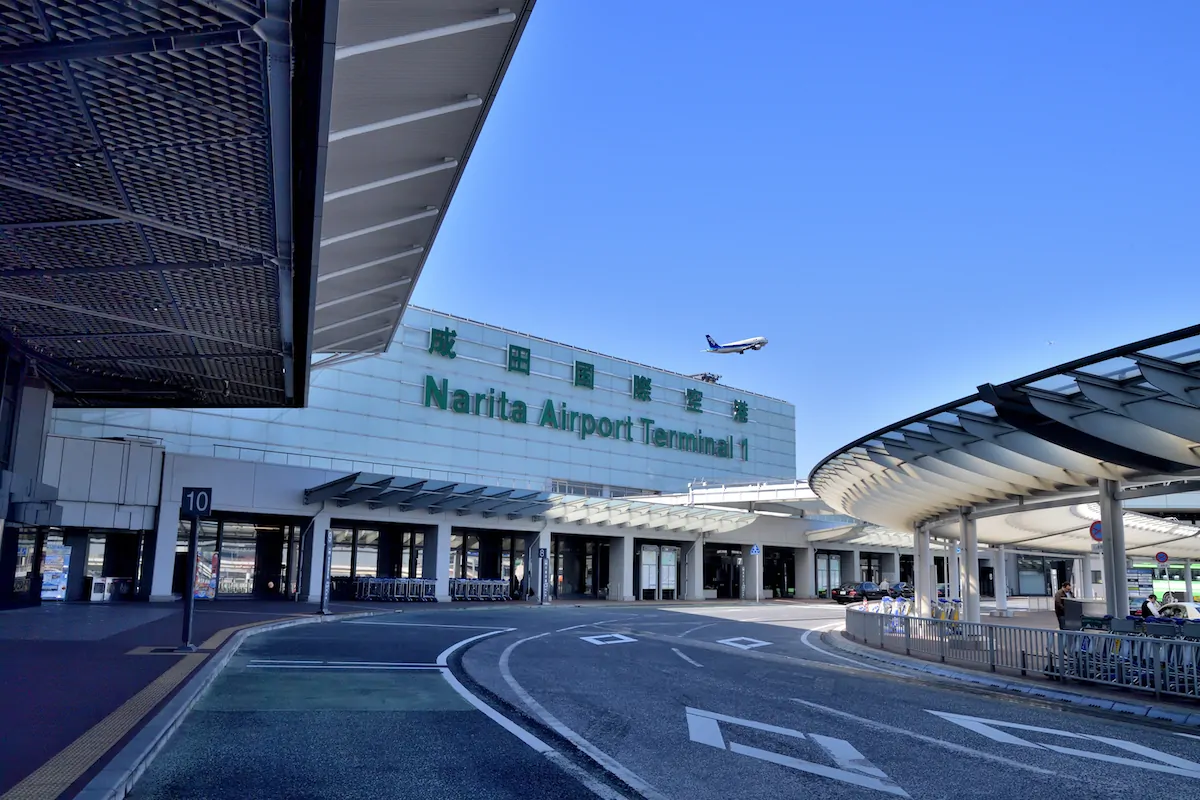
Terminal buildings and apron at Narita International Airport in Chiba Prefecture, Japan
Narita, Chiba Prefecture The airport sits on the Kanto plain about 60 kilometres east of Tokyo Station. Runway A runs 4,000 metres, Runway B is being lengthened to 3,500, and a third strip is planned to the south.

Two runways in service, a third one still waiting for land

Narita sits on the Kanto plain about 60 kilometres east of Tokyo Station, in the city of Narita and the towns of Shibayama and Tako. The site covers roughly 1,141 hectares today. A runway programme agreed in 2018 is intended to almost double that footprint and lift the annual movement cap from 340,000 to 500,000.

The plan has two halves. Runway B is being lengthened by 1,000 metres and should enter service in the fiscal year ending March 2030. Runway C, a new 3,500 metre strip parallel to the other two, has slipped from March 2029 to the end of December 2034 because roughly 5 percent of the land is still not settled.

Runway A, 16R/34L4,000 m, the main arrival strip
Runway B, 16L/34R2,500 m today, 3,500 m by fiscal 2029
Runway C, new build3,500 m, now expected December 2034
0 m2,000 m4,000 m
IATA and ICAO
NRT and RJAA. The airport serves the whole Kanto region, not only central Tokyo.
Operator
Narita International Airport Corporation, usually shortened to NAA, a company owned by the national government and the Prefecture of Chiba.
Movements in 2024
242,071 aircraft movements, of which 190,978 were international. International passenger flights alone came to 157,703.
Cargo in 2024
1,945,795 tonnes of international air freight, the largest air cargo gateway in Japan, handled through Tokyo Customs at the Narita air cargo branch.
Slot ceiling
340,000 movements a year under the current agreement, rising to 500,000 once Runway C and the Runway B extension are both in service.
Passenger ceiling
About 57 million a year today, planned to reach 75 million after the terminal and runway works are finished.

What the delay means for a booking: nothing changes on a 2026 or 2027 ticket. Runway A and Runway B already carry the current schedule, and the lengthening of Runway B is the first piece to open. Treat any published date for Runway C as a plan rather than a fact, and check the airport operator's own notices if a trip depends on it.

Three terminals, one station, and a plan to merge them

Narita does not work like Haneda. The international and domestic sides are not in one building, and the three terminals were added in three different decades. That matters most at a connection, because moving between terminals costs time that a tight itinerary does not have.

Terminal 1

The original building, north of the railway station, opened with the airport in 1978 and gained its south wing later.

  • Main user: ANA and most Star Alliance carriers
  • Rail: Narita Airport station sits directly below
  • Note: the north and south wings share one check in hall

Terminal 2

Opened in 1992 and now the main oneworld building. Japan Airlines, Philippine Airlines and Cebu Pacific all depart from here.

  • Main user: Japan Airlines and oneworld partners
  • Rail: the same station, a short walk from the arrivals hall
  • Note: the usual building for a Manila departure

Terminal 3

Built for low cost carriers in 2015. It has no railway station of its own, so every rail passenger walks or rides across to Terminal 2 first.

  • Main user: Jetstar Japan, AirAsia Philippines and other low cost operators
  • Rail: about 500 metres on foot to Terminal 2, then the station
  • Note: allow extra time with luggage or in rain

The consolidation plan

NAA has proposed a new terminal between Terminals 1 and 2, moving customs and passenger processing into one central building and adding roughly 30 contact stands. The floor area would grow from 970,000 square metres to about 1.1 million, a new railway station would sit under the southern building, and the first phase is targeted at the 2030s. Nothing about that plan changes a 2026 trip. It does explain why the transfer bus exists today.

Rail to Tokyo

Narita Express
To Tokyo Station in about 50 minutes, run by JR East.
Keisei Skyliner
To Keisei Ueno in about 41 minutes, the faster option for the north side of the city.
Access point
Terminal 1 and Terminal 2 share Narita Airport station. Terminal 3 has no stop.

Coach and taxi

Limousine bus
Direct services to major Tokyo hotels and stations, typically 85 to 120 minutes depending on traffic.
Taxi
About 60 to 90 minutes to central Tokyo, with a fixed fare band rather than a meter.
When to use it
Late arrivals, heavy luggage, or an address away from a rail station.

Narita town

Keisei line
Two stops from the airport to Keisei Narita, about 10 minutes.
On foot
Naritasan Shinshoji and the Omotesando approach road are a short walk from that station.
Worth it when
A layover of five hours or more, or an early departure the next morning.

Five carriers, one afternoon decision, and the shortest hop into the Philippines

Narita to Manila is not a long haul route with a connection in the middle. It is a single nonstop sector of 3,051 kilometres, about the same block time as Tokyo to Bangkok, and it lands at Ninoy Aquino International Airport one time zone behind Tokyo. Roughly 77 departures a week leave Narita for Manila across the five carriers below.

The practical choice is not which airline flies the route, because they all do. It is which terminal you leave from and whether the evening bank suits your onward plan. Terminal 2 departures are the easiest by rail. Terminal 3 departures add a walkway.

Carrier and terminal pattern on the Narita to Manila sector. Assignments change between seasons, so confirm at check in.
CarrierBuilding at NaritaPatternBlock time
ANATerminal 1Daily nonstop, with a late afternoon departure from the Star Alliance side of the airport.4 h 45 m
Japan AirlinesTerminal 2Daily nonstop alongside its oneworld partners, including the Philippine flag carrier.4 h 55 m
Philippine AirlinesTerminal 2Daily nonstop, with an early afternoon departure and a wide body on most days.4 h 55 m
Cebu PacificTerminal 2Daily nonstop on a narrow body, priced below the full service carriers.4 h 45 m
Jetstar JapanTerminal 3Evening nonstop on a low cost model, with baggage sold separately.5 h
The clock moves once

Manila is one hour behind Tokyo, so a 17:30 departure that takes four and three quarter hours lands a little after 21:15 local time. The return leg loses that hour again.

Bags clear at Manila

Ninoy Aquino is the entry point for the Philippines, so immigration, customs and the eTravel QR check all happen there, not at Narita. Budget 60 to 90 minutes after landing.

Onward to Mindanao

Manila to Davao is about 1 hour 50 minutes by air. Our production base in Tagum City is roughly an hour by road from Davao airport.

Thirty days without a visa, and an archipelago that fits a week or a month

A Japanese passport holder enters the Philippines visa free for an initial stay of 30 days under Executive Order 408. That is long enough for a beach week, a language course, or a first look at a manufacturing site, and it is why the country is one of the easier destinations to test from Tokyo.

What is checked at the border

  • A passport valid for at least six months beyond the intended stay. Japanese passports are normally ten year documents for adults.
  • A return or onward ticket to Japan or to the next country. A one way ticket alone can be refused at check in.
  • An eTravel registration completed within 72 hours before arrival at etravel.gov.ph. It is free and produces the QR code scanned at immigration.
  • Proof of where you are staying for the first nights, in the form of a booking confirmation.
  • No derogatory record with the Bureau of Immigration, the intelligence services or Interpol.

Staying longer than 30 days

Extensions are handled at a Bureau of Immigration office inside the country. The first waiver adds 29 days, and further extensions run monthly or every two months after that.

Long stay routes include a retirement visa under the Philippine Retirement Authority, a student visa for a language school, and the various work visas a registered employer can sponsor.

None of this is a substitute for the consulate's current advice. Entry rules change, and the airline applies them at the gate.

Five to seven days

City and one beach

Land in Manila, spend two nights around Intramuros and Makati, then fly to Caticlan for Boracay. The domestic hop is short and frequent.

Manila to Caticlan, about 1 h 20 m, then a short boat transfer

Ten to fourteen days

Three islands

Cebu first, then Bohol by fast ferry, then Siargao or Palawan on a domestic flight. This is the shape most first time visitors settle on.

Cebu to Bohol, about 2 h by ferry, or 30 m by air

Thirty days

Study or long stay

Cebu and Manila both run English language schools with dormitory packages, and Japanese students are a familiar part of that market. The 30 day entry covers a short course without a visa.

Cebu to Tagum City, about 1 h 30 m by air to Davao, then road

A layover worth leaving the airport for: Naritasan Shinshoji is a temple complex founded in 940, about 10 minutes by train from the airport plus a walk up the Omotesando. A five hour gap between flights is enough for the temple, the approach road and a meal, provided the immigration queue behaves.

A 20 percent corporate rate and full foreign equity in export manufacturing

The CREATE MORE Act, Republic Act 12066, rewrote the incentive package that a Japanese investor works with. The headline change is the corporate income tax rate, which came down from 25 percent to 20 percent for both domestic and foreign corporations. The rest of the package is a set of options rather than a single rate.

20%Corporate income tax for corporations, down from 25 percent, with a further deduction for businesses that meet the local content rules.
4 to 7 yearsIncome tax holiday for a registered project, measured from commercial operation. Export enterprises sit at the longer end.
5%Special corporate income tax on gross income, available to export enterprises in place of the standard rate after the holiday.
100%Foreign equity permitted in export manufacturing and most other activities outside the Foreign Investment Negative List.
US$200,000Minimum paid in capital for a foreign owned enterprise, or US$100,000 where the project uses advanced technology.
Zero VATZero rated value added tax on local purchases of goods and services by registered exporters, subject to the rules in force.
Board of Investments Philippine Economic Zone Authority Subic Bay Metropolitan Authority Clark Development Corporation Department of Trade and Industry

Where Japanese capital already fits

The sectors that absorb Japanese investment in the Philippines are not speculative. Electronics and semiconductor assembly, automotive parts and wiring harnesses, shipbuilding and repair, food processing, precision components, garments and workwear, and business process services all have established supply chains and trained labour pools. Cavite, Laguna, Batangas and the Clark and Subic zones carry most of the manufacturing footprint, while Cebu carries shipbuilding and Davao del Norte carries light manufacturing and agri processing.

What a Tokyo buyer sources from a Philippine floor

Apparel is the fastest way into Philippine manufacturing because the capital requirement is low, the sampling cycle is short, and the Japanese market accepts the quality systems that Philippine cut and sew shops already run. A Japanese buyer usually arrives with a tech pack, a colour standard and a delivery window, and leaves with a sample.

Typical apparel categories a Japanese buyer places in the Philippines.
CategoryWhat is specifiedVolume shape
Workwear and uniformsPoly cotton or stretch twill, reflective trim, rank markings, site by site carton packing.Repeat programmes with size curves and replenishment.
Corporate and promo apparelRing spun cotton, embroidery, screen print, woven labels, individual poly bags.Seasonal drops from about 50 pieces per design.
ActivewearPolyester elastane, flatlock seams, moisture management, sublimation or panel construction.Colourways and size runs rather than a single bulk line.
Bags and accessoriesPolyester or recycled canvas, webbing, zips, logo placement, retail hangtags.Quoted per order after a sample is approved.

The sequence is consistent across suppliers. Specification, fabric and trim confirmation, a sample, a correction round, then a production slot. Sampling usually takes about 7 to 10 days. Bulk production usually runs 3 to 5 weeks after sample approval, depending on fabric availability and decoration. Air freight to Narita takes 1 to 2 days. Sea freight to the five major Japanese ports takes 4 to 7 days.

Quality systems a Japanese buyer expects

Kenshin needle inspection

Every piece passes a needle detector before packing, with the result recorded per carton. This is standard for the Japanese market and is not optional.

JIS L 0001 care labelling

Japanese care symbols, fibre composition and the country of origin printed in Japanese, checked against the approved artwork.

Colour control

Lab dip approval against the buyer's standard, with a spectrophotometer reading held under a tolerance of about 2.0 Delta E.

Final inspection

An AQL 2.5 inspection on measurement, workmanship and packing before the carton is sealed, with photos sent for approval.

Documentation

Commercial invoice, packing list, certificate of origin for PJEPA, and the air waybill or bill of lading, all matched to the carton marks.

Twenty billion dollars of two way trade, and a duty line that rewards origin

Japan is the Philippines' second largest trading partner after China and its second largest export market after the United States. In 2024 the Philippines sold USD 10.33 billion of goods to Japan, 14.1 percent of total exports, and bought USD 10.11 billion, 7.9 percent of total imports. The relationship is old enough that the tariff treatment is not a novelty.

USD 10.33 bnPhilippine goods exported to Japan in 2024, 14.1 percent of the total
USD 10.11 bnJapanese goods imported by the Philippines in 2024, 7.9 percent of the total
1.95 m tInternational air cargo through Narita in 2024, the largest gateway in Japan

The duty stack on apparel into Japan

Indicative treatment for garments under HS Chapters 61 and 62. Confirm the tariff line with a customs broker.
RouteDutyCondition
Standard MFNAbout 10 to 12 percentNo origin preference claimed.
PJEPA0 percentPhilippine origin, valid certificate of origin, direct consignment.
RCEP0 percent on most linesRules of origin met and proof of origin issued.
Consumption tax10 percentAssessed on the CIF value plus duty, regardless of the trade agreement.

The Philippines Japan Economic Partnership Agreement has been in force since December 2008, which makes it the older and better documented route for apparel. RCEP sits alongside it rather than replacing it. Either way, the paperwork is the part that decides whether the zero rate is actually applied at the border.

How the cargo moves

Indicative transit times from Manila or Cebu. Schedules and cut offs vary by carrier.
ModeLaneTransit
SeaManila or Davao to Tokyo, Yokohama, Nagoya, Osaka, Kobe4 to 7 days
AirManila or Cebu to Narita, belly hold or freighter1 to 2 days
Air expressDoor to door through an integrator hub2 to 4 business days

Narita's cargo side runs on a 24 hour cycle, with bonded areas, a dedicated customs branch and separate cooler capacity for perishables. For apparel the practical point is that a Tokyo buyer can hold a small replenishment order on air and a seasonal programme on sea, using the same factory and the same specification.

What travellers and buyers ask about Narita

The answers below are the ones that come up most often, in the order they come up.

How many terminals does Narita have?

Three. Terminal 1 opened in 1978 and handles ANA and most Star Alliance carriers. Terminal 2 opened in 1992 and handles Japan Airlines, Philippine Airlines and Cebu Pacific. Terminal 3 opened in 2015 for low cost carriers and connects to Terminal 2 by a walkway of about 500 metres.

Is there a nonstop flight from Narita to Manila?

Yes. ANA, Japan Airlines, Philippine Airlines, Cebu Pacific and Jetstar Japan all fly the sector nonstop, with roughly 77 departures a week. The distance is 3,051 kilometres and the block time runs from about 4 hours 45 minutes to 5 hours.

Do Japanese passport holders need a visa for the Philippines?

No, for stays of up to 30 days under Executive Order 408. You need a passport valid for at least six months beyond the stay, a return or onward ticket, and an eTravel registration completed within 72 hours before arrival. Longer stays need an extension at the Bureau of Immigration.

How far is Narita from central Tokyo?

About 60 kilometres east of Tokyo Station. The Narita Express takes about 50 minutes to Tokyo Station, and the Keisei Skyliner takes about 41 minutes to Keisei Ueno. Road transfer runs 60 to 120 minutes depending on traffic and the destination.

When will the third runway open?

Runway C is now expected at the end of December 2034, after the original March 2029 date slipped because of land acquisition. The Runway B extension from 2,500 to 3,500 metres is the first piece and is targeted within the fiscal year ending March 2030.

Can a Japanese brand manufacture in the Philippines?

Yes, and apparel is the simplest entry. Most shops work from a tech pack and a colour standard, quote from around 50 pieces per design, and run a sample before bulk. Lead times are typically 7 to 10 days for sampling and 3 to 5 weeks for bulk after approval.

What duty applies to Philippine apparel entering Japan?

Qualifying goods enter at 0 percent under the Philippines Japan Economic Partnership Agreement, or under RCEP, provided the origin rules are met and the shipment carries valid origin documentation. Japan's 10 percent consumption tax applies on the CIF value plus any duty, regardless of the agreement.

What does CREATE MORE change for a foreign investor?

It cuts the corporate income tax to 20 percent, offers a 4 to 7 year income tax holiday, a 5 percent special rate on gross income for export enterprises, and up to 100 percent foreign equity outside the Foreign Investment Negative List. Minimum paid in capital is generally US$200,000, or US$100,000 with advanced technology.

Flying in from Narita, or sourcing from Tagum City?

Send your travel dates and routing, or your specification and quantity, and our team in Tagum City will reply. Business hours: Mon to Sat, 8:30 AM to 5:00 PM (PHT).

Airport location, runway, terminal, slot and redevelopment detail comes from Narita International Airport Corporation traffic statistics for calendar 2024, the operator's fiscal 2025 half year disclosure, and the Ministry of Land, Infrastructure, Transport and Tourism filings reported in October 2026. Traffic, cargo and movement figures are the NAA calendar 2024 actuals. Route distance, carriers and block times come from published airline schedules for the 2026 season and should be rechecked before booking. Philippine entry rules are from Executive Order 408 as amended, the Department of Foreign Affairs visa free list and the Bureau of Immigration Citizen's Charter 2025. Trade values are from the Philippine Statistics Authority International Merchandise Trade Statistics 2024. Tax and incentive detail is from the CREATE MORE Act, Republic Act 12066, and the Board of Investments. Tariff and origin detail is from the Philippines Japan Economic Partnership Agreement and RCEP guidance. Schedules, terminal assignments, construction dates and entry rules change, so confirm with the airline, the airport operator and the Philippine consulate before you commit money or travel.