Northern Mindanao (Region X), Lone Congressional District, Updated 2026

Iligan City: Guide to Majestic Waterfalls, 44 Barangays & Industrial Capital

Iligan City is the historic industrial powerhouse of Northern Mindanao and the revered City of Majestic Waterfalls. Blessed with 23 cascading falls, clean hydroelectric energy from the Agus River, 44 distinct barangays, and rich Higaonon heritage, Iligan connects mountain watersheds to the protected coastline of Iligan Bay. This comprehensive guide covers city landmarks, waterfalls, barangays, governance, transit connections, and cultural traditions.

363,115
Population (PSA Census)
23 Falls
Documented Waterfalls
813.37 km²
Total Land Area
44
Barangays (ZIP 9200)
June 16, 1950
Charter Day (R.A. 525)
Agus VI & VII
Hydroelectric Complex
Geographic Profile

Where River Rapids Meet Iligan Bay

Iligan City is a highly urbanized coastal city situated along the northeastern shore of Iligan Bay in Northern Mindanao (Region X). Geographically grouped with the province of Lanao del Norte while politically independent as a lone legislative district since 2009, Iligan spans 813.37 square kilometers (81,337 hectares). The city shares borders with Misamis Oriental to the north, Bukidnon and Lanao del Sur to the east, and the municipalities of Linamon and Baloi in Lanao del Norte to the south.

The name Iligan originates from the indigenous Higaonon word ilig, which signifies to go downstream, referring to the rapid descent of waters flowing from the high plateau of Lake Lanao toward the sea through the mighty Agus River. The terrain ascends from gentle coastal plains through limestone terraces to towering forested peaks, including Mount Agad-Agad at 1,600 feet (487 meters) above sea level in Barangay Pugaan.

With an estimated population of 363,115 across 44 barangays, Iligan is a tri-people cultural melting pot where Christian Cebuanos, Maranao Muslims, and indigenous Higaonons have lived and traded for centuries. Cebuano is the predominant language spoken by more than 90 percent of the populace, alongside Tagalog, Maranao, and English.

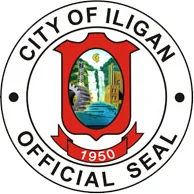
Official Seal of the City of Iligan depicting Maria Cristina Falls, Agus Hydroelectric Dam, industrial gears, and radiant sun
Official Seal of Iligan City: featuring the twin cataract waterfall, Agus Hydroelectric Dam, industrial gear, rising sun, and the year 1950 charter mark.
Ecological Treasures

The Great Waterfalls of Iligan

Iligan earned its official title as the City of Majestic Waterfalls because it cradles 23 verified waterfalls within its city borders. Fed by subterranean springs and the volume of the Agus River, these waterfalls provide clean drinking water, clean power, and eco-tourism recreation.

Headline Landmark

Maria Cristina Falls

Known as the Mother of Industry and Fountainhead of Progress, Maria Cristina Falls drops 320 feet (98 meters) over the Agus River. Its powerful twin cataracts are harnessed by the Agus VI Hydroelectric Plant, supplying renewable electric power to industries and homes across Mindanao.

  • Location: Borders of Maria Cristina, Ditucalan & Buru-un
  • Height: 320 feet (98 meters)
  • Viewing: Saturdays & Sundays at 11:00 AM (full flow)
Adventure Favorite

Tinago Falls

True to its name meaning hidden, Tinago Falls lies tucked in a deep ravine surrounded by thick jungle. Travellers descend approximately 500 winding steps to reach a majestic 420-foot canyon waterfall cascading into a deep, icy-cold, turquoise natural swimming lagoon with bamboo raft rides.

  • Location: Barangay Ditucalan / Linamon Boundary
  • Descent: ~500 concrete steps into the ravine
  • Activities: Bamboo rafting, swimming, cliff jumping
Tourism Triangle

Mimbalot Falls

Completing Iligan's official Tourism Triangle alongside Maria Cristina and Tinago, Mimbalot Falls features water cascading gracefully over curved natural rock formations. Located within the Iligan Paradise Resort complex, visitors enjoy zip-lining, cable cars, and forest swimming lagoons.

  • Location: Barangay Buru-un (11 km from City Proper)
  • Features: Rock terracing, natural splash basins
  • Amenities: Zipline, hanging bridges, cottages
Highland Giant

Limunsudan Falls

Standing an astounding 870 feet (265 meters) high, Limunsudan Falls is a breathtaking two-tiered waterfall, recognized as one of the tallest waterfalls in the Philippines. Located deep in the rainforest near the boundary of Bukidnon and Lanao del Sur, it offers an untamed wilderness experience.

  • Location: Barangay Rogongon (35 km from City Proper)
  • Height: 870 feet (two distinct tiers)
  • Access: Multi-hour highland trek or 4x4 expedition
Archangel Wings

Dodiongan Falls

Dodiongan Falls drops 65.6 feet (20 meters) down a sheer limestone cliff wall. The flow splits at the crest, resembling the outstretched wings of an archangel, cascading into a wide, tranquil emerald pool surrounded by limestone boulders and lush ferns.

  • Location: Barangay Bonbonon / Digkilaan (14 km away)
  • Drop: 20 meters vertical plunge
  • Trail: 20-minute river trek crossing shallow streams
Springs & Hinterlands

Timoga Cold Springs

Complementing the waterfalls are the Timoga Spring Resorts (Dela Mar, El Niño, Maranding, Timoga Spring), fed by crystal-clear, non-chlorinated subterranean water flowing continuously into tiled Olympic-size pools. Nearby hinterlands also host Hindang Falls, Pampan Falls, and Kalubihon Falls.

  • Location: Along National Highway, Barangay Buru-un
  • Water: 100% natural, free-flowing cold spring
  • Pairing: Fresh seafood cottages and local lechon

Eco-Tourism Reminder: When exploring waterfalls in Iligan, particularly Tinago and Dodiongan, wear high-traction footwear for wet rock paths. Hire certified local community guides at the barangay checkpoints to support the local riverine economy and ensure personal safety.

Administrative Geography

Complete Guide to the 44 Barangays

Iligan City is politically subdivided into 44 barangays. All barangays share the unified city postal code of 9200. Each barangay plays a specialized role, spanning commercial cores, industrial hubs, educational belts, and upland watershed zones.

Commercial & Civic Core

7 Barangays

The administrative and retail heartbeat of the city. Houses City Hall atop Buhanginan Hill, the city plaza, major shopping malls, banks, hospitals, and heritage institutions.

  • Pala-o (City Hall & GT Lluch Hospital)
  • Tubod (Robinsons Place & BPO District)
  • Poblacion (Downtown & Cathedral)
  • Saray (Commercial Port Area)
  • San Miguel (Trading Hub)
  • Mahayahay (Residential Commercial)
  • Villa Verde (Urban Residential)

University & Industrial Belt

10 Barangays

Hosts major manufacturing plants, PHIVIDEC heavy industrial estates, private sea terminals, and Mindanao State University-IIT educational campus.

  • Tibanga (MSU-IIT Campus)
  • Maria Cristina (Agus VI Hydro Plant)
  • Kiwalan (Port of Iligan)
  • Suarez (Heavy Manufacturing)
  • Tomas Cabili (Industrial Seaport)
  • Santa Filomena (Industrial Coast)
  • Dalipuga (Northern Coastal Hub)
  • Santo Rosario (SM City Iligan)
  • Tambacan (IBJT South Terminal)
  • Santiago (Coastal Residential)

Suburban & Tourism Corridors

15 Barangays

Lush residential suburbs, springs, and beach corridors connecting highway thoroughfares toward Misamis Oriental and Lanao del Norte.

  • Buru-un (Timoga Springs & Mimbalot)
  • Ditucalan (Tinago Falls Trailhead)
  • Hinaplanon (Residential North)
  • Upper Hinaplanon (Suburban)
  • Del Carmen (Suburban East)
  • Luinab (Residential Foothills)
  • Tipanoy (Golf Course & Valleys)
  • Acmac (Highway Junction)
  • Ubaldo Laya (Suburban Core)
  • Upper Tominobo (Southern Ridge)
  • San Roque (Residential Valley)
  • Santa Elena (Southern Suburb)
  • Abuno (Valley Community)
  • Bagong Silang (Suburban North)
  • Bunawan (Coastal Agricultural)

Watershed & Highland Hinterlands

12 Barangays

Vast forest reserves, mountainous agriculture, indigenous ancestral domains, and the deep river canyons housing Iligan's most remote waterfalls.

  • Rogongon (Limunsudan Falls 870 ft)
  • Hindang (Hindang Falls & Caves)
  • Digkilaan (Dodiongan Falls Basin)
  • Puga-an (Mount Agad-Agad Trail)
  • Bonbonon (Agricultural Highlands)
  • Mandulog (River Basin)
  • Dulag (Highland Ridge)
  • Kabacsanan (Upland Farm Community)
  • Kalilangan (Highland Frontier)
  • Lanipao (Upland Agricultural)
  • Mainit (Thermal Spring Valley)
  • Panoroganan (Mountain Ancestral Domain)
Civic Heritage

Four Centuries of History & Civic Leadership

From a Spanish mission founded in 1609 to an autonomous highly urbanized metropolis, Iligan's governance has championed regional self-sufficiency, clean power generation, and community resilience.

Historical Timeline

Founded as an Augustinian Recollect mission in 1609, followed by Jesuit administration in 1639. The Spanish fort was relocated to the current coastal site due to maritime raids. Iligan gained official cityhood on June 16, 1950 through Republic Act 525, was designated a Highly Urbanized City in 1983, and became an independent lone legislative district in October 2009 via Republic Act 9724.

Local Leadership

Executive leadership is directed by City Mayor Frederick W. Siao, working in collaboration with the Sangguniang Panlungsod and Vice Mayor Marianito "Dodong" D. Alemania. City hall administration prioritizes modern healthcare infrastructure, digitized public services, river flood management, and sustainable eco-tourism promotion.

Buhanginan Hill City Hall

The Iligan City Hall complex crowns Buhanginan Hill (130 feet above sea level) in Barangay Pala-o, commanding panoramic 360-degree views of Iligan Bay and Mount Agad-Agad. It is also the site of the Anahaw Open Amphitheater, recognized as one of the largest open-air amphitheaters in Mindanao, hosting cultural performances and city festivals.

Living Culture

Festivals, Heritage & Local Flavors

Iligan's cultural identity celebrates harmony among indigenous Lumad (Higaonon), Muslim Maranaos, and Christian settlers, preserved through sacred fiestas and culinary craftsmanship.

Diyandi Festival (Sept 29)

Celebrated every September 29 in honor of patron Saint Michael the Archangel (San Miguel), the festival derives from the Higaonon word diyandi, meaning to rejoice together. Highlights include the Kasadya Street Dancing Showdown and the legendary San Miguel Comedia, a centuries-old theatrical dance-drama depicting the archangel defeating Lucifer.

Cheding's Toasted Peanuts

Founded in 1955 along Sabayle Street in downtown Iligan, Cheding's Toasted Peanuts is the city's most iconic delicacy. Specially roasted without oil using an open cast-iron skillet technique, these skinless salted peanuts have earned national acclaim as a must-buy pasalubong gift for visitors from across the globe.

Crispy Lechon & Halal Flavors

Iligan lechon is celebrated for its shatteringly crisp skin and aromatic stuffing of wild lemongrass, scallions, and garlic. Alongside lechon dining along Timoga, the city offers authentic Mindanao specialties including pater (steamed rice topped with spicy shredded beef or chicken wrapped in roasted banana leaves) and fresh halal seafood from Iligan Bay.

Economic Foundation

Industrial Capital of the South & Research Anchor

Reliable, cost-effective hydroelectricity generated by Maria Cristina Falls catalyzed Iligan's transformation into Mindanao's heavy industrial epicenter and home to premier science and technological universities.

Iligan houses major steel fabricators, Holcim cement manufacturing facilities, coconut oil refineries, chemical plants, and flour processing mills clustered along coastal Barangays Kiwalan, Maria Cristina, Suarez, and Tomas Cabili. The Port of Iligan and seven private industrial piers allow direct deep-water docking for cargo freighters moving raw materials and industrial commodities across the Philippine archipelago and foreign markets.

In tandem with industrial muscle, Iligan is a university town. It is the home of the Mindanao State University-Iligan Institute of Technology (MSU-IIT) in Barangay Tibanga, internationally recognized for its engineering, computer science, mathematics, and natural science research. The presence of Saint Michael's College and Iligan Medical Center College sustains a steady supply of top-tier engineers, health professionals, and technical managers.

Key Economic Pillars

  • Renewable Hydro Power: National Power Corporation Agus VI and VII generating over 200 MW.
  • Heavy Manufacturing: Cement, steel rebar, chlor-alkali, and industrial chemicals.
  • Deep-Water Seaport: International standard cargo port and passenger ferries to Cebu.
  • Higher Education: Over 180 schools and universities spearheaded by MSU-IIT.
Getting There & Around

Travel Routes, Terminals & Live Navigation

Iligan is strategically connected by air, sea, and land to major metropolitan centers across Mindanao and the Visayas.

Air, Sea & Highway Routes

By Air: The primary gateway is Laguindingan International Airport (CGY) in Misamis Oriental, located approximately 67 kilometers northeast. Travel time is 1.5 to 2 hours along the paved Butuan-Cagayan de Oro-Iligan National Highway (Route 9) via direct passenger shuttle vans, Ceres buses, or rental cars.

By Sea: The Port of Iligan in Kiwalan maintains regular commercial passenger and vehicle ferry connections operated by 2GO Travel, Trans-Asia Shipping Lines, and Cokaliong Shipping Lines connecting directly to Cebu City and Manila.

By Land: The Integrated Bus and Jeepney Terminal (IBJT) in Tambacan handles southbound buses to Marawi City (30 to 45 minutes south), Pagadian, Ozamiz, and Cotabato. Northbound express buses connect to Cagayan de Oro every 15 to 30 minutes.

Verified Digital Maps & Coordinates

Access turn-by-turn navigation, elevation data, virtual tours, and tourist coordinates across verified mapping platforms:

Geographic Coordinates: Latitude 8° 13′ 43″ N, Longitude 124° 14′ 17″ E (8.2286° N, 124.2381° E). Elevation: 6.0 meters at coastal city hall to 487 meters at Mount Agad-Agad.
Visual Experience

Explore Iligan City on Video

Watch this video showcase of Iligan City featuring aerial perspectives, tumbling waterfalls, scenic mountain roads, and the energetic rhythm of daily life.

Video feature: Exploring Iligan City, The City of Majestic Waterfalls. Watch on YouTube

Common Questions

Frequently Asked Questions About Iligan City

Why is Iligan City called the City of Majestic Waterfalls?
Iligan City cradles 23 verified waterfalls within its territory, more than any other city in the Philippines. The most famous include Maria Cristina Falls (320 ft), Tinago Falls (420 ft ravine cascade), Mimbalot Falls, Dodiongan Falls (65 ft), and the two-tiered Limunsudan Falls (870 ft), fed by the runoff from Lake Lanao through the Agus River.
Is Iligan City part of the province of Lanao del Norte?
Geographically and statistically, Iligan City is grouped with Lanao del Norte in Northern Mindanao (Region X). Politically and administratively, however, it is a Highly Urbanized City (HUC) and was established as a lone legislative district by Republic Act 9724 in October 2009, operating independently from the provincial government.
How do I travel to Iligan City from Manila or Cebu?
Fly directly to Laguindingan International Airport (CGY) in Misamis Oriental via Philippine Airlines or Cebu Pacific. From the airport terminal, take a direct passenger shuttle van or bus to Iligan City (approximately 67 km, 1.5 to 2 hours travel time). Alternatively, take an overnight passenger ferry from Cebu City directly to the Port of Iligan in Kiwalan.
What is the unified ZIP code for Iligan City?
All 44 barangays of Iligan City use the primary postal code 9200, established by the Philippine Postal Corporation for standard residential, institutional, and commercial mail delivery.
When is the best time to visit Maria Cristina Falls?
Maria Cristina Falls is harnessed for hydroelectric generation by the National Power Corporation. The best times for public viewing of the full twin-cataract cascade are Saturdays and Sundays at 11:00 AM, when excess water is released through the spillways into the Agus River gorge.
What is the Diyandi Festival and when is it celebrated?
The Diyandi Festival is Iligan City's annual month-long cultural celebration in honor of patron Saint Michael the Archangel, climaxing on September 29. Derived from the Higaonon word meaning to rejoice, it features the Kasadya Street Dancing showdown and the traditional San Miguel Comedia theatrical folk drama.
What food and pasalubong is Iligan City famous for?
Iligan is renowned across the country for Cheding's Toasted Peanuts (crispy oil-free skillet-toasted peanuts founded in 1955 on Sabayle Street), fragrant crispy Iligan lechon seasoned with lemongrass, fresh Timoga seafood, and traditional Mindanao dishes such as beef or chicken pater wrapped in banana leaves.
Can visitors swim at Tinago Falls and Timoga Springs?
Yes. Tinago Falls allows swimming and bamboo raft riding under the cascading water with required life vests and guide assistance. For leisure pool swimming, the Timoga Spring Resorts in Barangay Buru-un offer clean, continuously flowing subterranean cold springs in tiled swimming pools.

Custom Group Shirts, Jerseys & Uniforms for Iligan Trips

Planning a company retreat, university convention at MSU-IIT, athletic tournament, or waterfall expedition to Iligan City? PHShirt and RB Advertising produce professional full sublimation shirts, quick-dry adventure jerseys, corporate jackets, and event uniforms tailored to your team.

  • Breathable dri-fit fabrics ideal for humid waterfall hikes and sports
  • Vibrant full-coverage dye sublimation printing that never fades or peels
  • Direct shipping throughout Iligan, Northern Mindanao, and nationwide
Fast Production
Bulk Orders & Kits

Custom designs with personalized names, numbers, and official emblems.

Get a Custom Quote

Contact RB Advertising & PHShirt

Reach out directly to discuss fabric options, sizing charts, design mockups, and bulk turnaround times through our canonical contact channels: