
Barangay Peacekeeping Action Team (BPAT) in Tagum City
The Barangay Peacekeeping Action Team serves as the frontline community force multiplier for the Philippine National Police across all 23 barangays of Tagum City. Operating under the PNP Barangay Peacekeeping Operations doctrine, BPAT members lead grassroots crime prevention, disaster response, and local conflict mediation.
The Barangay Peacekeeping Operations (BPO) Doctrine
Launched nationwide by the Philippine National Police and Department of the Interior and Local Government in 2009, the Barangay Peacekeeping Operations framework establishes structured community policing at the village level. It bridges the gap between law enforcement personnel and civilian communities.
Doctrine of Reciprocal Responsibility
Public safety is a mutual civic covenant between police officers and community members. BPAT operationalizes this doctrine by placing trained citizen volunteers alongside beat patrol officers.
Force Multiplier Effect
With more than 500,000 active volunteers across over 38,000 barangays nationwide, BPATs substantially multiply law enforcement presence. They ensure continuous patrol coverage in residential puroks, public markets, and school zones.
Eyes and Ears of Authorities
BPAT members provide localized intelligence collection regarding illicit drug distribution, suspicious individuals, and neighborhood disturbances. Their rapid reporting enables prompt police response before crimes escalate.
Executive Leadership and Supervision
Under Department of the Interior and Local Government circulars, the Punong Barangay serves as the chairperson of the Barangay Peace and Order Committee. Operational guidance, tactical patrol directives, and skills training are supervised directly by the Chief of Police of Tagum City Police Station.
Five Core Operational Components of BPAT
Academic field evaluations and police executive doctrine divide BPAT peacekeeping duties into five specialized operational sectors. Each component addresses specific public safety needs within the barangay.
1. Law Enforcement
Supporting mobile patrols, visible checkpoints, night foot beats, and traffic assistance. BPATs aid police officers in deterring burglaries, curbing street violence, and maintaining orderly public transport terminals.
2. Community Organization
Mobilizing purok associations, youth clubs, transport cooperatives, and neighborhood watch groups. Volunteers coordinate regular crime prevention seminars and community assemblies to educate residents.
3. Disaster Management
Serving as initial responders during floods, earthquakes, fires, and tropical depressions. BPAT personnel assist in emergency evacuations, basic first aid, clearing debris, and relief good distribution.
4. Environmental Protection
Enforcing ecological waste management regulations, curbing illegal tree cutting, and safeguarding waterways. Teams collaborate with local environmental officers to maintain sanitation in community corridors.
5. Conflict Resolution
Facilitating immediate dispute de escalation and supporting the Katarungang Pambarangay conciliation process. Volunteers assist Lupon Tagapamayapa mediators in amicable settlements.
Three Phases of BPAT Operationalization
Establishing an effective village peacekeeping detachment requires following the standard three phase deployment protocol prescribed by PNP community relations manuals.
Phase 1: Awareness and Consultation
Conducting public hearings, purok meetings, and diagnostic surveys to identify primary crime hotspots, drug concerns, and localized safety vulnerabilities.
Phase 2: Organization and Training
Recruiting volunteer members across diverse community sectors and conducting formal skills training. Modules cover basic human rights, arrest protocols, disaster drills, and traffic management.
Phase 3: Mobilization and Deployment
Assigning trained teams to routine night patrols, joint police checkpoints, school assistance desks, and emergency command posts during civic festivals and elections.
Composition and Structure of Barangay Peacekeeping Teams
An official Executive Order issued by the Punong Barangay formally establishes the roster of BPAT officers. Representation spans multiple civil society sectors to ensure community wide representation.
| Organizational Role | Sector Representation | Key Duties and Operational Scope |
|---|---|---|
| Executive Chairperson | Punong Barangay (Barangay Captain) | Overall administrative management, logistical allocation, and coordination with the Tagum City Mayor and City Peace and Order Council. |
| Police Supervisor and Mentor | PNP Police Community Relations Officer | Supervises tactical procedures, conducts continuous skills development, and coordinates joint patrols with Tagum City Police Station. |
| Field Operations Chief | Chief Barangay Tanod | Directs daily and nightly duty rosters, manages patrol sector assignments, and coordinates with purok safety coordinators. |
| Security and Patrol Operatives | Barangay Tanods and Community Volunteers | Conduct foot patrols, man community outposts, report illegal acts, and support disaster relief teams. |
| Specialized Sector Liaisons | Women, Youth, Transport, and Faith Leaders | Lead public safety education, monitor child welfare issues, assist women crisis desks, and manage local traffic corridors. |
Legal Boundaries and Weapon Prohibitions
BPAT members are civilian volunteers and auxiliary peacekeepers. They are strictly prohibited from carrying firearms during official duties unless independently licensed and authorized under existing national laws. Their equipment centers on non lethal gear such as batons, flashlights, first aid pouches, and handheld two way radios.
BPAT Units Across the 23 Barangays of Tagum City
Tagum City maintains active BPAT detachments in all 23 urban, suburban, and agricultural barangays. These dedicated teams safeguard commercial centers, rural agrarian communities, and key transportation arteries.
Urban Commercial Barangays
Magugpo Poblacion, Magugpo East, Magugpo West, Magugpo North, and Magugpo South. Teams manage night market peace and order, retail traffic safety, and business district foot patrols.
Suburban and Residential Hubs
Mankilam, Visayan Village, Apokon, San Miguel, and Canocotan. BPATs safeguard sprawling subdivisions, public schools, and government center perimeters along the national highway.
Agricultural and Riverine Barangays
Bincungan, Busaon, Liboganon, Pandapan, San Agustin, and Madaum. Volunteers coordinate flood warning alerts, riverbank monitoring, and rural purok peacekeeping.
Connecting Maritime Gateways in Davao del Norte
Barangay Madaum in Tagum City hosts the strategic Hijo Special Economic Zone (HSEZ), while neighboring Panabo City features Davao International Container Terminal (DICT). BPAT personnel in adjacent coastal corridors assist port perimeter safety and logistics route security.
Custom BPAT Uniform and Identification Tailoring
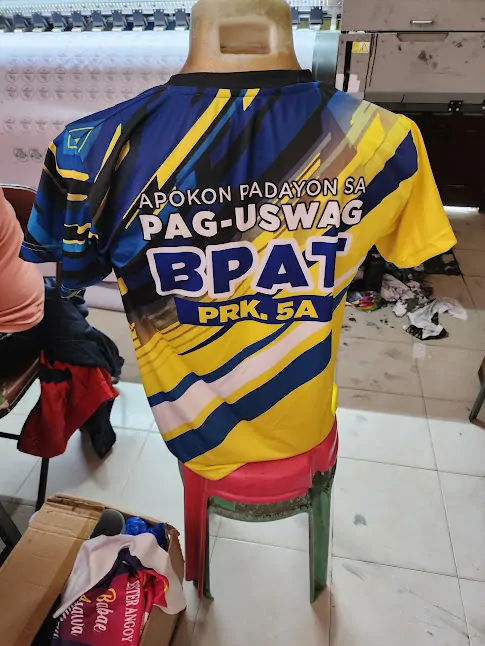
A standardized uniform fosters community respect, establishes official authority, and ensures clear visibility during night patrols. RB Prints and Advertising in Tagum City manufactures regulation BPAT apparel for local government units across Davao del Norte.
Sublimated Dry Fit Uniform Polos
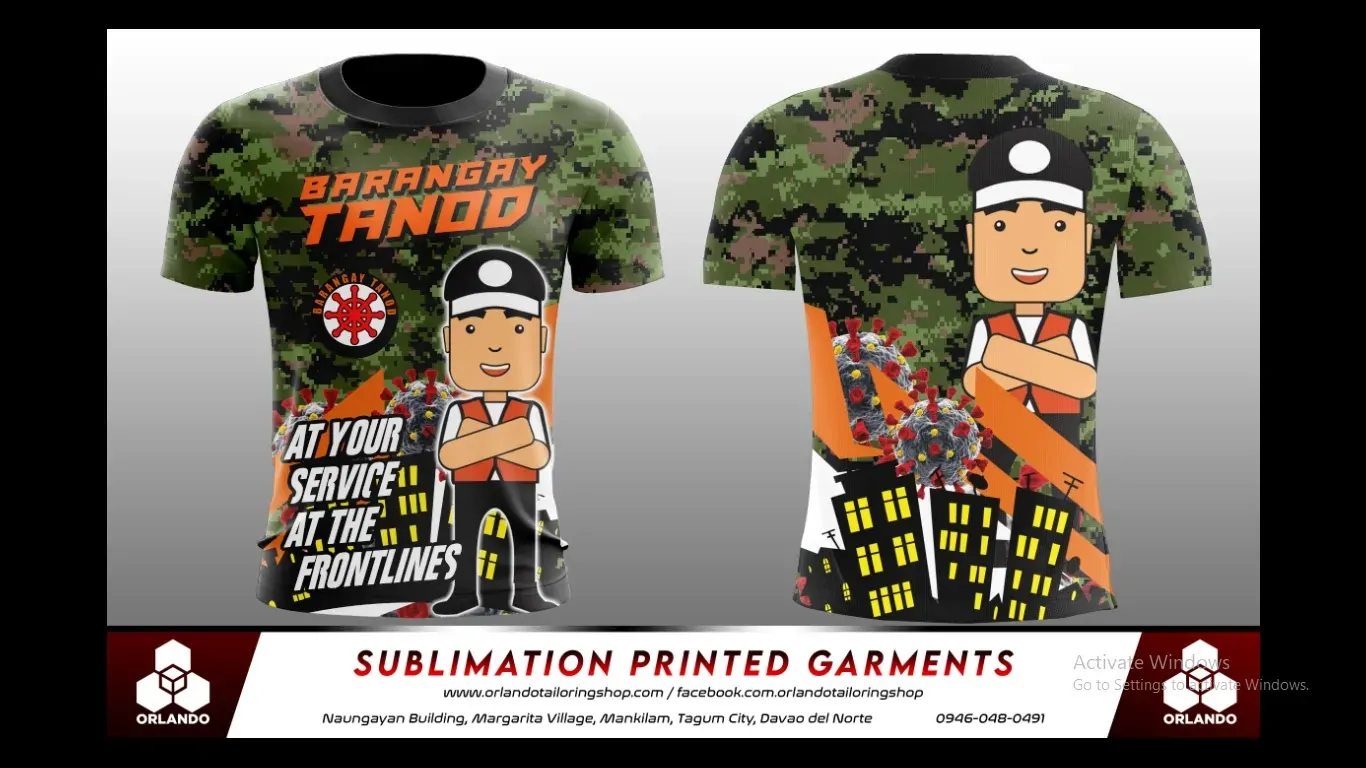
Engineered with breathable moisture wicking fabrics suited for tropical night patrols. Crisp sublimation printing guarantees non peeling barangay seals, BPAT logos, and reflective yellow lettering.
Computerized Embroidered Patches
We tailor official chest shields, sleeve emblems, and nametags utilizing high density computerized embroidery services. Metallic threads and sturdy twill bases provide long lasting durability.
Reflective Safety Patrol Vests
Equipped with high visibility retroreflective tape for night foot beats, road accident management, and checkpoint operations. Includes radio holsters, flashlight loops, and customizable rank velcro.
Departmental and Barangay Bulk Orders
Learn more about our comprehensive embroidery tailoring services and municipal safety equipment. We accommodate individual replacement orders as well as full barangay council procurement contracts.
BPAT Uniform and Insignia Showcase
Inspect our regulation apparel produced for peacekeeping action teams, village watchmen, and municipal security volunteers in Tagum City.
Tailoring Specifications for BPAT Apparel
Our production team follows standardized LGU design guidelines, ensuring precise pantone matching for barangay seals and official department logos.
- High durability honeycomb polyester or poly cotton blend fabrics
- Reinforced double stitching across shoulders, collar bands, and side seams
- Precision embroidered barangay logos and official city emblems
- Available in short sleeve patrol polos and tactical field long sleeves
- Custom sizing from Extra Small to 5XL for men and women operatives
Orders can be placed directly at our Mankilam or Sobrecary production shops in Tagum City.

Frequently Asked Questions: BPAT in Tagum City
Answers to common questions regarding volunteer eligibility, operational scope, training certifications, and uniform procurement.
What is the main purpose of the Barangay Peacekeeping Action Team?
Who can join BPAT in Tagum City?
Are BPAT members allowed to carry firearms during duty?
What role do BPATs play during natural disasters?
Where can barangays in Davao del Norte order official BPAT uniforms?
Order Official BPAT Uniforms in Tagum City
Equip your barangay peacekeeping detachment with durable, regulation tailored patrol shirts, vests, and embroidered badges. Connect with our Tagum City team for quotes and bulk production scheduling.