
Visit the Philippines
Thirty days without a visa on a US passport, one road transfer to the nearest nonstop, and four international gateways inside the archipelago.
Plan the tripWhen you visit our website, it may store or retrieve information on your browser, mostly in the form of cookies. This information might be about you, your preferences or your device and is mostly used to make the site work as you expect it to. You can choose not to allow some types of cookies. Read our Privacy Policy
These cookies are necessary for the website to function and cannot be switched off in our systems.
These cookies allow us to collect information about website traffic and technical performance.
These cookies enable enhanced functionality and personalisation.
These cookies may be set through our site by our advertising partners to build a profile of your interests.
SJC and the Philippines
Silicon Valley loads more long haul passengers than its own runway count suggests, yet not one scheduled flight leaves San Jose for Manila. That single gap decides how a Bay Area traveller builds an itinerary, how a California fund structures a Philippine investment, and how a buyer moves semiconductors, electronics or apparel back into the United States. Three tracks, one origin.
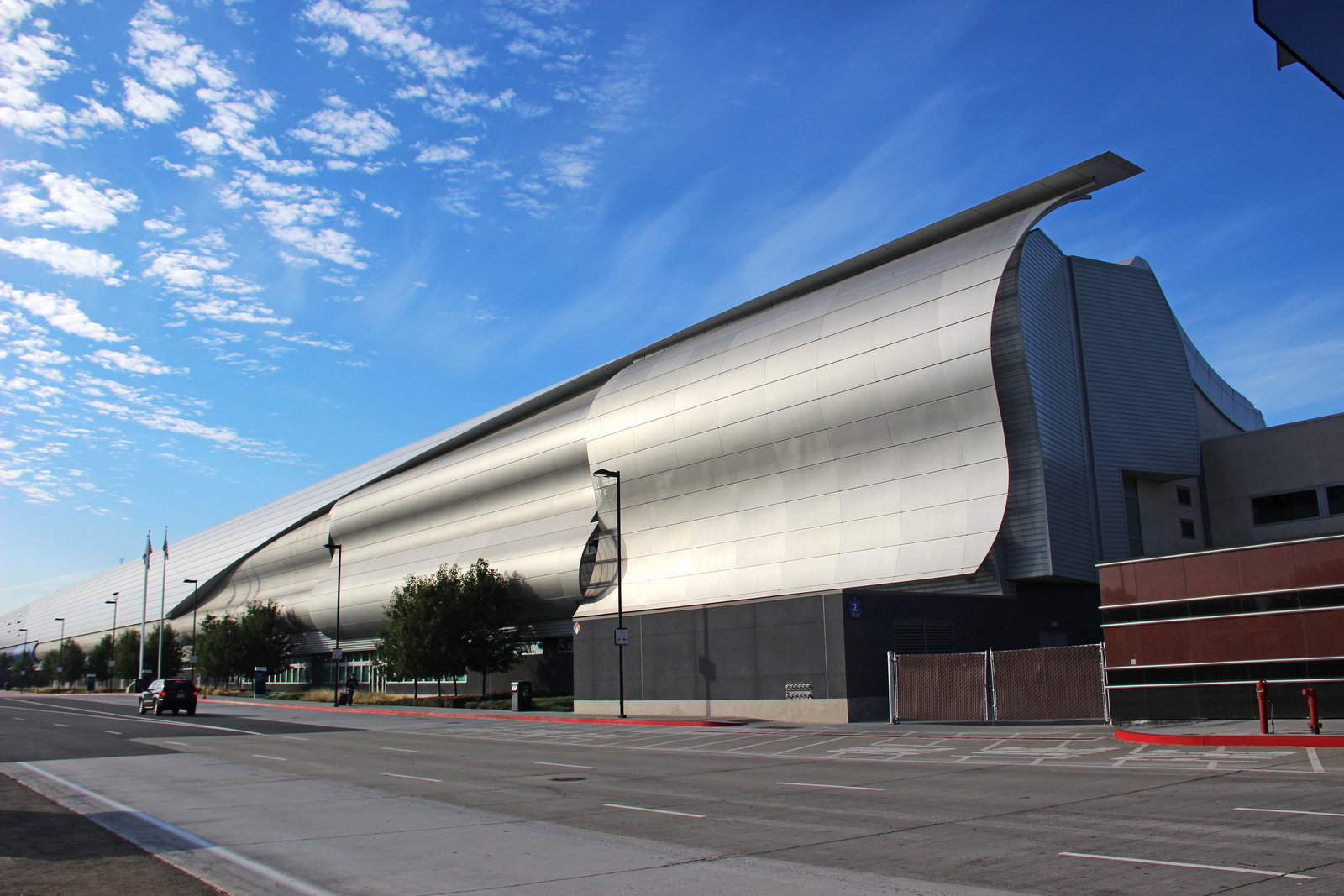
The same Terminal A security line serves a family booking two weeks of islands, a partner reviewing an incentive package, and a sourcing manager approving a first sample. What changes is the paperwork, the lead time, and who answers the first call.
Thirty days without a visa on a US passport, one road transfer to the nearest nonstop, and four international gateways inside the archipelago.
Plan the tripThe CREATE MORE rate, the foreign equity thresholds, and the agencies that grant incentives a Silicon Valley holding company can actually use.
Read the termsSemiconductor assembly, electronics, wire harnesses, apparel and shared services, with an honest duty line into the United States and the freight lanes that carry it.
See the sectorsSJC runs two international airline groups today: ZIPAIR to Tokyo Narita, seasonal and winter only, and Volaris to three cities in Mexico. Everything else is domestic. A Philippine trip therefore starts either with a road transfer to San Francisco or with a one stop routing through a hub that already serves Manila.
Terminals A and B. No scheduled service to Manila.
United and Philippine Airlines fly nonstop to Manila, about 17 departures a week.
Ninoy Aquino International, with domestic connections to Cebu, Davao, Palawan and Siargao.
The drive is the honest part of this page. Allow an hour and a half in commute traffic, and book the SFO departure with enough margin that a stalled bridge does not cost the ticket. A traveller who would rather not drive can take the one stop routing instead.
San Francisco is the shortest total journey and the only Bay Area airport with a nonstop to Manila. Los Angeles adds a domestic hop and then a long nonstop, which suits a traveller already flying south. Honolulu breaks the Pacific into two comfortable legs. Tokyo suits a traveller who wants to stop over in Japan, and it is the only international nonstop that leaves SJC itself.
Domestic connections are the real planning decision. Manila, Cebu and Clark each take international arrivals, and Davao, Puerto Princesa, Caticlan and Siargao all sit one domestic hop from those gateways. Book the domestic leg inside the same ticket where possible, because a missed connection on a separate ticket is the traveller's problem, not the airline's.
Travel season runs from December to May, when the northeast monsoon brings dry air across most of the country. June to November is the wet season, with the highest typhoon risk between August and October. Holy Week and the Christmas period are the two domestic travel peaks, and internal flights sell out early.
| Destination | What it is | From the international gateway |
|---|---|---|
| El Nido and Coron | Limestone karst, lagoons and wreck diving in northern Palawan, the image most travellers carry of the country. | Fly Manila to Puerto Princesa or El Nido, then a van or boat transfer. |
| Cebu and Bohol | Diving, Spanish era churches, and the Chocolate Hills, with the densest domestic flight network outside Manila. | Direct international arrival at Mactan Cebu, then a fast ferry to Bohol. |
| Siargao | Surf, lagoons and island hopping on the Pacific side of Mindanao. | Fly Manila or Cebu to Sayak Airport, then twenty minutes by road. |
| Banaue and Ifugao | Two thousand year old rice terraces carved into the Cordillera, walked rather than viewed. | Night bus or a short flight to Bagabag, then road transfer. |
| Davao and Mount Apo | Volcanic hiking, durian, and the busiest city in Mindanao, with direct links to the southern islands. | Fly Manila or Cebu to Davao, one hour fifty minutes from Manila. |
Silicon Valley writes cheques for hardware, logistics, climate and applied AI, and it prices risk against a five to seven year horizon. The Philippine incentive code rewards exactly that patience, because a registered exporter receives a low tax line for a defined period and full foreign ownership without a local partner.
The Corporate Recovery and Tax Incentives for Enterprises Act, and its 2024 amendment known as CREATE MORE, reset the fiscal bargain for registered enterprises. The headline for an investor is a corporate income tax rate of twenty percent for a registered business enterprise, against the standard twenty five percent domestic rate, plus an income tax holiday of four to seven years depending on the location tier and the industry priority list.
Ownership is the second question a partnership will ask. Export manufacturing sits outside the Foreign Investment Negative List and can run at full foreign equity, which is why most foreign industrial investors structure the Philippine entity as an exporter first and a local seller second. A domestic market enterprise needs two hundred thousand United States dollars in paid in capital, reduced to one hundred thousand where the project deploys advanced technology or employs at least fifty people directly.
| Term | Position | What it means in practice |
|---|---|---|
| Corporate income tax | 20 percent | Registered business enterprises under CREATE MORE, against 25 percent for an unregistered domestic company. |
| Income tax holiday | 4 to 7 years | Length follows the location tier and the industry priority list, counted from commercial operations. |
| Foreign equity, export activity | 100 percent | No local partner required where the enterprise exports, subject to the negative list and the sector. |
| Minimum paid in capital | USD 200,000 | For a domestic market enterprise, reduced to USD 100,000 with advanced technology or fifty direct employees. |
| Registration route | PEZA, BOI, SBMA, CDC | Each promotion agency runs a one stop shop for registration, visas and import permits. |
| VAT on local purchases | Zero rated | Registered exporters can buy locally produced goods and services at zero VAT, and import capital equipment duty free. |
| Repatriation | Central bank registered | Investments recorded with the Bangko Sentral ng Pilipinas can be repatriated, with dividends remitted in foreign currency. |
| Investor residence | SIRV and SVEG | The Special Investor Resident Visa requires a USD 75,000 investment, and the Special Visa for Employment Generation requires ten direct Filipino employees. |
The Philippines is not the cheapest factory floor in Asia. It is the most natural second source for a California company that already designs silicon, because assembly and test capacity, engineering labour and English language operations sit in the same time zone band as the product team. Electronics is not a side story here. It is most of the export book.
USD 49.64 billion of electronics exports against USD 84.48 billion in total merchandise exports. The United States was the single largest destination at 14.75 percent, ahead of Hong Kong, China, Japan and Singapore.
| Sector | Production base | Lane into the United States |
|---|---|---|
| Semiconductor assembly and test | Laguna, Cavite, Batangas, Cebu and Clark, where roughly three quarters of the electronics industry works in semiconductor manufacturing services. | Air freight to San Francisco, Oakland or Los Angeles, with sea freight for volume programmes. |
| Electronics manufacturing services | Metro Manila, CALABARZON, Northern and Central Luzon, and Cebu, covering circuit board assembly through to full product build. | Air freight for launch quantities, then ocean to Oakland or Long Beach. |
| Wire harnesses and automotive electronics | Sub assembly and precision parts in Laguna, Cavite and Cebu, feeding both original equipment makers and the replacement market. | Containerised sea freight, with air for urgent line stops. |
| Apparel and workwear | Cut and sew lines in Metro Manila, Cavite, Cebu and the Davao Region, with private label programmes starting at fifty pieces per design. | Air freight for samples and small runs, sea freight to Oakland for stock programmes. |
| Furniture and interior products | Cebu and Pampanga workshops working rattan, solid wood, stone and metal, long established with export buyers. | Sea freight, since volume and weight rule out air. |
| Shared services and software | Metro Manila, Cebu, Davao and Clark, with finance, compliance, engineering support and software teams working in English. | No freight. The service is delivered over the network. |
There is no free trade agreement between the United States and the Philippines, and the generalised system of preferences that once covered some Philippine lines expired in 2020. Goods therefore enter at the most favoured nation rate, and the rate depends on the tariff line rather than on the origin.
The split matters commercially. Many semiconductor and information technology products enter the United States duty free under commitments made in the Information Technology Agreement, while finished apparel lines carry rates that climb into double digits and vary by construction and fibre. A licensed customs broker should confirm the exact eight digit line before a first order is priced.
Tariff policy toward Asian origins has moved repeatedly since 2025, so treat any rate quoted in a pitch deck as stale. What the Philippine case actually offers is capacity, lead time and small batch flexibility, and it competes with other Asian sources on those three rather than on landed cost alone.
Ask for the factory's registration with the promotion agency, the social compliance audit, and a sample from the actual production line rather than from a showroom set. Confirm the care label standard, the fibre composition declaration, and whether the origin marking is printed or woven.
Then agree the incoterm. FOB Manila, Cebu or Davao keeps control of freight with the buyer and is the cleaner starting point. CIF Oakland is easier to budget and harder to control.
For a Bay Area buyer the practical advantage is the calendar. A sample approved on a Monday in California reaches a Philippine line by Wednesday, and a small run can ship before the next design review.
San Francisco is the Bay Area's international air cargo gateway, with Oakland handling most of the ocean volume on the eastern shore. From either point, a container or a pallet reaches San Jose the same day by road.
| Mode | Route | Transit |
|---|---|---|
| Air cargo | Manila, Clark, Cebu or Davao to San Francisco or Oakland, usually on a belly hold or a freighter connection. | 2 to 4 days airport to airport |
| Express courier | Door to door through the integrator networks, with customs handled by the carrier. | 3 to 6 business days |
| Ocean, Oakland | Manila or Cebu to Oakland, then road to San Jose, about one hour. | 16 to 24 days port to port |
| Ocean, Los Angeles and Long Beach | Manila or Cebu to the southern California ports, then rail or road north. | 15 to 22 days port to port, plus 1 to 2 days north |
Production takes three to six weeks after sample approval, so a first order planned around a retail or launch window needs the calendar built backwards from the delivery date rather than forwards from the purchase order.
Four things decide whether a first trip runs smoothly: the clock, the ground transfer, the paperwork, and the money. None of them is difficult, and all of them are easier when planned before the ticket is bought.
Manila runs on Philippine Standard Time, which is fifteen hours ahead of Pacific Daylight Time and sixteen hours ahead of Pacific Standard Time. A nine in the morning meeting in Makati is five in the afternoon the previous day in San Jose, so a call window that suits both sides sits between five and eight in the evening California time.
The airport sits about three kilometres north of downtown San Jose, off Airport Boulevard and the Guadalupe Parkway. BART does not reach the airport. Caltrain stops at Diridon station, roughly four kilometres south, and rideshare from the terminal to downtown takes about ten minutes outside commute hours.
Philippine consular matters for Northern California are handled through the Consulate General in San Francisco. Carry the arrival registration confirmation, keep a copy of the return ticket, and check the passport expiry against the six month rule before booking.
The peso is the only currency accepted locally, and the header currency switcher on this site converts published prices for reference only. Cards work in malls, hotels and chain restaurants across the cities. Keep cash for markets, tricycles, ferries and small island operators, and withdraw from a bank branch machine rather than a standalone kiosk.
The questions that come up first, answered without the tourism brochure language.
Ask about a first sample run, an incentive review, or a freight plan into the Bay Area. The same desk handles all three.