
Aerospace Industry in the Philippines: Travel, Investment and Manufacturing
The Philippines builds flight control actuation for the Boeing 787 and the Airbus A350, seats and galleys for the A320 family, and interior structures for long haul cabins. Sixteen aerospace projects registered with the Philippine Economic Zone Authority shipped more than US$1 billion in 2024 and employed over 11,500 people. The same islands that make the parts bring people in: 6.48 million arrivals in 2025, and nineteen new international routes. This page covers the industry, the gateways, the incentives and the entry rules.
- Aerospace exports, first nine months of 2025
- US$603.1 million Against US$590.2 million for the whole of 2024
- PEZA aerospace and aviation projects
- 16 projects Over P26 billion invested, 11,500 workers
- Maintenance demand, next five years
- About US$7 billion Growing 6.4 percent a year
- Visitor arrivals, 2025
- 6.48 million P694 billion in visitor spending
An industry measured in parts, not press releases
Philippine aerospace is small against semiconductors and electronics, and that is the point. It is a concentrated supply chain built for export, with civil aviation approvals, a trained shop floor and a government roadmap behind it. These are the figures that describe the sector as it stands in late 2026.
- Exports, January to September 2025
- US$603.1 million, against US$590.2 million for the whole of 2024. The main markets are the United States, Singapore, France and China.
- Ecozone footprint
- 16 projects registered with PEZA, more than P26 billion in investments, over US$1 billion of exports in 2024 and more than 11,500 skilled workers.
- Maintenance organisations
- 108 approved local organisations and 136 approved foreign organisations, as reported by the Civil Aviation Authority of the Philippines in 2025.
- Maintenance and overhaul demand
- About US$7 billion over the next five years at 6.4 percent annual growth, with Airbus types accounting for more than 80 percent of the work.
- Air traffic
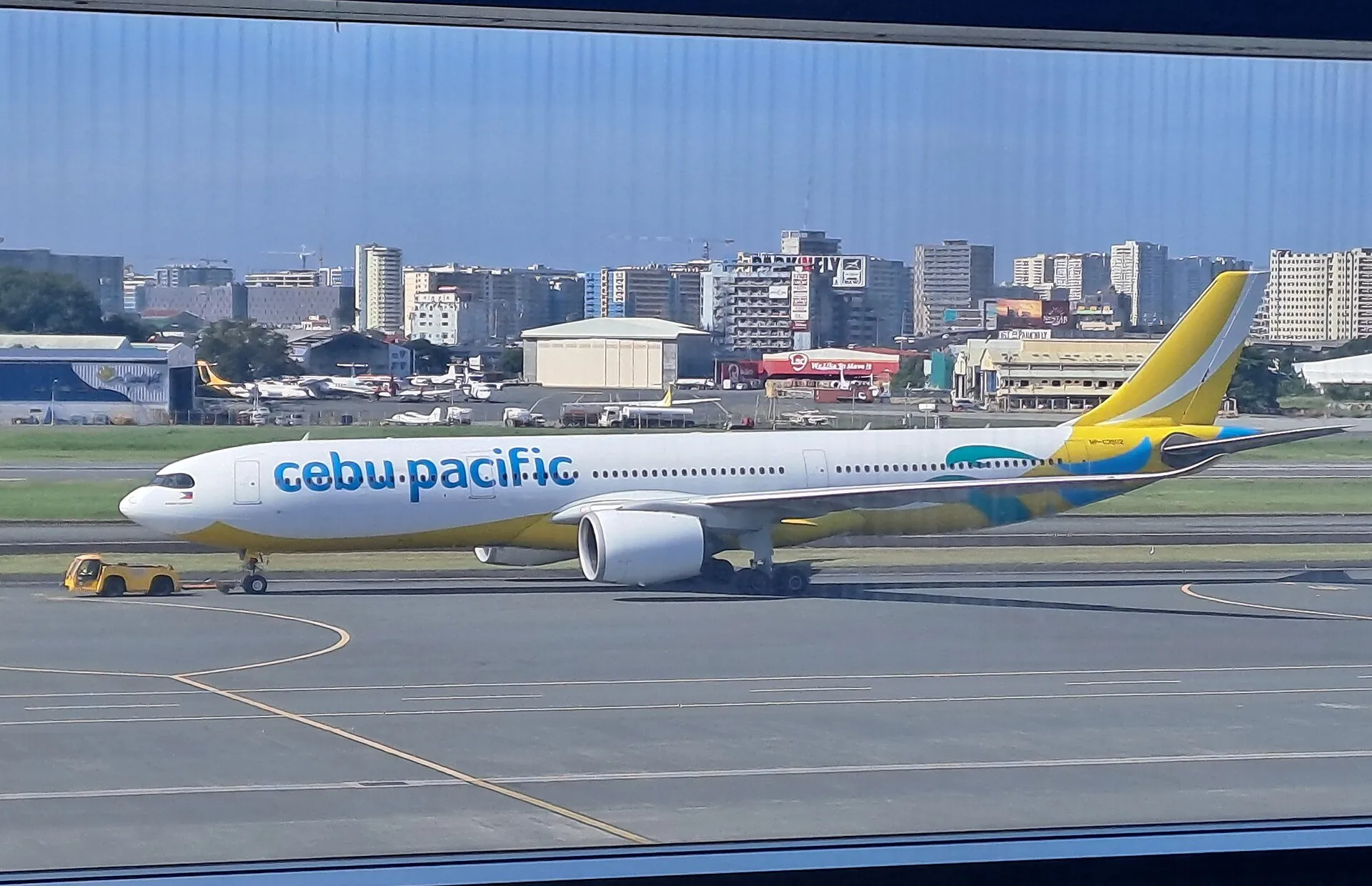
- 62.34 million passengers, up 4.06 percent, carried by a fleet led by Cebu Pacific at about 98 aircraft and Philippine Airlines at about 80.
- Skills pipeline
- The National Aviation Academy of the Philippines averaged 3,266 graduates a year between 2014 and 2024, from an average enrolment of 18,040 students.
- Policy frame
- The 2024 Philippine Aerospace Industry Roadmap sets the growth agenda, with the Board of Investments and the Aerospace Industries Association of the Philippines carrying it.
What the country actually sells to the world
Not complete aircraft. The Philippine export is the hard, certified, repeatable part: an actuator that moves a control surface, a seat frame that survives a 16g load, a galley that meets flammability rules, a wiring loom that survives vibration and heat.
That is a durable position. Tier 1 suppliers do not move a qualified line for a small cost difference, and the Philippine plants have held their programmes through several aircraft generations.
The component level detailWhat Philippine factories build
Five capability families carry the export line. Each one sits inside an economic zone, each one works to a civil aviation quality system, and each one ships into a programme that a foreign buyer can audit before placing work.
Open the manufacturing pageFlight control actuation
Baguio City, BenguetElectro hydraulic servo valves, actuators and flight control units machined and assembled by Moog Controls Corporation inside the Baguio City Economic Zone.
Programmes: Boeing 787, Boeing 777X, Airbus A350Cabin interiors and seats
Sto. Tomas, BatangasCollins Aerospace, through B/E Aerospace, runs a 698,000 square foot campus at the First Philippine Industrial Park for seating, galleys, lavatories and cabin monuments. The site has held a PEZA registration since 2010.
Programmes: Airbus A320 family, A350, Boeing 737 MAX, 777Aerostructures and composites
Clark and ParanaqueJamco Philippines builds floor panels, galleys, flight deck stowage and lightweight honeycomb core structures, with flammability compliance to the FAR 25.853 standard that governs cabin materials.
Scope: commercial jets, regional aircraft, corporate fleetsWiring, avionics and electronics
CALABARZON and Metro ManilaElectrical wiring interconnect systems, avionics racks, power distribution units and shielded harness assemblies, drawing on the same electronics base that made the country a semiconductor packaging centre.
Standards: IPC/WHMA-A-620, EWIS, ESD controlled assemblyMaintenance, repair and overhaul
Pasay, Clark and CebuLufthansa Technik Philippines runs base heavy maintenance at Villamor, including C checks, D checks and cabin reconfiguration. SIA Engineering and Metrojet Engineering operate at Clark, and Aviation Partnership Philippines has moved from line work into base maintenance with more than 770 licensed mechanics.
Platforms: Airbus A380, A350, A330, Boeing 777, ATRWhere the industry sits on the map
The clusters follow the airfields and the expressways, not the political map. Four regions carry almost all of the certified work, and each one has a different reason to exist.
CALABARZON
Batangas, Cavite, LagunaThe deepest supply chain in the country. Collins Aerospace at First Philippine Industrial Park in Sto. Tomas anchors a ring of precision machining, plastics, tooling and packaging suppliers that serve the same programmes.
Newest entrant: Global Aerospace Technology Philippines, registered at Cavite Technopark for unmanned aircraft, special purpose machinery and aerospace components.
Baguio City
Benguet, CordilleraA single anchor, Moog Controls, and a deep bench of precision machinists. The Baguio City Economic Zone runs flight control hardware for widebody programmes and has done so for decades.
Why it works: a technical university pipeline, lower land cost, and a workforce that stays. The trade off is road access to Manila and Clark, which is why air and sea routing matters here.
Clark Freeport
Pampanga, Central LuzonClark Aviation Capital is being positioned as the MRO and aerotropolis play. SIA Engineering and Metrojet Engineering already operate there, and Lufthansa Technik has proposed a US$400 million facility at the aviation complex.
Also here: Clark International Airport, the aviation museum, Air Force City, and the February balloon fiesta at New Clark City.
Metro Manila
Pasay and ParañaqueThe maintenance and gateway cluster. Lufthansa Technik Philippines operates at Villamor Air Base beside NAIA, and the Ninoy Aquino International Airport complex carries the bulk of international traffic and belly cargo.
For visitors: the Philippine Air Force Aerospace Museum sits inside Villamor, about ten minutes on foot from Terminal 3.
Arriving, staying and flying for the fun of it
Aviation is part of the travel product here, not separate from it. You land at a gateway, hop between islands on a dense domestic network, and in February you can watch balloons launch at dawn an hour north of Manila.
Gateways that matter
- Manila (MNL) the main international door, and the busiest field in the country.
- Clark (CRK) Central Luzon, an easy alternative to Manila traffic, and the aviation cluster.
- Cebu (CEB) the Visayas hub, with the shortest connections to the beach islands.
- Davao (DVO) the Mindanao gateway, and our own base in Tagum City is a short road transfer away.
- Iloilo (ILO) and Kalibo (KLO) Western Visayas, including the Boracay approach.
Entry, in plain terms
- 30 days visa free for many passports under Executive Order 408, with a passport valid six months beyond the stay.
- eTravel registration inside 72 hours before arrival, and a return or onward ticket at the border.
- Newer openings a 14 day visa free stay for Chinese nationals, and visa free entry for Indian and Taiwanese passports introduced in 2025.
- Longer stays extensions at the Bureau of Immigration, and a 9(a) temporary visitor visa for anything longer.
- Rules change: confirm your own nationality against the current Department of Foreign Affairs list before booking.
Worth planning a trip around
- Philippine International Hot Air Balloon Fiesta each February at New Clark City. The 26th edition ran 13 to 15 February 2026 with 22 special shape balloons.
- Philippine Air Force Aerospace Museum at Villamor Air Base, founded in 1974, with about twenty retired aircraft in the outdoor park.
- Clark Aviation Museum and Air Force City for the military aviation collection, with Pinatubo treks and Kapampangan food on the same trip.
- Island hops to Siargao, Palawan and Boracay on a domestic network that makes a three island trip ordinary.
- Cruise and transit 136 cruise calls in 2025, plus the NAIA transit tour and medical concierge desks for long layovers.

The investment case, without the brochure language
Aerospace and MRO sit inside the same incentive architecture as electronics and precision manufacturing. The terms below are current to the CREATE MORE Act and the PEZA and Board of Investments programmes, and they are the ones a site selection team will actually test.
The full investment workflow- Corporate income tax
- 20 percent, down from 25 percent
- Income tax holiday
- 4 to 7 years, depending on tier and location
- Export enterprises
- 5 percent special rate on gross income in place of national taxes
- Foreign equity
- Up to 100 percent outside the Foreign Investment Negative List
- Paid in capital
- US$200,000, or US$100,000 with advanced technology
- Zones and agencies
- PEZA ecozones, Board of Investments registration, Clark and Baguio economic zones
- Aerotropolis zones are being written now PEZA is drafting rules for aviation and aerospace specific ecozones near airports, with the Civil Aviation Authority of the Philippines, and expects to add them to the proposed amendments to the Special Economic Zone Act.
- Clark is the live MRO bet Lufthansa Technik has proposed a US$400 million maintenance facility at Clark Aviation Capital. SIA Engineering and Metrojet Engineering already operate in the freeport, and Clark International Airport is the second international gateway for Luzon.
- The supplier gap is the opening Precision machining, composites, tooling, calibration, packaging and logistics for the existing Tier 1 plants are still thinner than the anchor operations they support. That is where a smaller investor can enter the chain.
- Space is the next line item The Philippine Space Agency is working with Perigee Aerospace and the Cagayan Economic Zone Authority on a demonstration sounding rocket launch at Lal-lo, Cagayan, targeted for early 2027.
This is a general overview, not investment, legal, tax or accounting advice. Incentive terms, zone rules and approvals change, and each project is assessed on its own registration. Confirm the current terms with the Board of Investments, PEZA and your own advisers before committing capital.
The constraint is people, and the pipeline is being rebuilt
Every operator in the country names the same bottleneck: licensed technicians, type rated engineers and experienced supervisors. The response has moved from advocacy to statute, with a national aviation academy and an industry matching programme behind it.
- Aerospace and aviation workers in PEZA zones
- 11,500+ Across 16 registered projects
- Annual graduates, 2014 to 2024
- 3,266 Average, from an enrolment of 18,040
- Licensed mechanics at one MRO alone
- 770 Of 1,200 staff at Aviation Partnership Philippines
- Regional mechanic demand
- 78,000 Southeast Asia over 20 years, about 3,000 a year
The National Aviation Academy of the Philippines was created in 2025 under Republic Act 12255, converting the Philippine State College of Aeronautics into the national institution for aviation training. It keeps the existing programmes in commercial pilot, aeronautical engineering with drone technology, aircraft maintenance technology and aircraft electronics, and adds aviation logistics and aviation information technology.
The Academe Industry Matching programme run by the Board of Investments brings DepEd, CHED, TESDA, the Philippine Trade Training Center and the Metals Industry Research and Development Center together with industry, so the course content follows the competencies the plants actually hire.
On the shop floor the bridge is a cadet programme. Aviation Partnership Philippines runs a nine month intensive course for graduates before they touch a live aircraft, because a licence alone does not make a technician productive on a specific type. A CAAP licence is also not an FAA or EASA licence, so anyone aiming at an international career adds type training and a second authority's paperwork on top.
For a foreign employer the practical read is simple: the raw talent is here and the English is not a barrier, but you should budget for six to twelve months of type specific training before a new hire carries a task card alone.
Four lines that are still being drawn
Beyond the certified parts and the base checks, the country is pushing into launch, unmanned systems, sustainable fuel and cabin electronics. These are early, and worth reading as intent backed by named projects rather than as settled industries.
Space and launchPhilSA, SIKLAB
The Philippine Space Agency was created in 2019 under Republic Act 11363. Its SIKLAB project has sent engineers to South Korea to assemble and test a liquid fuelled sounding rocket with Perigee Aerospace, with a demonstration launch targeted at Lal-lo, Cagayan in early 2027.
Unmanned systemsUAV, UAS, components
Global Aerospace Technology Philippines is registered at Cavite Technopark to manufacture and assemble unmanned aerial vehicles, unmanned aircraft systems, special purpose machinery and aerospace components, with supplier openings for smaller local firms.
Sustainable aviation fuelBiomass feedstock
The Board of Investments is promoting the country as a sustainable aviation fuel producer, pointing to more than 15 million metric tons of biomass from rice, corn, coconut and cassava, with feedstock concentrated in Central Luzon, CALABARZON, Western Visayas, Northern Mindanao and Davao.
Cabin electronicsIn flight entertainment
The government is looking at in flight entertainment production as the next step from seat manufacturing in Batangas, using the same electronics and display supply base that already serves global device makers.
Questions that come up first
Short answers, with the figures an operator, buyer or traveller usually needs before the first call.
Does the Philippines have a real aerospace industry?
Yes. Sixteen aviation and aerospace projects are registered with PEZA, holding over P26 billion in investments and shipping more than US$1 billion of exports in 2024. Aerospace exports reached US$603.1 million in the first nine months of 2025, against US$590.2 million for all of 2024, according to Board of Investments data.
What does the country make for aircraft?
Flight control actuation and servo valves, passenger seats, galleys, lavatories, cabin monuments, composite floor panels, stowage, electrical wiring interconnect systems, avionics racks, tooling and ground support equipment. The plants supply Boeing and Airbus programmes through Tier 1 and Tier 2 contracts.
Where are the aerospace plants?
The main clusters are CALABARZON, with Collins Aerospace at First Philippine Industrial Park in Sto. Tomas, Batangas; Baguio City, with Moog Controls; Clark Freeport in Pampanga for MRO and aerotropolis development; and Metro Manila, with Lufthansa Technik Philippines at Villamor.
Can a foreign company own the whole plant?
Up to 100 percent foreign equity is allowed in export manufacturing outside the Foreign Investment Negative List. Minimum paid in capital is generally US$200,000, or US$100,000 with advanced technology. CREATE MORE also sets a 20 percent corporate income tax, a four to seven year income tax holiday and a 5 percent special rate on gross income for registered export enterprises.
Do I need a visa to visit?
Many passports enter visa free for 30 days under Executive Order 408, with a passport valid six months beyond the stay, an onward ticket and an eTravel registration inside 72 hours before arrival. Chinese nationals have a 14 day visa free stay, and Indian and Taiwanese passports were added to the visa free list in 2025. Confirm your nationality against the current Department of Foreign Affairs list before booking.
When is the hot air balloon fiesta?
Every February at New Clark City in Tarlac, about an hour and a half by road from Manila. The 26th Philippine International Hot Air Balloon Fiesta ran from 13 to 15 February 2026 with 22 special shape balloons, night glow, drone racing, paragliding and career talks. It is the country's longest running aviation sports event.
Is there an aviation museum near Manila airport?
Yes. The Philippine Air Force Aerospace Museum sits inside Villamor Air Base in Pasay, about ten minutes on foot from NAIA Terminal 3. It was founded in 1974, opened at its current site in 2007, and holds an indoor collection plus an outdoor aircraft park of about twenty aircraft. Bring identification for the base gate and check the current opening days before you go.
How big is the maintenance market?
About US$7 billion of MRO demand over the next five years, growing at 6.4 percent a year, with Airbus types accounting for more than 80 percent of it. The Civil Aviation Authority of the Philippines counted 108 approved local maintenance organisations and 136 approved foreign organisations in 2025.
Flying in, investing, or sourcing from a Philippine floor?
Tell us your dates and routing, your site requirements, or the parts and quantities you need. Our team in Tagum City will reply. Business hours: Mon to Sat, 8:30 AM to 5:00 PM (PHT).
Figures come from Board of Investments briefings at the Singapore Airshow 2026 and reported in February 2026, the Philippine Economic Zone Authority, the Civil Aviation Authority of the Philippines, the Department of Tourism 2025 arrivals report, the 2024 Philippine Aerospace Industry Roadmap, Republic Act 12066 (CREATE MORE), Republic Act 12255 creating the National Aviation Academy of the Philippines, Republic Act 11363 creating the Philippine Space Agency, and published industry forecasts for aircraft maintenance demand. The hero photograph is by LMP 2001, CC BY-SA 4.0, via Wikimedia Commons. Route, entry and event details change, so confirm schedules and visa rules with the airline, the airport operator and the Philippine consulate before you book. The investment section is a general overview and is not investment, legal, tax or accounting advice.