
Visit the Philippines
Thirty days without a visa on a US passport, three workable one stop routings, and four international gateways inside the archipelago.
Plan the tripWhen you visit our website, it may store or retrieve information on your browser, mostly in the form of cookies. This information might be about you, your preferences or your device and is mostly used to make the site work as you expect it to. You can choose not to allow some types of cookies. Read our Privacy Policy
These cookies are necessary for the website to function and cannot be switched off in our systems.
These cookies allow us to collect information about website traffic and technical performance.
These cookies enable enhanced functionality and personalisation.
These cookies may be set through our site by our advertising partners to build a profile of your interests.
JAX and the Philippines
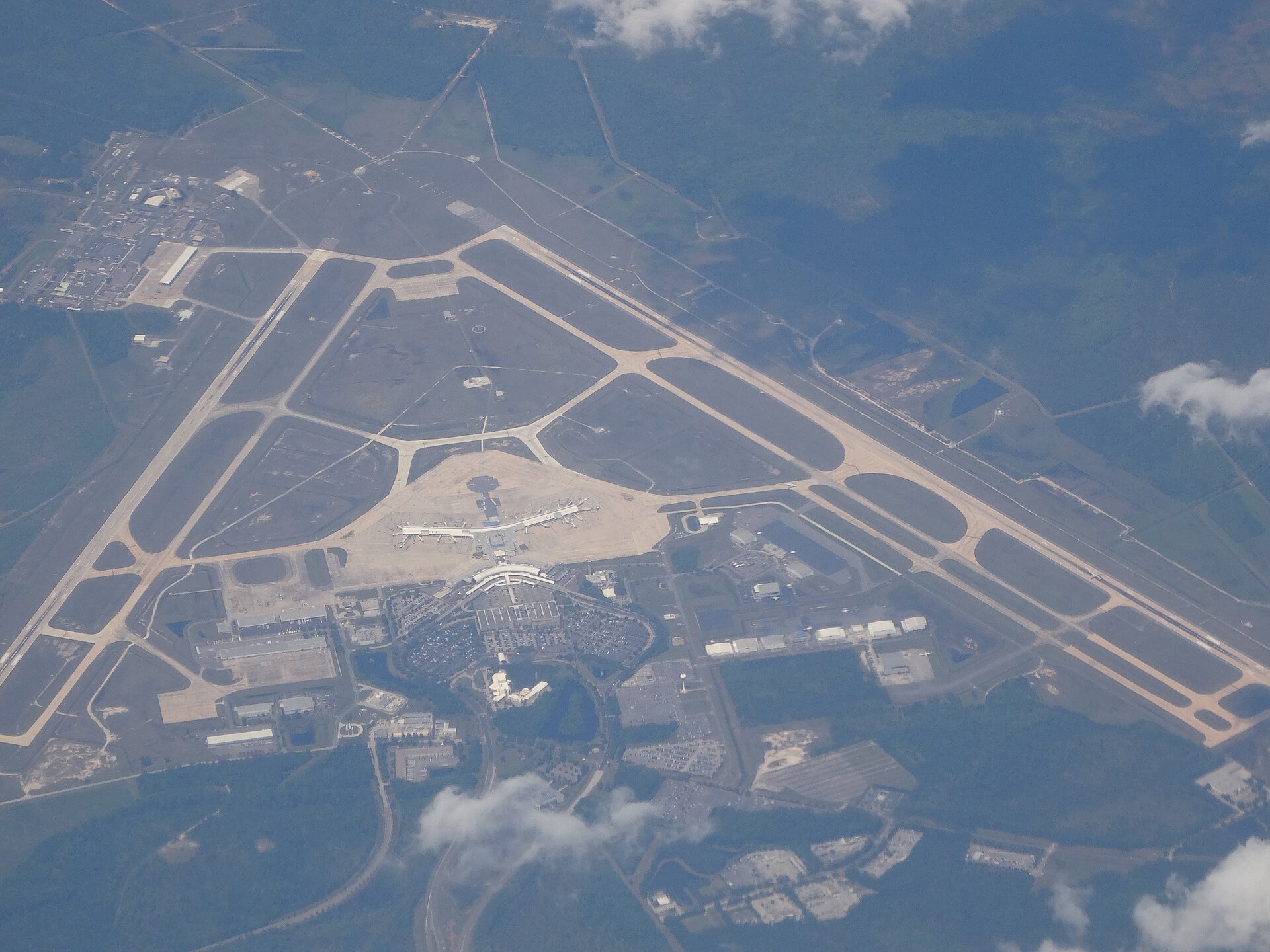
Jacksonville sits on the St. Johns River, thirteen miles north of downtown, with two concrete runways, twenty gates and no scheduled flight to Asia at all. That one fact decides how a Northeast Florida traveller builds a Philippine itinerary, how a Duval County investor reads an incentive package, and how a buyer moves apparel or electronics back into the Port of Jacksonville. Three tracks, one origin.
Mile 00One origin
The same security checkpoint serves a family booking two weeks of islands, a partner reviewing an incentive package, and a sourcing manager approving a first sample. What changes is the paperwork, the lead time, and who answers the first call.
Thirty days without a visa on a US passport, three workable one stop routings, and four international gateways inside the archipelago.
Plan the tripThe CREATE MORE rate, the foreign equity thresholds, and the agencies that grant incentives a Florida holding company can actually use.
Read the termsElectronics, semiconductors, apparel, aerospace parts and shared services, with an honest duty line into the United States and the lanes that carry it.
See the sectorsMile 01The field
Jacksonville International opened in 1968 and replaced Imeson Field as the city's main airport. The Jacksonville Aviation Authority has run it as an independent authority since 2001, alongside Craig, Herlong and Cecil, and the federal classification is a medium hub.
What opens in 2027 matters. American Airlines is expected to take five of the six new gates from 28 January 2027, which gives the airport room to grow the domestic feed that a future long haul route would depend on. The authority says it is in talks with carriers about Mexico, the Caribbean and Europe. None of that changes the Philippine routing today, and this page does not pretend otherwise.
Mile 02Ground
Every ground option collects on the lower level beside baggage claim, which makes the arrivals hall the only decision point. Rental counters are inside the terminal, not on a shuttle bus.
Interstate 95 exit 363 at Airport Road, or Interstate 295 to Yankee Clipper Drive. Twenty to thirty minutes to downtown outside peak traffic.
Taxis use the staffed booths outside baggage claim. Uber and Lyft collect at the lower arrival curb at poles 1 and 2, and drop off on the upper departure curb.
The Jacksonville Transportation Authority route runs between the terminal and downtown in about forty minutes, with a stop on the lower level outside baggage claim.
Seven companies have counters on the lower level beside baggage claim. Returns go into the ground floor of the garage next to the terminal.
Parking, plainly. Five grades exist: an hourly garage at the terminal, a daily garage behind it, a daily surface lot within walking distance, three economy lots with a free shuttle running around the clock, and valet at the departure curb. Rates change, so check the airport site before a long stay. If someone is collecting you, the cell phone waiting lot keeps the arrivals curb clear.
Mile 03The route
No airline flies from Jacksonville to Manila, and no carrier flies from Jacksonville to any Asian hub. The trip is built from a domestic hop to a gateway that already has a Philippine nonstop, and there are three of those on the JAX network.
JAX ORD MNL
American and United both fly JAX to O'Hare. Philippine Airlines PR132 leaves O'Hare for Manila on Monday, Wednesday and Friday evenings, on the A350.
About 16 hours 15 minutes eastbound · 13,070 kmJAX JFK MNL
Delta and JetBlue fly the JAX to JFK sector. Philippine Airlines PR127 departs JFK at 01:45 three times a week, and the A350 covers the Pacific in 16 hours 50 minutes.
About 16 hours 50 minutes nonstop · 13,695 kmJAX LAX MNL
Breeze flies JAX to LAX nonstop. From there Philippine Airlines and other carriers run the long Pacific sector, which suits a traveller who would rather cross the country first.
About 15 hours across the Pacific · 11,740 km| Gateway | JAX to gateway | Gateway to Manila | Who flies it |
|---|---|---|---|
| Chicago O'Hare | Nonstop, about 2 hours 30 minutes | PR132, Monday, Wednesday and Friday | American and United, then Philippine Airlines |
| New York Kennedy | Nonstop, about 2 hours 20 minutes | PR127, three times weekly at 01:45 | Delta and JetBlue, then Philippine Airlines |
| Los Angeles | Nonstop on Breeze, about 5 hours 20 minutes | Daily across the Pacific on several carriers | Breeze, then Philippine Airlines or another widebody operator |
| San Francisco | Two stops, since JAX has no SFO nonstop | United and Philippine Airlines, about 17 departures a week | United or American through a hub, then United or Philippine Airlines |
Schedules, frequencies and aircraft change by season. Confirm the operating day with the airline before booking, and leave a full connection window at the gateway, because a domestic delay on a separate ticket is the traveller's problem rather than the airline's.
Mile 04Visit
The Philippines recorded 6.48 million visitor arrivals in 2025, including 5.94 million foreign visitors, and the United States supplied about 1.13 million of them. Roughly one in five foreign visitors is American, which is why the nonstop network keeps growing from the US side.
The country has two seasons rather than four. December to May is the dry stretch, driven by the northeast monsoon, and it is the easiest time to build a first trip around boats, ferries and mountain roads. June to November is wet, with the highest typhoon risk between August and October, and that risk is highest on the eastern seaboard of Luzon, Samar, Leyte and the Bicol peninsula.
Domestic travel peaks twice, at Holy Week and across the Christmas season, and internal flights to Caticlan, Puerto Princesa, Siargao and Baguio sell out early. A traveller from Jacksonville who can move a trip by two weeks will usually find better internal availability and cheaper inter island seats in the shoulder weeks of late May and late November.
Distances inside the archipelago are the part most US travellers underestimate. Manila to Cebu is a one hour twenty minute flight and a twenty hour ferry. Manila to Davao is one hour fifty minutes by air. Manila to Siargao is a flight to Sayak plus a road transfer. Booking the domestic leg inside the same ticket where possible is the single biggest protection against a missed connection.
| Destination | What it is | Connection from the gateway |
|---|---|---|
| El Nido and Coron | Limestone karst, lagoons and wreck diving in northern Palawan, the image most travellers carry of the country. | Fly Manila to Puerto Princesa or El Nido, then a van or a boat transfer. |
| Cebu and Bohol | Diving, Spanish era churches and the Chocolate Hills, with the densest domestic network outside Manila. | International arrival at Mactan Cebu, then a fast ferry to Bohol. |
| Siargao | Surf, lagoons and island hopping on the Pacific side of Mindanao. | Fly Manila or Cebu to Sayak, then twenty minutes by road. |
| Banaue and Ifugao | Rice terraces carved into the Cordillera over two thousand years, walked rather than viewed from a bus window. | Night bus from Manila, or a short flight to Bagabag and a road transfer. |
| Davao and Mount Apo | Volcanic hiking, durian and the busiest city in Mindanao, with direct links into the southern islands. | Fly Manila or Cebu to Davao, one hour fifty minutes from Manila. |
Mile 05Invest
Jacksonville already runs on logistics, insurance, health services, advanced manufacturing and naval aviation. The Philippine incentive code rewards the same things the Duval County economy is good at: moving goods, running back offices in English, and building things to a specification.
The Corporate Recovery and Tax Incentives for Enterprises Act, and its 2024 amendment known as CREATE MORE, reset the fiscal bargain for registered enterprises. A registered business enterprise pays twenty percent corporate income tax against the twenty five percent standard domestic rate, and receives an income tax holiday of four to seven years depending on the location tier and the industry priority list.
Ownership is the second question a partner will ask. Export manufacturing sits outside the Foreign Investment Negative List and can run at full foreign equity, which is why most foreign industrial investors structure the Philippine entity as an exporter first and a local seller second. A domestic market enterprise needs two hundred thousand United States dollars in paid in capital, reduced to one hundred thousand where the project deploys advanced technology or employs at least fifty people directly.
Registration runs through one of four promotion agencies. The Board of Investments suits a project anywhere in the country. The Philippine Economic Zone Authority suits an export zone locator. The Subic Bay Metropolitan Authority and the Clark Development Corporation suit their own freeport areas. Each runs a one stop shop for registration, visas and import permits.
| Term | Position | What it means in practice |
|---|---|---|
| Corporate income tax | 20 percent | Registered business enterprises under CREATE MORE, against 25 percent for an unregistered domestic company. |
| Income tax holiday | 4 to 7 years | Length follows the location tier and the industry priority list, counted from commercial operations. |
| Export enterprises | 5 percent special rate | After the holiday, a special corporate income tax on gross income, or enhanced deductions, for registered export activity. |
| Foreign equity, export activity | 100 percent | No local partner required where the enterprise exports, subject to the negative list and the sector. |
| Minimum paid in capital | USD 200,000 | For a domestic market enterprise, reduced to USD 100,000 with advanced technology or fifty direct employees. |
| VAT on local purchases | Zero rated | Registered exporters can buy locally produced goods and services at zero VAT, and import capital equipment duty free. |
| Repatriation | Central bank registered | Investments recorded with the Bangko Sentral ng Pilipinas can be repatriated, with dividends remitted in foreign currency. |
| Investor residence | SIRV and SVEG | The Special Investor Resident Visa requires a USD 75,000 investment. The Special Visa for Employment Generation requires ten direct Filipino employees. |
Mile 06Make
The Philippines is not the cheapest factory floor in Asia. It is the most natural second source for a US company that already buys electronics, because assembly and test capacity, engineering labour and English language operations sit in one place. Electronics is not a side story here. It is more than half of the export book.
USD 13.44 billion of Philippine goods went to the United States in 2025, the single largest destination, ahead of Hong Kong, Japan, China and the Netherlands. Total Philippine merchandise exports reached USD 84.41 billion, and electronics alone accounted for 54.4 percent of them.
| Sector | Production base | Lane into the United States |
|---|---|---|
| Semiconductor assembly and test | Laguna, Cavite, Batangas, Cebu and Clark, where most of the electronics industry works in semiconductor manufacturing services. Semiconductor exports reached USD 34.62 billion in 2025, up 18.7 percent. | Air freight to a US gateway, with sea freight for volume programmes. |
| Electronics manufacturing services | Metro Manila, CALABARZON, Northern and Central Luzon and Cebu, covering circuit board assembly through to full product build. | Air freight for launch quantities, then ocean to Savannah or the Gulf. |
| Apparel and workwear | Cut and sew lines in Metro Manila, Cavite, Cebu and the Davao Region, with private label programmes that start small. | Air freight for samples and small runs, sea freight for stock programmes. |
| Aerospace parts and maintenance | Clark, Bataan and Metro Manila, with a cluster that already serves Airbus and other original equipment makers. | Air freight, because the value per kilogram supports it. |
| Medical devices and packaging | Cavite, Laguna and Metro Manila, covering sterile packaging, diagnostic kits and single use components. | Air freight for regulated launches, sea freight once the line is qualified. |
| Shared services and software | Metro Manila, Cebu, Davao and Clark, with finance, compliance, engineering support and software teams working in English. | No freight. The service is delivered over the network. |
There is no free trade agreement between the United States and the Philippines, and the generalised system of preferences that once covered some Philippine lines expired in 2020. Goods enter at the most favoured nation rate, and the rate depends on the tariff line rather than on the origin.
The split matters commercially. Many semiconductor and information technology products enter the United States duty free under commitments made in the Information Technology Agreement, while finished apparel lines carry rates that climb into double digits and vary by construction and fibre. A licensed customs broker should confirm the exact eight digit line before a first order is priced.
Tariff policy toward Asian origins has moved repeatedly since 2025, so treat any rate quoted in a pitch deck as stale. What the Philippine case actually offers is capacity, lead time and small batch flexibility, and it competes with other Asian sources on those three rather than on landed cost alone.
Ask for the factory registration with the promotion agency, the social compliance audit, and a sample from the actual production line rather than from a showroom set. Confirm the care label standard, the fibre composition declaration, and whether the origin marking is printed or woven.
Then agree the incoterm. FOB Manila, Cebu or Davao keeps control of freight with the buyer and is the cleaner starting point. CIF Savannah is easier to budget and harder to control.
For a Jacksonville buyer the practical advantage is the calendar. A sample approved on a Monday in Florida reaches a Philippine line by Wednesday, and a small run can ship before the next design review.
Mile 07Freight
Jacksonville is a serious ocean port and a thin air cargo market for Asia. JAXPORT handles containers and roll on roll off traffic on the St. Johns River, while trans Pacific air freight normally enters through Chicago, New York or Los Angeles and then moves south by truck or feeder.
| Mode | Route | Transit |
|---|---|---|
| Air cargo | Manila, Clark, Cebu or Davao to Chicago, New York or Los Angeles, then a domestic flight or truck into Jacksonville. | 2 to 5 days airport to airport |
| Express courier | Door to door through the integrator networks, with customs handled by the carrier. The practical route for samples and urgent line stops. | 3 to 7 business days |
| Ocean, JAXPORT | Manila or Cebu to Jacksonville by transshipment, then a short road leg into the city and the surrounding distribution parks. | 28 to 40 days port to port |
| Ocean, Savannah | Manila or Cebu to Savannah, the largest single terminal container facility on the East Coast, then about two and a half hours by road south on Interstate 95. | 28 to 38 days port to port, plus the road leg |
Production takes three to six weeks after sample approval, so a first order planned around a retail or launch window needs the calendar built backwards from the delivery date rather than forwards from the purchase order. Ranges above are planning figures for a normal sailing or a normal air connection. Confirm the current service and the cut off with a licensed forwarder before promising a date to a customer.
Mile 08Practical
Four things decide whether a first trip runs smoothly: the clock, the ground transfer, the paperwork, and the money. None of them is difficult, and all of them are easier when planned before the ticket is bought.
Manila runs on Philippine Standard Time, which is thirteen hours ahead of Eastern Standard Time and twelve hours ahead of Eastern Daylight Time. The Philippines does not observe daylight saving, so the gap shifts by an hour twice a year. A nine in the morning meeting in Makati is eight or nine the previous evening in Jacksonville.
The airport sits north of the city, reached from Interstate 95 exit 363 or from Interstate 295 to Yankee Clipper Drive. Downtown is twenty to thirty minutes away outside peak traffic, and the beaches add another twenty minutes. There is no rail link to the terminal.
Philippine consular matters for the Southeast are handled through the Embassy in Washington and the Consulate General in Miami. Carry the eTravel confirmation, keep a copy of the return ticket, and check the passport expiry against the six month rule before booking.
The peso is the only currency accepted locally, and the header currency switcher on this site converts published prices for reference only. Cards work in malls, hotels and chain restaurants across the cities. Keep cash for markets, tricycles, ferries and small island operators, and withdraw from a bank branch machine rather than a standalone kiosk.
Mile 09Answers
The questions that come up first, answered without the tourism brochure language.
Airport location, runway, terminal, gate and construction detail comes from the Jacksonville Aviation Authority annual report, its traffic statistics page and its airline directory, with the Concourse B schedule and cost from the authority board presentations reported in August 2026. Passenger and enplanement figures are fiscal year 2025, ending 30 September 2025. Route, frequency and aircraft detail comes from Philippine Airlines timetables and the carrier's own route announcements, including the Manila to Chicago launch set for 9 November 2026. Trade and investment detail is from the Philippine Statistics Authority, the CREATE MORE Act (Republic Act 12066), the amended Foreign Investments Act, the Board of Investments, the Philippine Economic Zone Authority and the United States Trade Representative. Tourism and entry detail is from the Department of Tourism, the Department of Foreign Affairs visa free list and the eTravel system. Schedules, airline assignments, construction dates, fares and entry rules change, so confirm with the airline, the airport operator and the Philippine consulate before you commit money or travel.
Ask about a first sample run, an incentive review, or a freight plan into Northeast Florida. The same desk handles all three.