
Seattle Tacoma International Airport and the Philippines
A single nighttime departure from the Puget Sound region reaches Manila without a stop. Use this page to plan a Philippine trip, read the investment case from the agencies that run it, or open an apparel manufacturing conversation with a Philippine workshop.
- Distance
- 6,689 miles
- Time aloft
- About 13 to 14 hours
- Nonstop carrier
- Philippine Airlines
Seattle already has a Pacific vocabulary. The Philippines shares it.
The Puget Sound region reads the water, the volcanoes, the ferries, and the coffee harvest as everyday reference points. The Philippine archipelago runs on the same instincts at a much larger scale, which is why the transition feels shorter than the 6,689 miles suggest.
| Reference point | Puget Sound and Seattle | The Philippine archipelago |
|---|---|---|
| Water | Puget Sound, the Salish Sea, and the ferries that cross both. Water frames the region and sets the pace of the working day. | More than 7,000 islands between the Philippine Sea and the South China Sea. Ferries, outriggers, and short flights do the work that roads do elsewhere. |
| Volcanoes | Mount Rainier and Mount Baker. Snow covered peaks visible from the city on a clear day. | Mayon, Taal, Pinatubo, and Mount Apo. Active and dormant cones shape the landscape, the soil, and the tourism map. |
| Coffee | A dense cafe culture and a serious roasting scene. Seattle treats coffee as infrastructure. | Arabica from Benguet, Sagada, and Mount Kitanglad. Highland farms supply a growing domestic specialty market. |
| Seafood | Salmon, Dungeness crab, and oysters. Seasonal, cold water, and central to the regional kitchen. | Tuna, grouper, milkfish, and prawns. Warm water fisheries feed both local tables and export channels. |
| People | One of the largest Filipino communities in the United States. Washington State holds the fourth largest Filipino population among the fifty states. | A diaspora of more than ten million. Family networks in the Pacific Northwest keep both directions of travel busy. |
| Working language | English, with a strong regional accent. Trade and university ties run on it. | English and Filipino, with regional languages alongside. English is an official language and the default in business documentation. |
Plan the crossing in four paired decisions
Philippine Airlines opened the first nonstop link between the Philippines and the United States Pacific Northwest in October 2024 and has since moved to five weekly departures. Everything below assumes that nonstop, with notes for the one stop alternatives when the schedule does not fit.
Choose the nonstop or accept a connection
One carrier flies SEA to MNL without a stop, departing in the evening. One stop routing through Taipei, Seoul, or Tokyo adds hours but widens the choice of arrival times and fares.
01Decide which Philippine airport you actually need
Manila is the long haul arrival point. Cebu, Clark, and Davao handle international traffic too, and Manila domestic flights reach all three in about an hour and a half.
Sort documents before the airport
Check passport validity against the length of stay and confirm the current entry rule for your nationality with the Philippine Embassy. Rules change, and the airline applies them at check in.
02Register with eTravel
The Philippine government collects arrival information online before departure. Complete it inside the window shown on the official portal and keep the confirmation on your phone.
Expect a late evening departure
Published departures from SEA cluster between about 9:30 PM and midnight. Ticketing sits on level 5 and baggage claim on level 3, so a three hour buffer fits a long haul check in.
03Sleep through the dateline
The aircraft crosses the Pacific overnight and lands in Manila in the morning local time, roughly thirteen to fourteen hours after departure. Set your watch on boarding, not on landing.
Plan the return connection into SEA
Arriving international passengers clear customs at the International Arrivals Facility. The published minimum connection time dropped to 75 minutes when that building opened, but book a longer gap with checked bags.
04Allow for the domestic terminal change
Philippine Airlines domestic departures generally leave from a different terminal than the international arrival. Build the transfer into the itinerary rather than assuming a short walk.
Three regions, one realistic itinerary
- Luzon for history and highlands. Manila and Intramuros, the Banaue and Batad rice terraces, Vigan, and the Bicol volcanoes sit on one landmass with road and domestic air links.
- Visayas for reefs and islands. Cebu and Mactan, Bohol, Boracay, Iloilo, and Negros are linked by short flights and fast ferries rather than long overland legs.
- Mindanao for surf, highlands, and the workshop. Siargao, Camiguin, Bukidnon, Davao City, and Samal Island form a southern loop, and Tagum City sits inside it.
Read the investment case from the agencies that administer it
The Philippines publishes a national list of preferred investment activities and runs a separate regime for companies that locate inside economic zones. Washington State brings aerospace, software, maritime, and agricultural depth to the table. These are the five sectors where the two economies already overlap, and where the public documentation is strongest.
| Sector | Why it fits a Pacific Northwest investor | Primary source |
|---|---|---|
| Electronics and semiconductors | Electronics is among the country's largest export categories, with assembly, test, and packaging clustered inside economic zones. Washington's hardware and software base gives the sector a natural client list. | PEZA |
| Aerospace maintenance | Clark and Subic host aviation maintenance, repair, and overhaul activity inside the zone framework, and the national priority list treats aerospace as a promoted activity. Seattle's aerospace supply chain is the obvious commercial link. | Board of Investments |
| Information technology services | Business process, software development, and shared service centres form one of the largest service export industries in the country, with a deep English speaking talent pool across Manila, Cebu, and Davao. | DTI |
| Agribusiness and food processing | Tropical fruit, coconut, coffee, and seafood supply chains sit alongside a domestic market of more than one hundred million people. Washington's agricultural trade infrastructure maps onto the cold chain and export side. | Board of Investments |
| Apparel and textiles | A long established garment industry with cut and sew capability, small batch flexibility, and duty advantages under the generalized system of preferences for qualifying goods. This is the sector RB Advertising works in directly. | Shipping overview |
Three agencies carry most of the public record
- Board of Investments. Publishes the Strategic Investment Priority Plan and sector profiles across manufacturing, services, and agriculture.
- Philippine Economic Zone Authority. Administers economic zones and publishes locator requirements, available locations, and registration steps.
- Department of Trade and Industry. Runs the programs that connect Philippine production to export markets and publishes trade guidance.
Put an apparel program with a Philippine workshop
RB Advertising produces sublimated sportswear, team uniforms, corporate apparel, and workwear from Tagum City in Davao Region. The team works with buyers in the Philippines and abroad, and confirms production scope, specifications, and shipping terms for each enquiry rather than quoting from a fixed catalogue.
What the workshop handles
- Full sublimation sportswear. Jerseys, cycling kits, rash guards, and training sets printed edge to edge, which suits club, school, and event programs.
- Uniforms and corporate apparel. Polos, button downs, jackets, and event shirts with embroidery or screen print, including size runs across mixed teams.
- Workwear and outerwear. Heated workwear, cooling vests, and motorcycle workwear built for field conditions rather than showroom use.
See the corporate polo program and the air transport service used when a deadline cannot wait for ocean freight.
Getting through Seattle Tacoma without wasting the connection
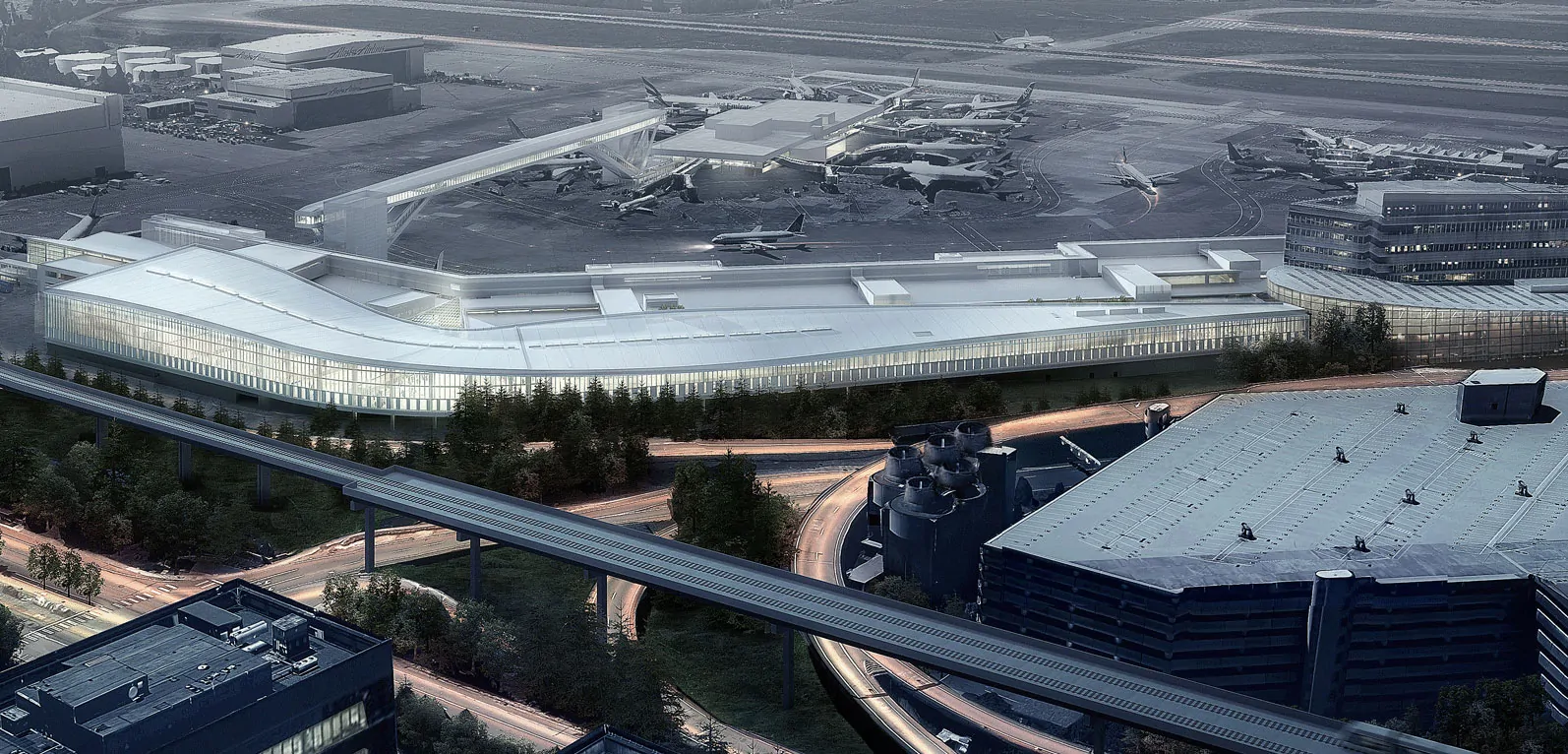
SEA runs on one central terminal with four concourses and two satellite buildings. A, B, C, and D connect on foot after security. The North Satellite handles much of the Alaska Airlines operation, and the South Satellite carries most long haul international departures. Two underground train systems do the work that walking cannot.
- AConcourse ADelta and SkyTeam, plus the international corridor into the arrivals facility
- BConcourse BWalkable from the south checkpoints, short hop to the South Satellite
- CConcourse CCentral terminal dining and retail, busiest stretch of the airport
- DConcourse DUnited and several international carriers, north side of the terminal
- NNorth SatelliteAlaska Airlines heavy, reached by the north underground train from C or D
- SSouth SatelliteMost long haul international departures, reached by train from A or B
All gate areas connect after security. Walking usually beats the train between neighbouring A, B, C, and D gates. For the satellites, allow a few minutes for the platform, the ride, and the walk back up. Airline assignments shift by season, so confirm the concourse on your boarding pass rather than on an older trip memory.
The International Arrivals Facility changed the return leg
Arriving from Manila, passengers deplane at the South Satellite or Concourse A and cross to the International Arrivals Facility, which opened in 2022. A 780 foot walkway carries arrivals above the taxilane at 85 feet, straight into a 450,000 square foot hall for customs and baggage claim.
Three practical consequences follow. Baggage carousels went from four to seven. Eight widebody gates on Concourse A now feed directly into the facility. The published minimum connection time fell from 90 minutes to 75, which is a floor rather than a target. If you are connecting to a domestic flight with checked bags, you still collect the bag, clear inspection, recheck it, and clear security again.
Ground access, ranked by predictability
Link light rail
3 dollars · 38 to 40 minutesThe 1 Line leaves SeaTac/Airport Station on level 4 of the parking garage and runs to Westlake in downtown Seattle. Trains arrive every 7 to 15 minutes across roughly twenty hours of service, and a covered walkway links the station to the terminal. The most time predictable option during rush hour.
App based rideshare and taxi
About 25 to 55 minutesPickups use designated zones on level 3 of the garage rather than the terminal curb. Off peak the drive is quick. Between 7 and 9 in the morning or 4 and 7 in the evening, plan for the upper end of the range.
Regional buses and Sounder commuter rail
Varies by routeSound Transit and King County Metro routes serve International Boulevard and the airport area, and the Sounder commuter rail reaches Tacoma and Everett from downtown stations. Useful for a Tacoma base, less so for a downtown Seattle hotel.
Rental cars and hotel shuttles
Shuttle from level 3Rental counters sit off the terminal loop behind a shuttle ride. Airport area hotels run their own shuttles from marked stops, which is worth confirming before a late evening arrival.
What travelers and buyers usually ask first
Does Seattle Tacoma International Airport have a nonstop flight to the Philippines?
Yes. Philippine Airlines launched nonstop Manila to Seattle service in October 2024, the first direct link between the Philippines and the United States Pacific Northwest, and has since increased to five weekly departures. The route is flown with Boeing 777-300ER aircraft seating 370 passengers. Schedules change by season, so confirm the current frequency with the airline before booking.
How long is the flight from Seattle to Manila?
About 13 hours 30 minutes to 14 hours 35 minutes eastbound depending on the schedule period, across roughly 6,689 miles or 10,763 kilometres. The return leg runs about 11 hours 50 minutes to 12 hours 30 minutes because of the prevailing winds.
Which concourse do international flights use at SEA?
Most long haul international departures use the South Satellite, reached by the underground train from Concourse A or B. Arrivals clear customs at the International Arrivals Facility next to Concourse A, which opened in 2022 and connects to the South Satellite by an elevated walkway. Some international services use other concourses, so check your boarding pass.
How do I get from SEA to downtown Seattle without a car?
Take the 1 Line light rail from SeaTac/Airport Station on level 4 of the parking garage. The fare is about 3 dollars, trains run every 7 to 15 minutes across roughly twenty hours a day, and the ride to Westlake takes 38 to 40 minutes. A covered walkway connects the station to the terminal.
How much connection time do I need when returning from Manila?
The published minimum connection time at SEA is 75 minutes, reduced from 90 when the International Arrivals Facility opened. Treat that as a floor. With checked bags you collect them, clear customs and border inspection, recheck with the onward airline, and clear security again, so 2 to 3 hours is the realistic buffer.
Where should an investor start reading about Philippine incentives?
Start with the Board of Investments for the Strategic Investment Priority Plan, and the Philippine Economic Zone Authority for locator rules inside economic zones. Eligibility and incentives depend on current law and the proposed activity, so confirm the details with the agency or a qualified adviser rather than relying on a summary.
Can RB Advertising produce apparel for buyers in Washington State?
Yes. Share the garment type, estimated quantity, artwork, size range, deadline, and delivery destination. The team confirms production scope, specifications, and shipping terms for each enquiry, and can quote air freight for samples or time critical orders against ocean freight for volume.
Talk with RB Advertising
For sportswear, uniforms, corporate apparel, or workwear enquiries, reach the team through a preferred contact channel. Business hours: Mon to Sat, 8:30 AM to 5:00 PM (PHT).
Passenger, cargo, and operations figures are drawn from Port of Seattle airport statistics for 2025. Terminal layout, the International Arrivals Facility, and ground access details follow Port of Seattle publications. Route and schedule details follow Philippine Airlines announcements and published schedules. Airline assignments, frequencies, and fares change, so confirm current details with your airline and the airport authority before departure.