
Italian Chamber of Commerce in Vietnam (ICHAM): The Vietnam to Philippines Manufacturing Corridor
The Italian Chamber of Commerce in Vietnam, or ICHAM, is the Italian business chamber in Vietnam: a not for profit organization founded in 2008, recognized by the Italian Government, and a member of Assocamerestero. It works on one relationship, Italy and Vietnam, through market research, delegations, business matching, and trade programs. This page explains who the chamber is, what it does, and then follows the question its members are increasingly asking: if our ASEAN base is already in Vietnam, what would a second manufacturing site in the Philippines actually change?
- 2008
- Founded as a not for profit trade promotion organization recognized by the Italian Government
- 100+
- Member firms across Italian, Vietnamese, and international business
- 2
- Offices in Vietnam, one in Ho Chi Minh City and one in Hanoi
- 4
- Desks in Italy, covering Veneto, Toscana, Liguria, and Lombardia
What the Italian Chamber of Commerce in Vietnam Is
ICHAM is a private, not for profit association, recognized by the Italian Government and sitting inside the Assocamerestero network of Italian chambers abroad. It is not an embassy, a consulate, or a government agency. It is a business body, funded by its members and by the programs it runs, and its product is the relationship between Italian and Vietnamese firms.
- Legal form
- A not for profit, trade promotion organization. It is not a government agency and it does not clear goods or issue visas.
- Recognition
- Recognized by the Italian Government and a member of Assocamerestero, the association that unites the Italian chambers of commerce abroad.
- Founded
- 2008. The chamber marked its fifteenth anniversary in 2023, which places it among the newer members of the Italian chamber network in Southeast Asia.
- Remit
- Economic and cultural cooperation between Italy and Vietnam, delivered through market research, business matching, visit trips, delegations, and trade exchanges.
- Ho Chi Minh City office
- 5th floor, Deutsches Haus, 33 Le Duan Boulevard, District 1, Ho Chi Minh City. The southern office sits in the commercial center of the country industrial belt.
- Hanoi office
- Casa Italia, 18 Le Phung Hieu Street, Hoan Kiem District, Hanoi. The northern office sits beside the Italian institutional presence and the policy agencies.
- Italy desks
- Four regional desks, in Veneto, Toscana, Liguria, and Lombardia, which link Italian regional manufacturing clusters to Vietnamese counterparts.
The chamber marked its fifteenth anniversary in 2023, which makes it a relatively young member of the Italian chamber network in Southeast Asia compared with the European Chamber of Commerce of the Philippines, founded in Manila in 1978. That difference matters to a reader. ICHAM is not a large general chamber with a country program in every sector. It is a focused bilateral body, close to Italian regional manufacturing, and deliberately concentrated on Vietnam.
Two organizations, one country. Vietnam also hosts a separate Italian facing business body, the Italy Vietnam Chamber of Commerce, which is distinct from ICHAM in structure and program. This page profiles ICHAM only, using what the chamber publishes about itself. Membership figures, office details, and programs change, so confirm the current position at icham.org before relying on any detail here.
What the Chamber Actually Does
Six lines of work, in the order a firm usually meets them: a study, then a partner, then a meeting, then a fair, then a network, then a brand.
-
Market research and partner search
Commissioned studies on Vietnamese sectors, and a structured partner search for an Italian firm that wants a distributor, an agent, or a manufacturing partner. This is the work that turns a trade fair contact into a signed agreement.
-
B2B meetings and business delegations
Curated meeting programs for inbound and outbound delegations. Italian firms travel to Vietnam, Vietnamese buyers travel to Italy, and the chamber builds the calendar in between.
-
Events, workshops, and technical seminars
Sector specific sessions where a market is explained by the people already operating in it, from customs procedure to distribution economics to industrial standards.
-
Trade fair pavilions and national programs
Collective Italian pavilions and country programs, including Italian Days in Da Nang with the Italian EXPO, the ICHAM pavilion at GEFE, and Vietnam participation at SIGEP World in Italy.
-
Membership network and directory
A member base of more than one hundred firms, an online directory, and a standing calendar of networking formats that put an Italian industrial group beside the Vietnamese partners it needs.
-
Cultural promotion of Italian production
Programs such as True Italian Taste, Made in Italy, the Export Lounge, and the Vietnam Best Sommelier in Italian Wines competition, which build brand recognition for Italian goods before a commercial conversation starts.
The chamber publishes its current project calendar, member directory, and event list on its own site. Member names quoted on this page are those listed on that public roster when the page was written, and rosters change, so treat the directory as the source of truth.
Italy, Vietnam, and the Second Site Question
The chamber runs a three stage corridor. Italy holds the desks, Vietnam holds the operations, and the third stage is the one now being discussed in boardrooms rather than at trade fairs: a second ASEAN platform.
-
Italy, four regional desks
Veneto, Toscana, Liguria, and Lombardia each hold a desk. A firm in Vicenza or Lucca reaches Vietnam through a desk in its own region, in its own language, before it ever books a flight.
-
Vietnam, two offices
Ho Chi Minh City runs the southern commercial and factory belt. Hanoi runs the northern industrial corridor and the policy relationship. The two offices cover the country between them.
-
The Philippines, one added platform
A second ASEAN site, English speaking, inside the same regional trade architecture, and duty free into the European Union for most Philippine made goods. This is the step this page explains.
An Italian group that has manufactured in Vietnam for a decade is not a newcomer shopping for a country. It already knows how to run an Asian plant, how to build a local management team, and how much attention a second jurisdiction costs. The question it asks is narrower: which second country adds the least operating overhead while removing the most concentration risk? The next two sections take that question seriously.
Five Pressures a Vietnam Manufacturer Already Feels
These are not arguments against Vietnam. They are the conditions that make a second site a rational line in a five year plan rather than a defensive move. Each row links to the longer report behind it.
| Condition | What it means for a second site | Read more |
|---|---|---|
| Industrial land | Lease rates in the northern and southern industrial parks have repriced as export manufacturing concentrated there. A second site resets the blended land cost of the group, and a lease signed today is a fifteen to fifty year commitment. | Vietnam industrial land lease rates |
| Power reliability | The northern grid has interrupted supply during peak dry season demand in recent years. For a plant running continuous process equipment, redundancy is a capital line item, not a footnote in a site study. | Northern Vietnam grid constraints |
| Labor cost curve | The regional minimum wage schedule steps up each year, and labor intensive steps absorb that step first. Cutting, sewing, packing, and assembly are the operations most likely to move to a lower cost region. | Vietnam labor cost report |
| Incentive conditions | Vietnam incentives are competitive but conditional. They attach to location, sector, and scale, and they run on a clock. A second site lets a group hold two incentive positions instead of one. | Vietnam corporate tax incentives |
| Concentration risk | A group with every ASEAN operation in one country carries that country currency, labor market, grid, and trade policy in a single line of its risk register. A second platform is the cheapest form of diversification available. | Alternatives to Vietnam manufacturing |
A second site is not a relocation. The Vietnamese plant keeps its customers, its team, and its incentive position. What the group adds is a second set of tariff, currency, grid, and labor exposures, and a second negotiating position with its own suppliers.
What the Philippines Actually Offers an Italian Manufacturer
Six things, in the order they change a business case. The first three change the tax and duty line of the model, the next two change the operating cost line, and the last one changes the addressable market.
-
Corporate income tax at 20 percent
Under the CREATE MORE Act, Republic Act 12066, a registered business enterprise pays corporate income tax at 20 percent rather than the standard rate, on income attributable to its registered activity.
-
Up to 27 years of combined incentives
An income tax holiday followed by either enhanced deductions or a special corporate income tax rate, with the total package running up to 27 years depending on location and sector.
-
Duty free capital equipment
Registered exporters can import production machinery, raw materials, spare parts, and consigned equipment free of duty and VAT, which removes the largest single line item in a plant start up budget.
-
VAT zero rating on export inputs
Local purchases of goods and services directly attributable to registered export sales carry a zero VAT rate, which keeps the domestic supply chain inside the incentive rather than outside it.
-
An English speaking workforce
Instruction, engineering documentation, and factory supervision run in English. For an Italian group used to working through translation in Vietnam, this shortens the ramp on a new line and on a new management team.
-
Duty free entry into the European Union
Most Philippine made goods enter the European Union at zero preferential tariff under the GSP+ arrangement, supported by a statement on origin. For an Italian brand manufacturing in Asia for the European market, that is the margin that decides the site.
Incentive terms, tax rates, and preference schemes are set by statute and change with amending rules. Confirm the current package with the Philippine Economic Zone Authority, the Board of Investments, and the Department of Trade and Industry, and confirm European Union preference with the European Commission, before a figure enters a board paper. Our comparison of the two incentive regimes is at PEZA and CREATE MORE against Vietnam MPI.
Which Italian Industries in Vietnam Travel Best to a Philippine Site
The chamber member roster spans machinery, motorcycles, electronics, apparel, food, and finance. Not every one of those transfers cleanly. This is the honest mapping, sector by sector, with the site that already hosts the work.
| Sector | Activity that transfers | Philippine site |
|---|---|---|
| Motorcycles and two wheel components | Assembly, parts, and accessories for a two wheel market | CALABARZON, Cavite and Laguna |
| Industrial machinery and automation | Precision machining, packaging machinery, plant engineering | CALABARZON and Clark |
| Electronics, sensors, and industrial control | Assembly, test, and packaging of electronic modules | Clark, Cebu, and Laguna |
| Apparel, sportswear, and protective gear | Cut and sew, embroidery, private label, technical finishing | Metro Manila, Laguna, and Mindanao |
| Food processing and packaging | Processing lines, packaging, and cold chain equipment | Central Luzon and Mindanao |
| Finance, insurance, and advisory | Deal support, credit intelligence, and legal structuring | Makati and Bonifacio Global City |
The poorest transfers are the ones that depend on a supplier ecosystem the Philippines has not built at the same depth, such as a dense motorcycle parts cluster or a specialty ceramics equipment chain. The strongest transfers are the ones that depend on labor, English language supervision, and duty treatment, which is assembly, test, packaging, cut and sew, and technical finishing.
Where a Second Site Would Actually Go
Five corridors, each with a different cost base and a different supplier depth. The country is an archipelago, so the choice of island is a logistics decision before it is a real estate decision.
CALABARZON
Cavite, Laguna, and Batangas hold the deepest industrial cluster in the country: automotive parts, electronics, machinery, and the densest base of mold and die shops. Port access runs through Manila and Batangas.
Clark and Central Luzon
A former air base turned freeport, with runway access, electronics locators, aviation maintenance, and direct rail and road links north of Manila.
Cebu
The Visayas center for electronics, shipbuilding, furniture, and a mature export processing culture. A separate island grid, and a separate labor market from Luzon.
Metro Manila and Laguna
The country largest cut and sew, embroidery, and private label apparel base, which is why a brand that needs both a factory and a regional head office often starts here.
Davao and Tagum, Mindanao
Lower land and labor costs, agri processing capacity, and a growing industrial corridor in the south. Our own factory and head office operate in Tagum City, in the Davao region.
Freight is the variable most often mispriced at the shortlist stage. A site forty minutes from a container port and a site four hours from one can carry the same headline rent and a very different landed cost. Our Vietnam and Philippines comparison puts the two cost structures side by side.
How a Philippine Site Gets Built, in Order
Five stages. The order matters more than the calendar, because the incentive filing fixes the activity and the capital equipment list before the lease is signed.
-
Structure the Philippine entity
Register the corporation with the Securities and Exchange Commission, settle the ownership and capital structure, and confirm whether the activity qualifies as a registered export enterprise or a domestic market enterprise.
-
File with PEZA or the Board of Investments
Ecozone locators register with the Philippine Economic Zone Authority. Projects outside an ecozone register with the Board of Investments. The filing fixes the incentive package, the activity, and the capital equipment list.
-
Select the park and sign the lease
Compare floor loading, substation capacity, water, effluent, and port distance before comparing headline rent. A cheap lease with an undersized substation becomes an expensive generator contract.
-
Mobilize and certify the team
Recruit the technical core, then certify through TESDA and the in house training program. Machine operators, quality inspectors, and maintenance technicians are the three roles that decide ramp speed.
-
Qualify the local supply chain
Local packaging, consumables, engineering services, and staff uniforms. Local content shortens lead times and reduces the foreign currency exposure that a fully imported bill of materials creates.
Chamber, Delegation, and Plant Apparel
A chamber, a delegation, and a new factory all need the same three things: shirts that carry a mark properly, event apparel that arrives before the event, and uniforms that survive a production floor. We manufacture all three in the Philippines.
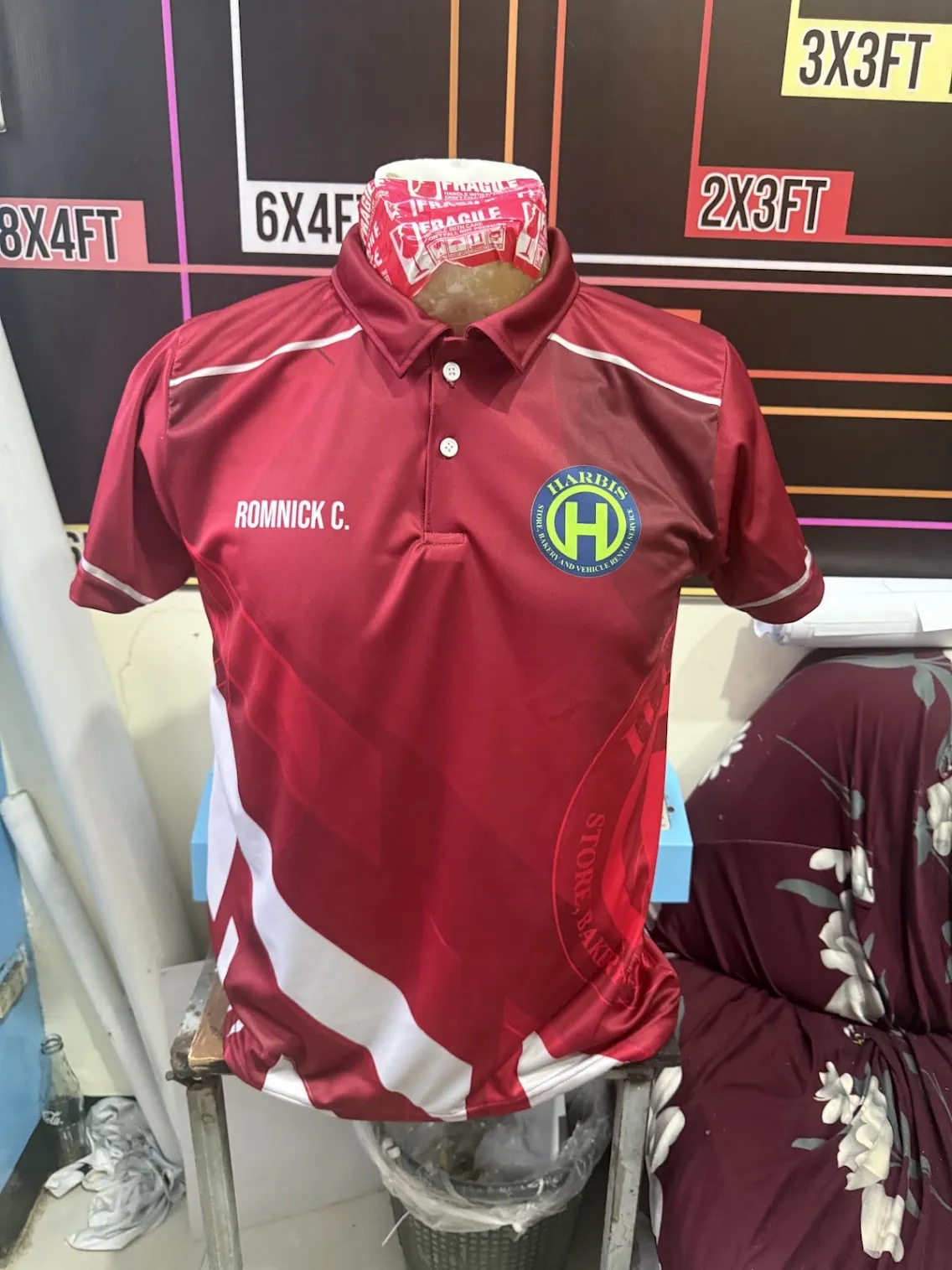
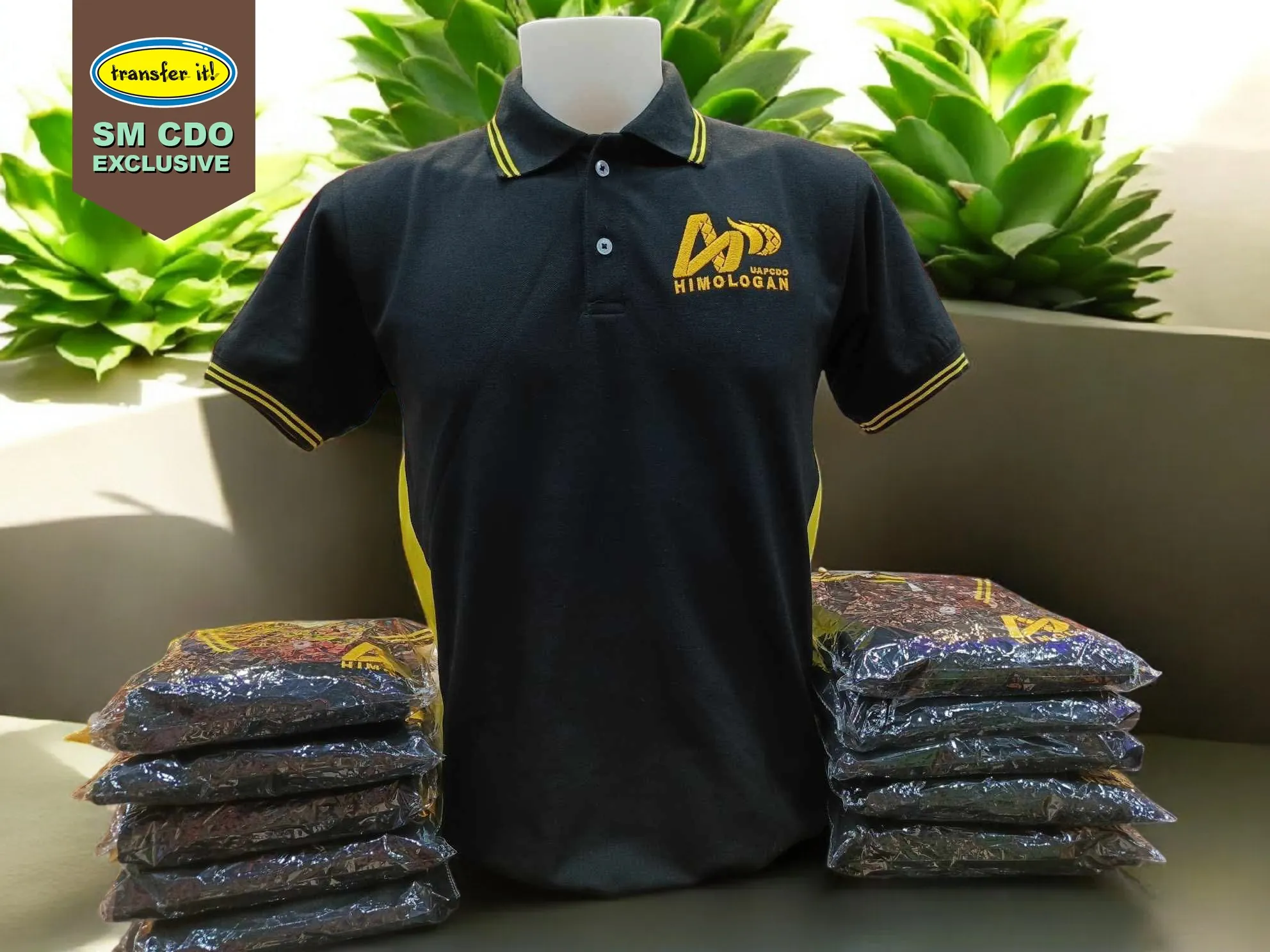

Conversions are approximate and follow the header currency switcher, which converts live and settles the order in the currency the buyer selects. Every order carries batch traceability, AQL 2.5 inspection, and needle detection on the line before packing.
For a European destination, our factory is registered under the Registered Exporter system, so each commercial invoice carries a REX statement on origin, which supports the GSP+ preference at import. Buyers who need the document set in advance can request the origin statement, the packing list, and the care label artwork with the quotation.
Independence. RB Advertising is a garment manufacturer based in Tagum City. We are not a member of ICHAM, we are not a partner of ICHAM, and nothing on this page should be read as an endorsement by the chamber. For chamber matters, contact the chamber. For apparel, contact us.
Italian Chamber of Commerce in Vietnam Questions
The questions a reader actually asks, answered without padding: the institution, its status, its offices, the corridor, the incentives, the sites, and the apparel.
Identity What is the Italian Chamber of Commerce in Vietnam?
The Italian Chamber of Commerce in Vietnam, or ICHAM, is a not for profit trade promotion organization established in 2008 and recognized by the Italian Government as a member of Assocamerestero, the association of Italian chambers of commerce abroad. It works on economic and cultural cooperation between Italy and Vietnam, through market research, business matching, delegations, events, and trade fair programs, and it maintains a network of more than one hundred member firms.
Status Is ICHAM a government body or an embassy?
No. ICHAM is a private, not for profit association. It is recognized by the Italian Government and sits inside the Assocamerestero network, but it is not an embassy, a consulate, or a government agency, and it does not issue visas or clear goods. Its value is the network and the commercial work it does between Italian and Vietnamese firms.
Offices Does ICHAM have an office in the Philippines?
No. ICHAM operates from Vietnam only, with an office in Ho Chi Minh City and an office in Hanoi, plus four desks in Italy covering Veneto, Toscana, Liguria, and Lombardia. The European Chamber of Commerce of the Philippines is a separate organization based in Makati, and it is the body to approach for European business inside the Philippines.
Corridor Why would an Italian manufacturer in Vietnam look at the Philippines?
Because a second site inside ASEAN keeps a firm inside the same tariff and logistics region while spreading land, power, labor, and trade exposure. Vietnam concentrates export manufacturing in a few northern and southern clusters, and those clusters carry rising land costs, seasonal power constraints, and an annual minimum wage schedule. A Philippine site gives an Italian group a second ASEAN platform, an English speaking workforce, and duty free entry into the European Union for most Philippine made goods under the GSP+ arrangement.
Incentives What incentives does the Philippines offer a foreign manufacturer?
The CREATE MORE Act, Republic Act 12066, sets corporate income tax at 20 percent for registered business enterprises and allows up to 27 years of combined incentives, including an income tax holiday and enhanced deductions. Registered exporters also receive duty free importation of capital equipment, raw materials, and spare parts, plus VAT zero rating on local purchases directly attributable to export sales. Registration runs through the Philippine Economic Zone Authority for ecozone locators, or through the Board of Investments for projects outside an ecozone.
Sites Which Philippine locations fit machinery, motorcycles, electronics, and apparel?
CALABARZON, covering Cavite, Laguna, and Batangas, is the deepest industrial cluster for automotive parts, machinery, and electronics. Clark and Central Luzon suit aviation, electronics, and logistics. Cebu carries electronics, shipbuilding, and furniture. Metro Manila and Laguna hold the largest cut and sew and private label apparel base. Mindanao, including Davao and Tagum, offers lower land and labor costs for agri processing and labor intensive assembly, and it is where our own factory operates.
Scope Can ICHAM advise on a Philippine investment?
Not directly. ICHAM works on the Italy and Vietnam relationship, so it is the right chamber for a firm already building in Vietnam. For a Philippine site, the working counterparts are the Philippine Economic Zone Authority, the Board of Investments, and the Department of Trade and Industry. This page is independent of ICHAM, and it summarizes publicly available material so a reader can see the corridor in one place before contacting any agency.
Apparel Can RB Advertising supply chamber, delegation, and plant apparel?
Yes. RB Advertising manufactures corporate polos, embroidered corporate shirts, delegation and event tees, and plant uniforms in the Philippines, with pique polos from 320.00 pesos, about 5.10 US dollars, 4.45 euros, or 3.85 pounds per piece at a 12 piece minimum. We are a garment manufacturer and we are not affiliated with ICHAM, so confirm membership, event, and delegation details with the chamber directly at icham.org.
Talk to the Manufacturing Desk
Tell us the program, the quantity, and the destination country. We return a quotation, a document checklist, and a production timeline. Operating hours are Mon to Sat, 8:30 AM to 5:00 PM PHT.