
Assocamerestero: The Italian Chamber Network Abroad and the Philippines as a Manufacturing Base
Assocamerestero is the association that coordinates the Italian chambers of commerce abroad: 86 chambers, 64 countries, and about 21,000 member firms. This page explains what the association is, what a chamber abroad actually does for a small Italian firm, and then follows the question its Philippine member hears most often: why would an Italian manufacturer place a plant in the Philippines now, ahead of the European Union trade agreement that is due to conclude before the end of 2026?
- 86
- Italian chambers of commerce abroad
- 64
- Countries with a chamber in the network
- 21,000
- Member firms across the network
- 160
- Assistance points worldwide
- Rome The association that coordinates the network
- Makati The Italian chamber inside the Philippines
- Mindanao The plant, the lease, and the export file
What Assocamerestero Is
Assocamerestero is not a chamber and it is not an investment agency. It is the body that holds a network of chambers together, gives the network one voice in Rome, and turns 86 separate local organizations into something an Italian firm can use as a single system.
- Legal form
- A private association of the Italian Chambers of Commerce Abroad and of Unioncamere, the union of the Italian chambers of commerce. It is not a ministry, an embassy, or a consulate.
- Origin
- Formed in the late 1980s so that the chambers abroad could speak to Italian institutions with one voice, and so that Italian firms could find the network without having to discover each chamber one at a time.
- Legal basis
- Law 518 of 1 July 1970 recognizes the chambers of commerce abroad. Law 56 of 2005 places them inside the Italian system of export promotion, as the third subject beside the Italian Trade Agency and ENIT.
- Seat
- Via G.B. Morgagni 13, Rome. The secretariat works with the Ministry of Enterprises and Made in Italy and with the Italian regional chamber system.
- Governance
- A General Council drawn from the chambers and from Italian institutions. Mario Pozza was confirmed as president for the 2026 to 2029 term, with Fabio Morvilli as vice president.
- Remit
- Strategic direction, coordination, representation, training, and project support for the network. The association does not trade goods, does not clear shipments, and does not approve investments.
- Member base
- About 21,000 member firms. Around 88 percent of them are local companies in their own market that treat Italy as a business or investment partner, not Italian firms living abroad.
- Publications
- The annual Who is Who directory of the chambers abroad, the world convention of the chambers, and the annual meeting of the secretaries general.
The distinction matters at the start of a project. An Italian firm that wants a Philippine site will not get a lease, a tax ruling, or a visa from Assocamerestero. What it can get is the right introduction, in the right country, through a chamber that already knows the local business community. The association is the index. The chamber is the chapter.
Two bodies, one network. The chambers abroad are recognized by the Italian State under Law 518 of 1970. Assocamerestero is the association that coordinates them, and it works beside Unioncamere, the union of the Italian chambers of commerce. This page profiles the association and its Philippine member from public sources. Membership figures, offices, and programs change, so confirm the current position at assocamerestero.it before relying on any detail here.
The Network by the Numbers, and What It Does
Scale is the reason the network is worth a phone call. The composition is the reason it works: most member firms are local companies in their own market, not Italian firms abroad, so an Italian exporter meets the market rather than a colony of compatriots.
Six things a chamber abroad does for a small firm
-
Market entry advice
A firm that has never sold in a market gets a local reading of the rules, the channels, the price points, and the competitors, in its own language, before it spends on travel. This is the first service most small firms use and the one that decides whether the second visit happens.
-
Partner search and business matching
A structured search for a distributor, an agent, a licensee, or a manufacturing partner, followed by introductions and meeting programs. The chamber sits between the two companies rather than representing either one.
-
Delegations and trade fair pavilions
Incoming and outgoing delegations, collective Italian pavilions at local fairs, and country programs. The chamber builds the calendar so that a small firm appears in a market at the moment buyers are looking.
-
Market studies and sector reports
Commissioned studies and published sector notes on demand, regulation, distribution, and pricing. The studies the network publishes are one of the few sources written for Italian small and medium enterprises rather than for large corporates.
-
Training and professional exchange
Management courses, internships, and exchange programs for chamber staff and member firms. The network treats market knowledge as a skill that is taught, not a secret that is guarded.
-
The membership card and the network itself
A member card that opens doors across the network, and a standing set of contacts in 64 countries. For a firm entering one market, the value is the local chamber. For a firm entering three, the value is that the three chambers already know each other.
The network also publishes an annual directory, runs a world convention, and supports new chambers as they form. Those are institutional functions rather than services, but they explain why a chamber in Manila can reach a chamber in Ho Chi Minh City or Singapore without a cold introduction.
Inside the Italian Chamber of Commerce in the Philippines
The Philippine member of the network is young by chamber standards and small by European standards, which is exactly why it answers email. It was founded in 2011, recognized by Assocamerestero in 2018, and it operates from Makati.
- Official name
- Italian Chamber of Commerce in the Philippines, Camera di Commercio Italiana nelle Filippine. A not for profit association registered with the Philippine Securities and Exchange Commission.
- Founded
- 2011, to build business relationships between Italy and the Philippines. The chamber marked its recognition by Assocamerestero in 2018, which placed it inside the global network.
- Office
- Suite 442, Dusit Thani Manila, Ayala Center, Makati City. The Makati address puts the chamber inside the main financial and diplomatic district of Metro Manila.
- Members
- About 108 member firms at the last network update, spread across banking, construction, design, energy, food and beverage, hospitality, logistics, manufacturing, and professional services.
- Leadership
- Sergio Boero as president, with Lorens Ziller as secretary general and executive director. The chamber publishes a monthly newsletter and a semiannual magazine.
- Sister chambers
- Working relationships with the Italian chambers in Singapore, Hong Kong and Macao, Vietnam, and Australia, plus local partners including the Makati Business Club and several Philippine government departments.
The member roster is a useful map of where Italian business already sits in the Philippines: banking and audit, construction and chemicals, design and stone, energy and solar, food and beverage import, hospitality, logistics, recruitment, and professional services. A manufacturer arriving with a machinery line or an apparel program is not entering an empty room. It is entering a room where the Italian brand names at the table already import, build, or distribute.
What the chamber is not. It is not the Philippine government, it does not grant incentives, and it does not replace the Philippine Economic Zone Authority, the Board of Investments, or the Department of Trade and Industry. It is a business association. Its value is the introduction, the local reading, and the calendar of events where the right people are already in the room.
Why an Italian Manufacturer Looks at the Philippines Now
Four conditions have moved at the same time. None of them is a reason to build a plant on its own. Together they are the reason the question moved from the trade fair to the board paper.
-
The trade agreement is at the door
The European Union and the Philippines announced substantial agreement on a free trade agreement on 22 September 2026, after six formal rounds, and both sides aim to conclude formally before the end of 2026. A treaty changes the tariff line for every Italian exporter at once. A plant, a lease, and a registered incentive position do not arrive at once.
-
The preference scheme is time limited
Philippine goods currently enter the European Union under GSP+, which covers 6,274 product lines at zero tariff. That arrangement is not permanent, and the free trade agreement is intended to replace it. For an Italian brand that makes in Asia for the European market, the difference between a preference that can lapse and a treaty that cannot is a line in the risk register.
-
The corridor is already large
Italy and the Philippines recorded about USD 1.49 billion of two direction trade in 2025, with about USD 1.11 billion of Italian sales into the Philippines. Electrical machinery, mechanical equipment, and pharmaceuticals lead the Italian flow. The Philippines buys Italian capital goods already, which means the service and spare parts base exists.
-
Europe is the fourth partner, and rising
The European Union accounted for 8.3 percent of Philippine goods trade in 2025, at EUR 17.6 billion, and services trade reached EUR 10.3 billion in 2024. European firms are not arriving in an empty field. They are arriving in a market where European standards, documentation, and payment terms are already understood by suppliers.
The trade figures are the recorded 2025 values. Agreement status and tariff schedules move with each negotiation round, so confirm the current position with the European Commission and the Philippine Department of Trade and Industry before a number enters a board paper. Our running note on the negotiation is at EU Philippines FTA Status.
What the Philippines Puts on the Table
Six instruments, in the order they change a business case. The first four change the tax and duty line of the model, the fifth changes the operating cost line, and the sixth changes the market the plant can serve.
-
Corporate income tax at 20 percent
Under the CREATE MORE Act, Republic Act 12066, a registered business enterprise pays corporate income tax at 20 percent rather than the standard rate, on income attributable to its registered activity.
-
Up to 27 years of combined incentives
An income tax holiday followed by enhanced deductions or a special corporate income tax rate, with the total package running up to 27 years depending on location and sector.
-
Duty free capital equipment
Registered exporters can import production machinery, raw materials, spare parts, and consigned equipment free of duty and VAT, which removes the largest single line in a plant start up budget.
-
VAT zero rating on export inputs
Local purchases of goods and services directly attributable to registered export sales carry a zero VAT rate, which keeps the domestic supply chain inside the incentive rather than outside it.
-
An English speaking workforce
Instruction, engineering documentation, and factory supervision run in English. For an Italian group used to working through translation elsewhere in the region, this shortens the ramp on a new line and on a new management team.
-
Preferential entry into Europe
Most Philippine made goods enter the European Union at a zero preferential tariff today under GSP+, supported by a statement on origin, with a treaty based schedule in negotiation. For an Italian brand making in Asia for the European market, that is the margin that decides the site.
Incentive terms are set by statute and change with amending rules. Confirm the current package with the Philippine Economic Zone Authority, the Board of Investments, and the Department of Trade and Industry, and confirm European preference with the European Commission, before a figure enters a board paper.
Which Italian Industries Travel Best to a Philippine Site
The Italian chambers abroad carry machinery, electronics, automotive, apparel, food, and design firms. Not every one of those transfers cleanly to the Philippines. This is the honest mapping, sector by sector, with the site that already hosts the work.
| Sector | Activity that transfers | Philippine site |
|---|---|---|
| Industrial machinery and automation | Assembly, packaging machinery, plant engineering, and after sales service | CALABARZON and Clark |
| Electronics and industrial control | Assembly, test, packaging, and repair of electronic modules | Clark, Cebu, and Laguna |
| Apparel, leather goods, and technical textiles | Cut and sew, embroidery, private label, and technical finishing | Metro Manila, Laguna, and Mindanao |
| Food processing and packaging | Processing lines, packaging, cold chain equipment, and ingredients | Central Luzon and Mindanao |
| Automotive and two wheel components | Parts, tooling, plastic injection, and vehicle assembly | CALABARZON, Cavite and Laguna |
| Furniture, design, and construction materials | Fabrication, finishing, stone, and contract interiors | Cebu and Pampanga |
The weakest transfers are the ones that depend on a supplier ecosystem the Philippines has not built at the same depth, such as a dense two wheel parts cluster or a specialty ceramics equipment chain. The strongest are the ones that depend on labor, English language supervision, and duty treatment, which is assembly, test, packaging, cut and sew, and technical finishing.
Where a Plant Would Actually Go
Five corridors, each with a different cost base and a different supplier depth. The country is an archipelago, so the choice of island is a logistics decision before it is a real estate decision.
CALABARZON
Cavite, Laguna, and Batangas hold the deepest industrial cluster in the country: automotive parts, electronics, machinery, and the densest base of mold and die shops. Port access runs through Manila and Batangas.
Clark and Central Luzon
A former air base turned freeport, with runway access, electronics locators, aviation maintenance, and rail and road links north of Manila.
Cebu
The Visayas center for electronics, shipbuilding, furniture, and a mature export processing culture. A separate island grid and a separate labor market from Luzon.
Metro Manila and Laguna
The country largest cut and sew, embroidery, and private label apparel base, which is why a brand that needs both a factory and a regional head office often starts here.
Davao and Tagum, Mindanao
Lower land and labor costs, agri processing capacity, and a growing industrial corridor in the south. Our own factory and head office operate in Tagum City, in the Davao region.
Freight is the variable most often mispriced at the shortlist stage. A site forty minutes from a container port and a site four hours from one can carry the same headline rent and a very different landed cost.
How a Philippine Site Gets Built, in Order
Five stages. The order matters more than the calendar, because the incentive filing fixes the activity and the capital equipment list before the lease is signed, and the chamber conversation should happen before either.
-
Start with the chamber, not the brochure
Approach the Italian Chamber of Commerce in the Philippines in Makati, or the chamber in the country where the group already operates, and ask for a market entry session. The chamber will tell you which of your assumptions are local folklore.
-
Structure the Philippine entity
Register the corporation with the Securities and Exchange Commission, settle ownership and capital structure, and confirm whether the activity qualifies as a registered export enterprise or a domestic market enterprise.
-
File with PEZA or the Board of Investments
Ecozone locators register with the Philippine Economic Zone Authority. Projects outside an ecozone register with the Board of Investments. The filing fixes the activity, the incentive package, and the capital equipment list.
-
Select the park and sign the lease
Compare floor loading, substation capacity, water, effluent, and port distance before comparing headline rent. A cheap lease with an undersized substation becomes an expensive generator contract.
-
Mobilize the workforce and the local supply chain
Recruit the technical core, then certify through TESDA and the internal training program. Qualify local packaging, consumables, engineering services, and staff uniforms before the first export shipment.
Chamber, Delegation, and Plant Apparel
A chamber, a trade delegation, and a new factory all need the same three things: shirts that carry a mark properly, event apparel that arrives before the event, and uniforms that survive a production floor. We manufacture all three in the Philippines.
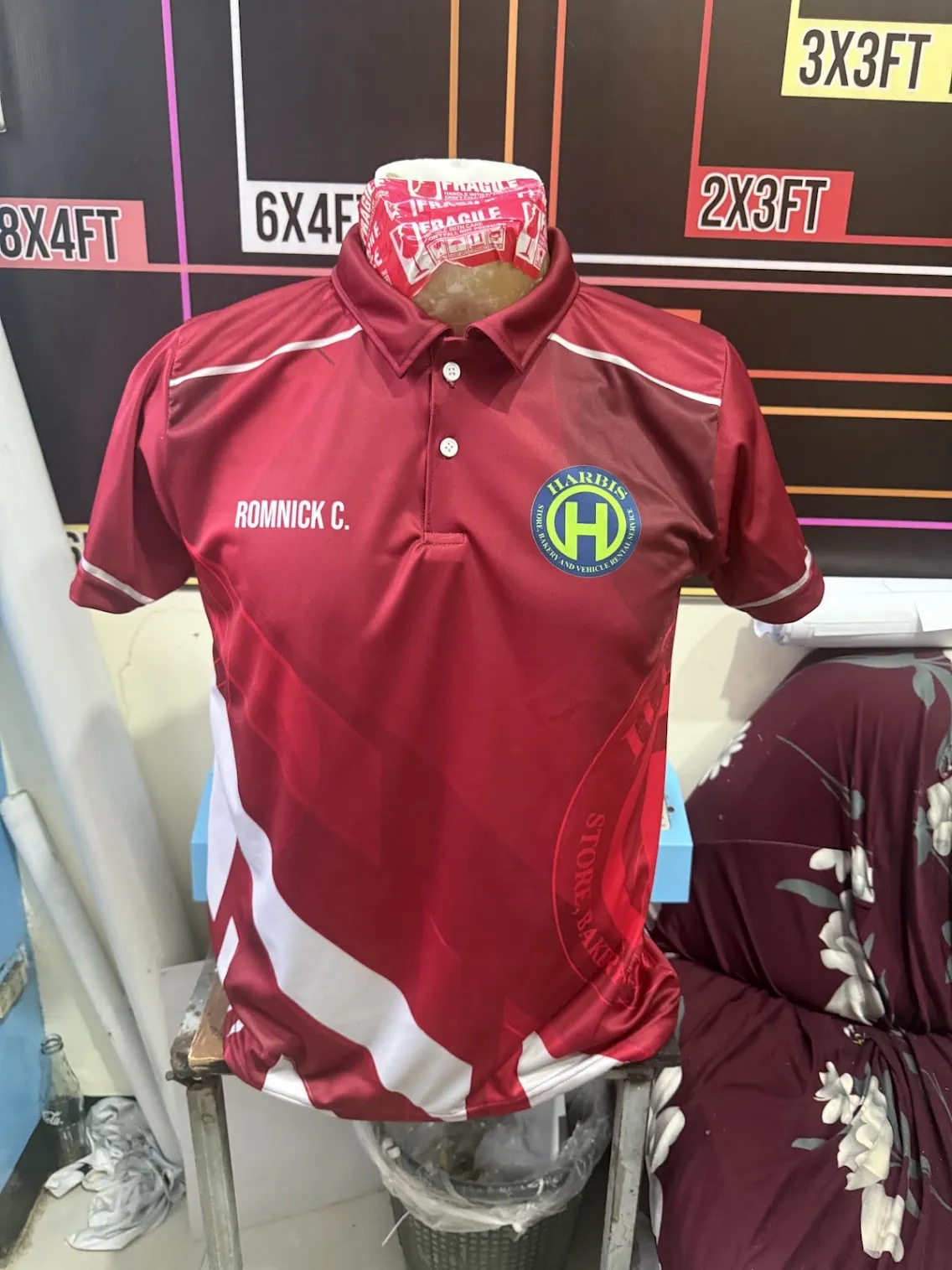
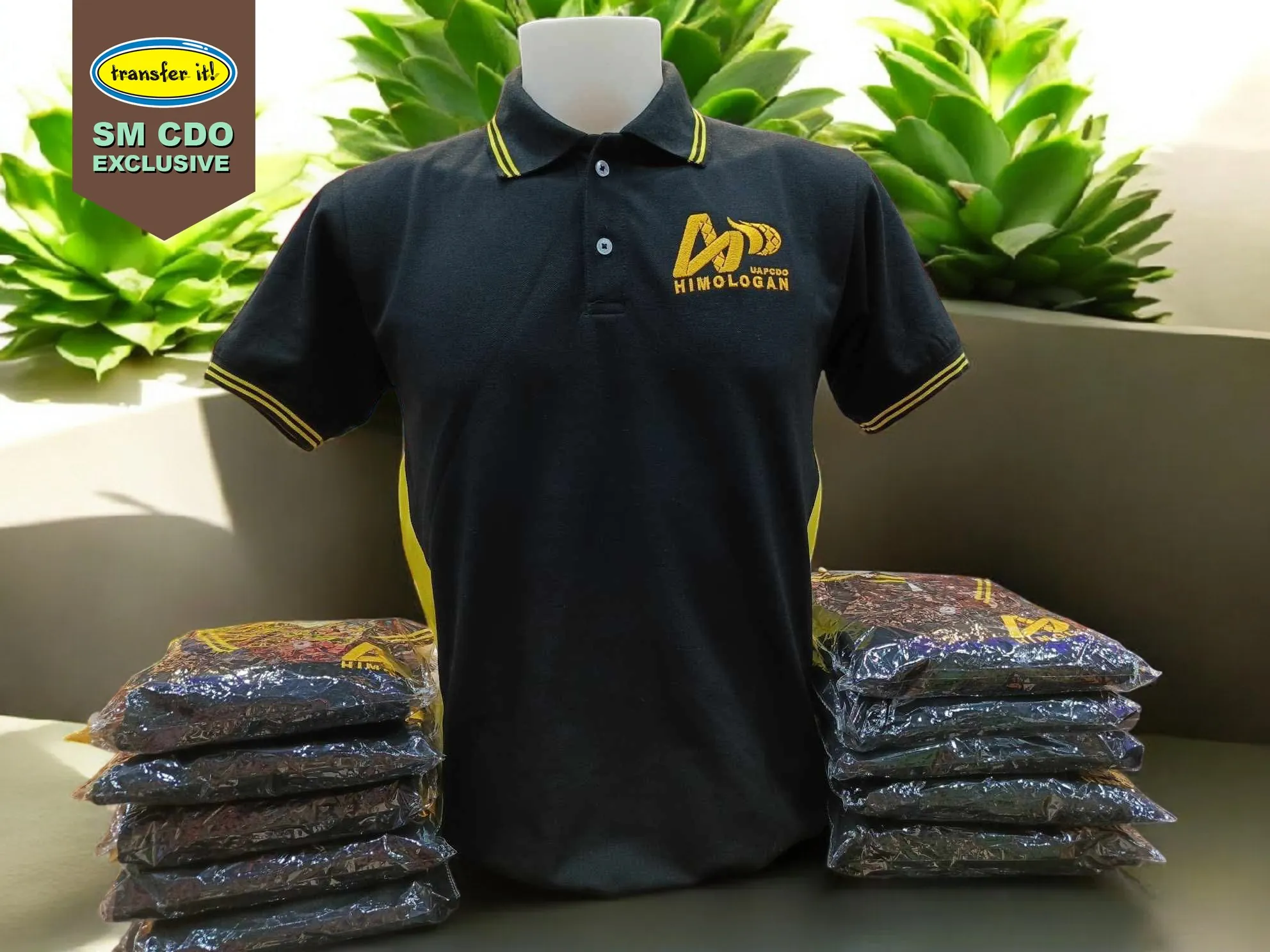

Conversions are approximate and follow the header currency switcher, which converts live and settles the order in the currency the buyer selects. Every order carries batch traceability, AQL 2.5 inspection, and needle detection on the line before packing.
For a European destination, our factory is registered under the Registered Exporter system, so each commercial invoice carries a REX statement on origin, which supports the GSP+ preference at import and the treaty schedule once it is in force. Buyers who need the document set in advance can request the origin statement, the packing list, and the care label artwork with the quotation.
Independence. RB Advertising is a garment manufacturer based in Tagum City. We are not a member of Assocamerestero, we are not a member or partner of the Italian Chamber of Commerce in the Philippines, and nothing on this page should be read as an endorsement by either body. For chamber and membership matters, contact the chamber. For apparel, contact us.
Assocamerestero and Philippine Manufacturing Questions
The questions a reader actually asks, answered without padding: the association, its status, the network, the Philippine chamber, the trade agreement, the incentives, and the apparel.
Identity What is Assocamerestero?
Assocamerestero is the association of the Italian Chambers of Commerce Abroad and of Unioncamere, the union of the Italian chambers of commerce. It coordinates, represents, and supports the chambers that Italian business communities maintain outside Italy. It is based in Rome and it works with the Italian Ministry of Enterprises and Made in Italy, the Italian Trade Agency, and the regional chamber system.
Status Is Assocamerestero a government agency?
No. It is a private association with a public mandate. The chambers it represents are recognized by the Italian State under Law 518 of 1 July 1970, and Law 56 of 2005 places them inside the national system of export promotion beside the Italian Trade Agency and ENIT. Assocamerestero itself is not a ministry, an embassy, or a consulate, and it does not issue visas, clear goods, or grant incentives.
Network How large is the Italian chamber network abroad?
The network publishes 86 chambers in 64 countries, 160 assistance points, about 21,000 member firms, and roughly 300,000 business contacts. About 88 percent of the member firms are local companies in their own market rather than Italian companies, which is what makes the network useful to an Italian exporter looking for a partner rather than a compatriot.
Philippines Does the Philippines have an Italian chamber of commerce?
Yes. The Italian Chamber of Commerce in the Philippines, the Camera di Commercio Italiana nelle Filippine, was founded in 2011 and is listed in the Assocamerestero network, which recognized it in 2018. It works from Suite 442 of the Dusit Thani Manila in Makati City and reports about 108 member firms at the last network update.
Trade What is the state of European and Italian trade with the Philippines?
The European Union was the fourth largest trading partner of the Philippines in 2025, with 8.3 percent of the country goods trade and EUR 17.6 billion of two direction goods trade. The Italy and Philippines corridor recorded about USD 1.49 billion in 2025, of which about USD 1.11 billion were Italian sales into the Philippines and about USD 380 million were Philippine sales into Italy.
Agreement Why does the EU Philippines trade agreement matter to an Italian investor?
The European Union and the Philippines announced substantial agreement on a free trade agreement on 22 September 2026, with the formal conclusion targeted before the end of 2026. Once the agreement enters into force it is intended to replace the current GSP+ arrangement with a treaty based tariff schedule. A manufacturer that registers and builds before that date holds a position that later entrants have to buy into.
Incentives What incentives does the Philippines offer an Italian manufacturer?
The CREATE MORE Act, Republic Act 12066, sets corporate income tax at 20 percent for registered business enterprises and allows up to 27 years of combined incentives. Registered exporters can import capital equipment, raw materials, and spare parts free of duty, and local purchases directly attributable to export sales carry a zero VAT rate. Registration runs through the Philippine Economic Zone Authority for ecozone locators or the Board of Investments for projects outside an ecozone.
Apparel Can RB Advertising supply chamber, delegation, and plant apparel?
Yes. RB Advertising manufactures corporate polos, embroidered corporate shirts, delegation and event tees, and plant uniforms in the Philippines, with pique polos from 320.00 pesos, about 5.10 US dollars, 4.45 euros, or 3.85 pounds per piece at a 12 piece minimum. We are a garment manufacturer and we are not a member of Assocamerestero or of the Italian Chamber of Commerce in the Philippines, so confirm chamber, membership, and delegation details with the chamber directly.
Talk to the Manufacturing Desk
Tell us the program, the quantity, and the destination country. We return a quotation, a document checklist, and a production timeline. Operating hours are Mon to Sat, 8:30 AM to 5:00 PM PHT.