
Sublimation T Shirt: Full Color Custom Printing That Becomes Part of the Fabric
A dye sublimation T shirt is printed with ink that turns to gas under heat and bonds inside the polyester fiber itself. There is no layer sitting on top of the cloth, so the design cannot crack, peel, or fade away from the shirt. That is what makes it the first choice for team uniforms, school PE shirts, company events, and allover graphic prints that need to survive a full season of washing.
- Garment
- Full print T shirt
- Fabric
- 100% polyester, 140 to 180 gsm
- Sizes
- XS to 5XL, youth sizes available
- Colors
- Unlimited, no per color fee
How Sublimation Printing Works on a T Shirt
Sublimation skips the idea of ink sitting on top of cloth. The dye changes state and becomes part of the material, which is why the print behaves like the fabric instead of like a coating.
Solid dye becomes gas
Specialty inks are printed onto transfer paper, then heat and pressure are applied. At that point the solid dye converts directly into gas without passing through a liquid stage. The gas penetrates the polyester fibers and solidifies inside them, creating a bond that cannot separate.
Print with no surface layer
Because the image lives inside the fiber, the shirt keeps its soft hand and its breathability. There is no plastic film to crack, no vinyl edge to lift, and no plastisol to fade. Photographs, gradients, and allover patterns reproduce in full detail across the whole panel.
The fabric is the white base
Sublimation has no white ink. Any area that should read as white is simply the untouched fabric showing through the design. That is why a sublimation T shirt must start from a white or very pale polyester blank, and why you cannot sublimate onto a black or colored cotton shirt.
The Press Room, Step by Step
The same six steps run every time a sublimation T shirt is made. The values below are the standard settings published for a flat bed heat press, and they should always be confirmed against the specific blank you buy because time and temperature move with the fabric weight and the fiber content.
-
Build the artwork
Prepare the design on your computer at the final print size. Good choices are Adobe Photoshop, Adobe Illustrator, Affinity Photo, or Affinity Designer. An A3 capable printer helps for larger panels, while smaller panels can run on A4. Keep the layout inside the safe area so nothing important falls on a seam.
300 DPI · sRGB -
Prepare the garment
The shirt must be dry and clean. Inspect it for loose threads or stitching before you press, and run a lint roller over it to lift dust and bobbles. Lay it flat on the rubber base of the press and adjust until the surface is as even as possible, then close the press for 5 to 10 seconds to pre press. Pre pressing irons out creases that would otherwise print as light marks.
Pre press 5 to 10 s -
Prepare the transfer
Print onto sublimation paper, then trim or carefully tear every edge of the paper before pressing. Ink can collect on the cut edges of the sheet and transfer as a border, so a clean edge gives a clean print. Tape each corner with heat resistant tape so the sheet cannot shift, and pad the inside of the shirt with a PTFE heat press pillow so pressure stays even where seams and hems add thickness.
Trim, tape, pad -
Press at temperature
For a 100 percent white polyester T shirt the working values are 200 °C for 50 seconds at medium pressure, with a PTFE protection sheet laid over the transfer. The sheet cuts the risk of scorching the fabric. These numbers are a starting point from the equipment supplier and not a universal setting. A heavier or blended shirt needs its own time and temperature, so confirm with the blank supplier before a bulk run.
200 °C · 50 s · Medium -
Peel and cool
When the timer ends, open the press and remove the paper transfer in one smooth motion rather than lifting it in pieces. Then take the shirt off the press and let it cool fully before handling or folding it.
One smooth peel -
Inspect and pack
Check the color depth, the edges, and the alignment against the approved mock up. Anything that misses the mark is caught here, before the shirt is bagged for delivery.
Quality check
Fabric Compatibility: What Takes a Sublimation Print
The dye bonds with synthetic fiber, so polyester content is the single biggest factor in how vivid and how permanent the print will be. This is the honest picture before you commit a design.
Read more on fabric chemistry in the sublimation fabric guide, compare methods in DTF versus sublimation printing, and see how moisture moving knits behave in the Microdex and Microcool fabric guide.
Sublimation T Shirt Design Ideas
Across the stock design libraries and the supplier catalogs, the same families keep coming back. These are finished pieces from our own design library, one per family, so you can see how each idea looks on a real printed shirt.
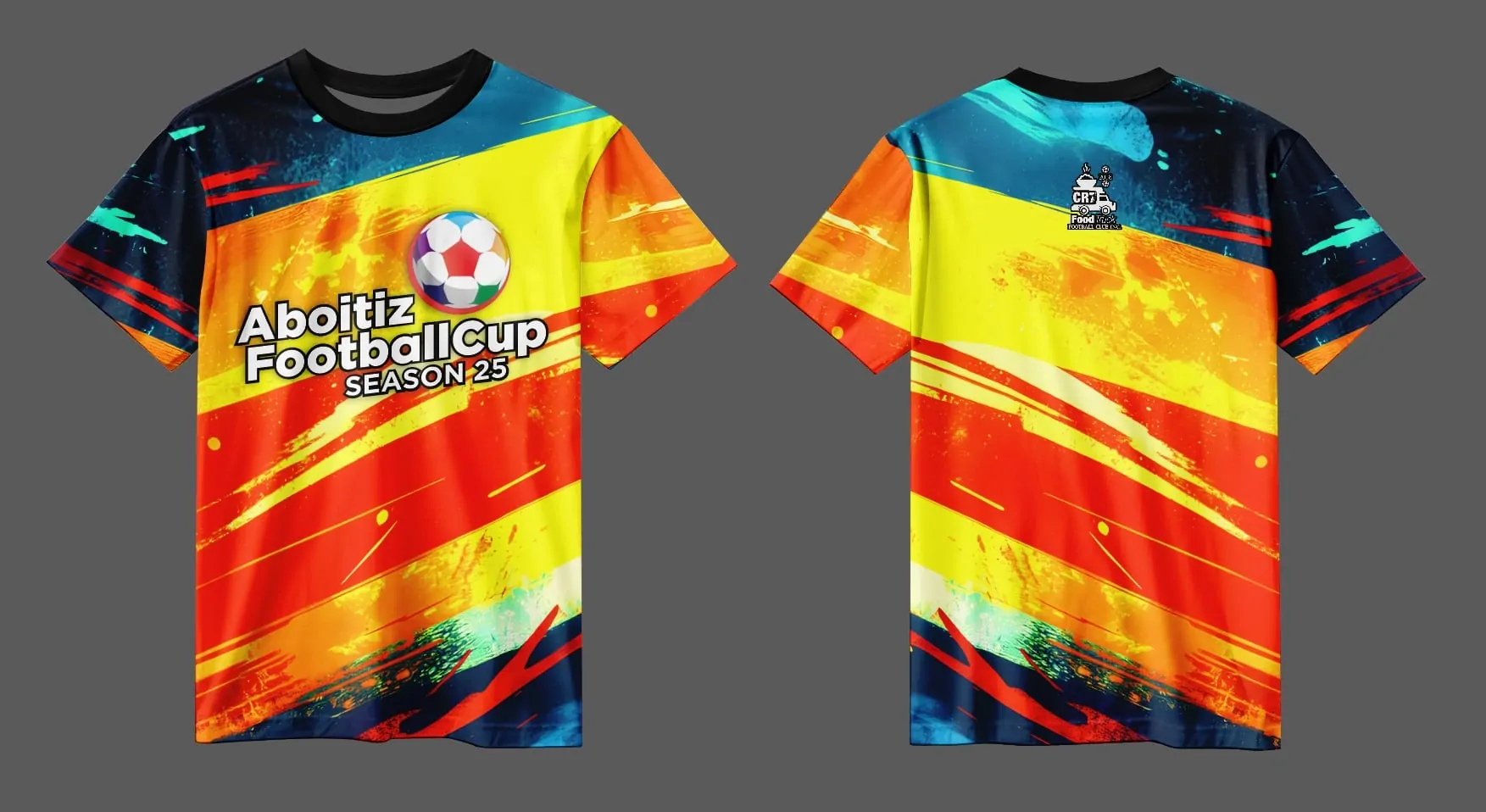 Sport and event
Sport and event shirts
Bold diagonal color fields with a tournament mark on the chest. Works for football cups, fun runs, and school sports festivals where energy has to read from across the field.
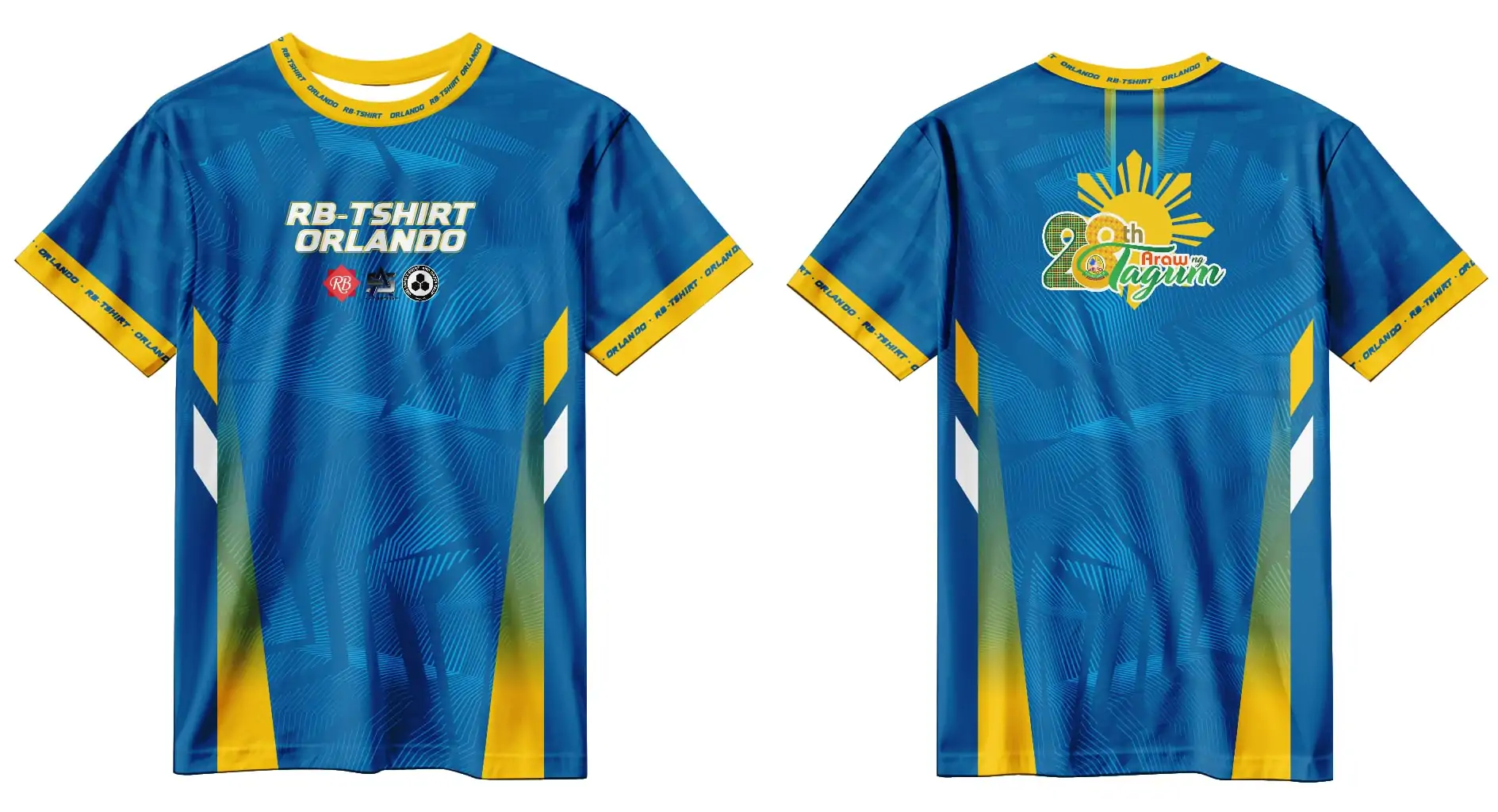 Team and league
Team and league kits
Side panels, sleeve bands, and a large back mark that carries the team name. A roster set prints in one batch so every member gets the same color.
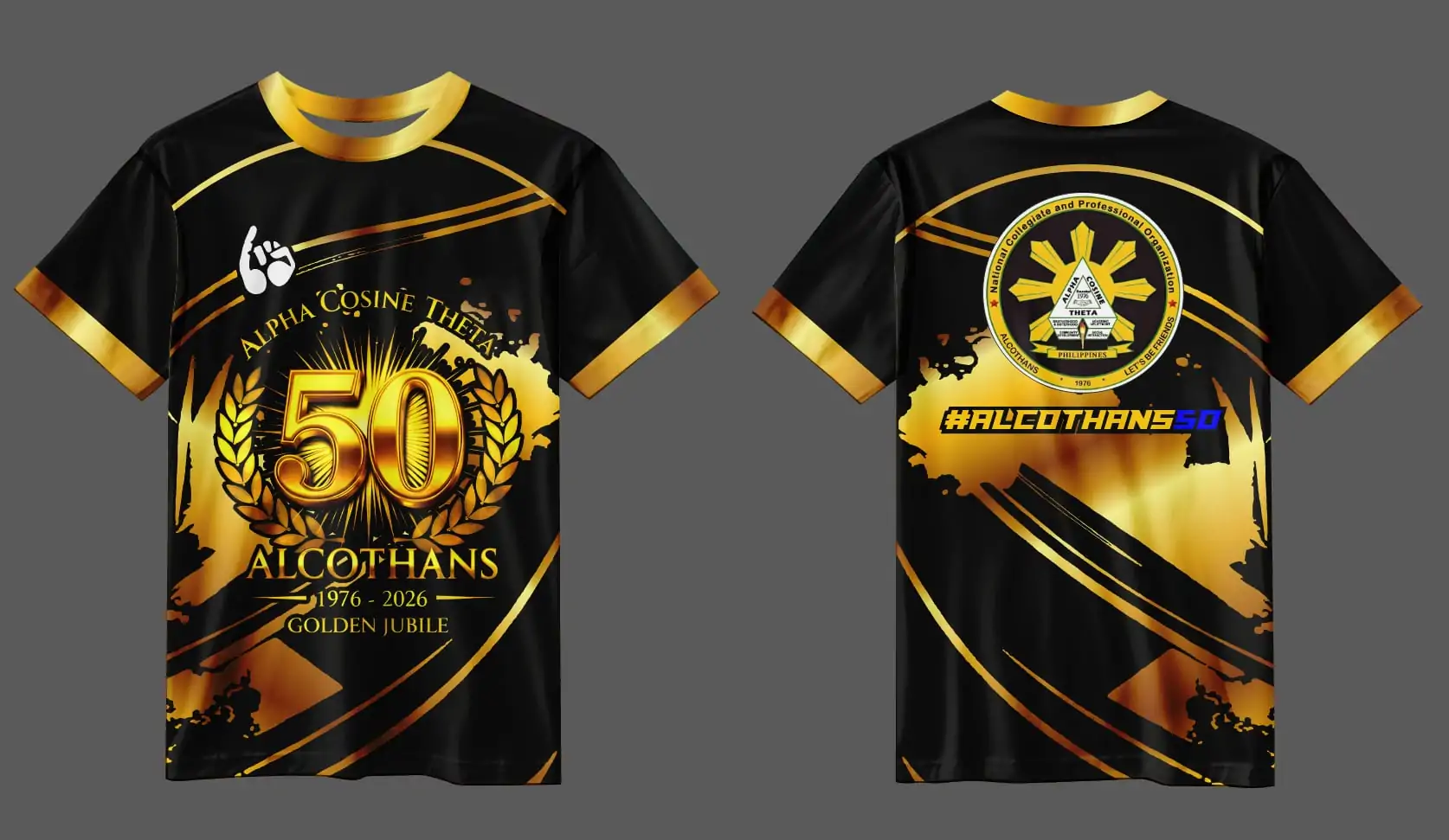 Corporate and milestone
Corporate and anniversary prints
Black and gold with a gilded crest for a company or organization milestone. Metallic effects are printed as flat art, so they stay soft on the hand.
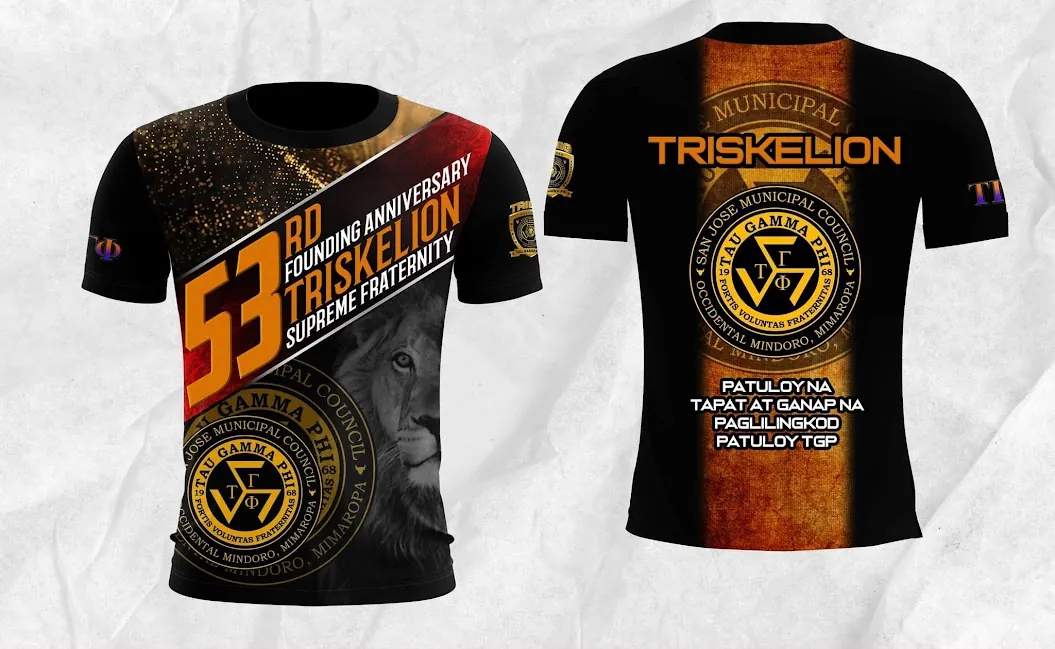 Fraternity and organization
Fraternity and civic marks
Heavy crest work, anniversary numerals, and a motto band across the back. Fraternities, alumni groups, and civic clubs use this treatment for reunions.
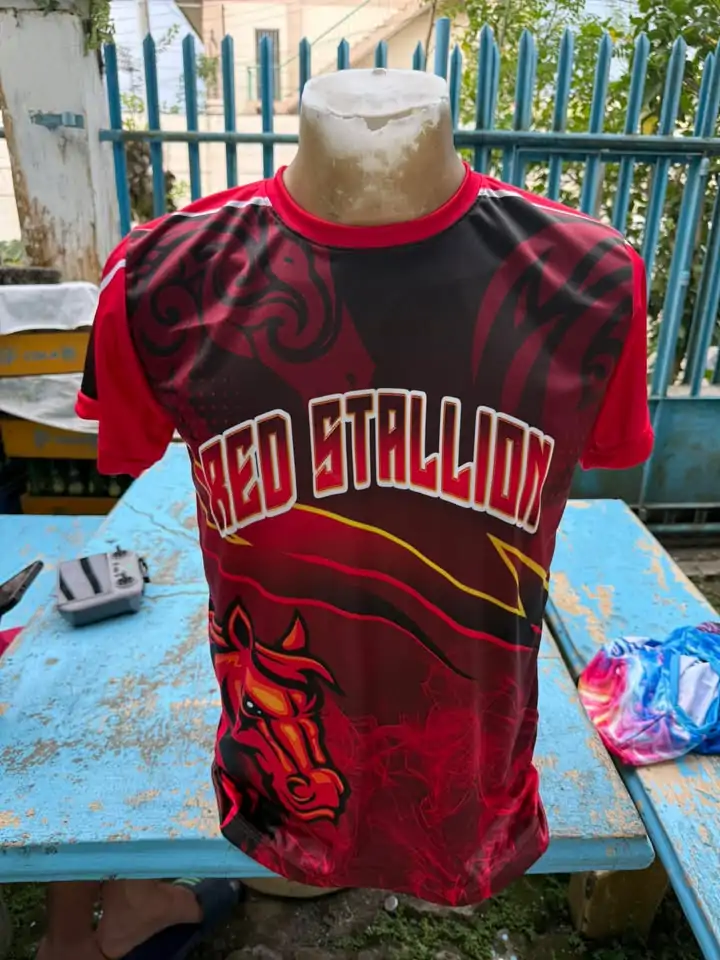 Esports and gaming
Esports and gaming shirts
Dark base, sharp highlights, and a large mascot or glitch pattern. The reference libraries are full of this family because full color print is the natural fit for a gaming team identity.
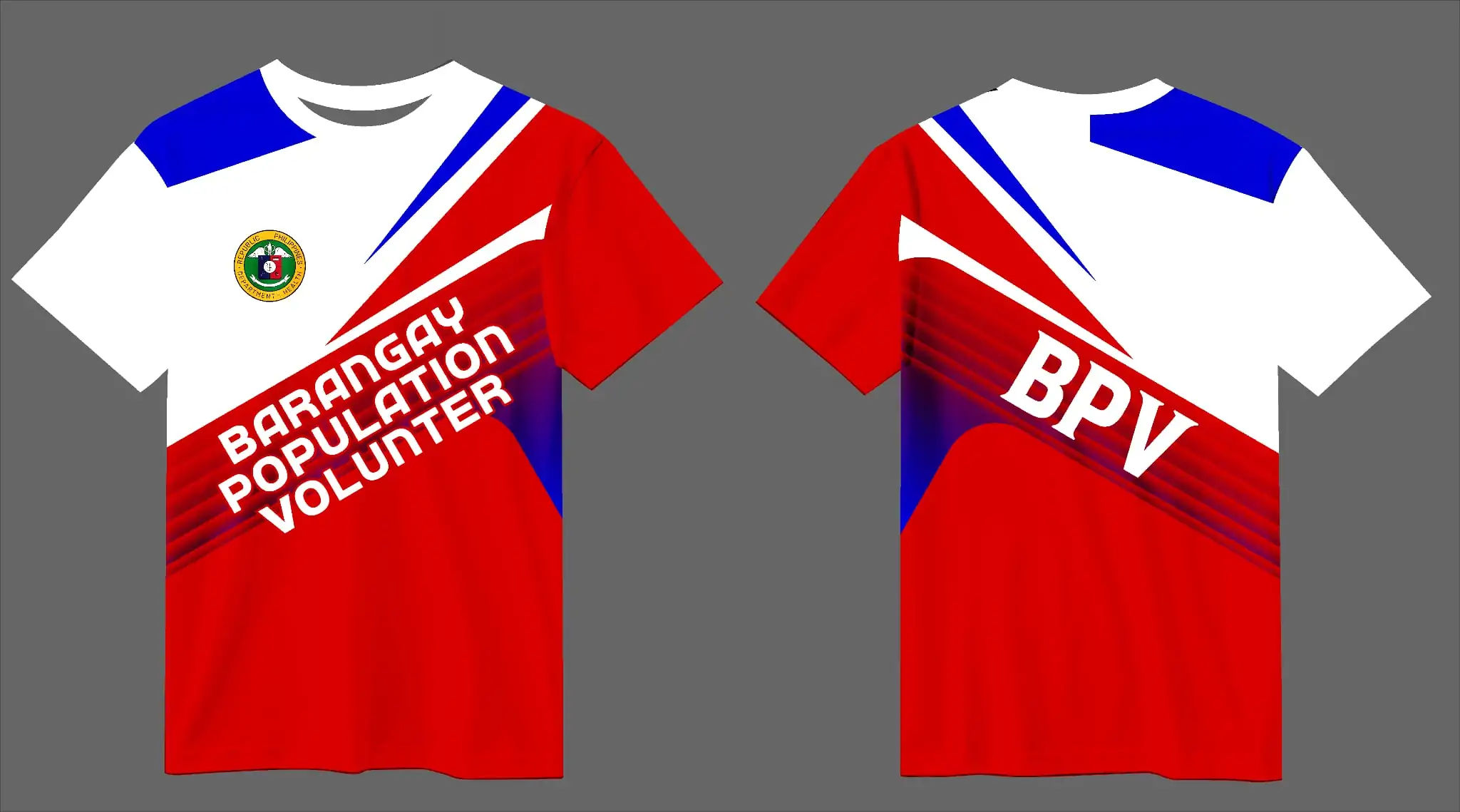 LGU and barangay
Barangay and LGU programs
Red, white, and blue panels with a program title and the agency seal. Used for barangay volunteers, city events, and community outreach cohorts.
Beyond these six, the wider design space in the stock libraries runs through racing and motorsport halftone stripes, tribal and Polynesian tattoo patterns, geometric honeycomb and triangle tiles, gradient wave and water art, floral and neon line work, varsity lettering, and seasonal novelty artwork. Send us a reference and we will build a print ready layout around it.
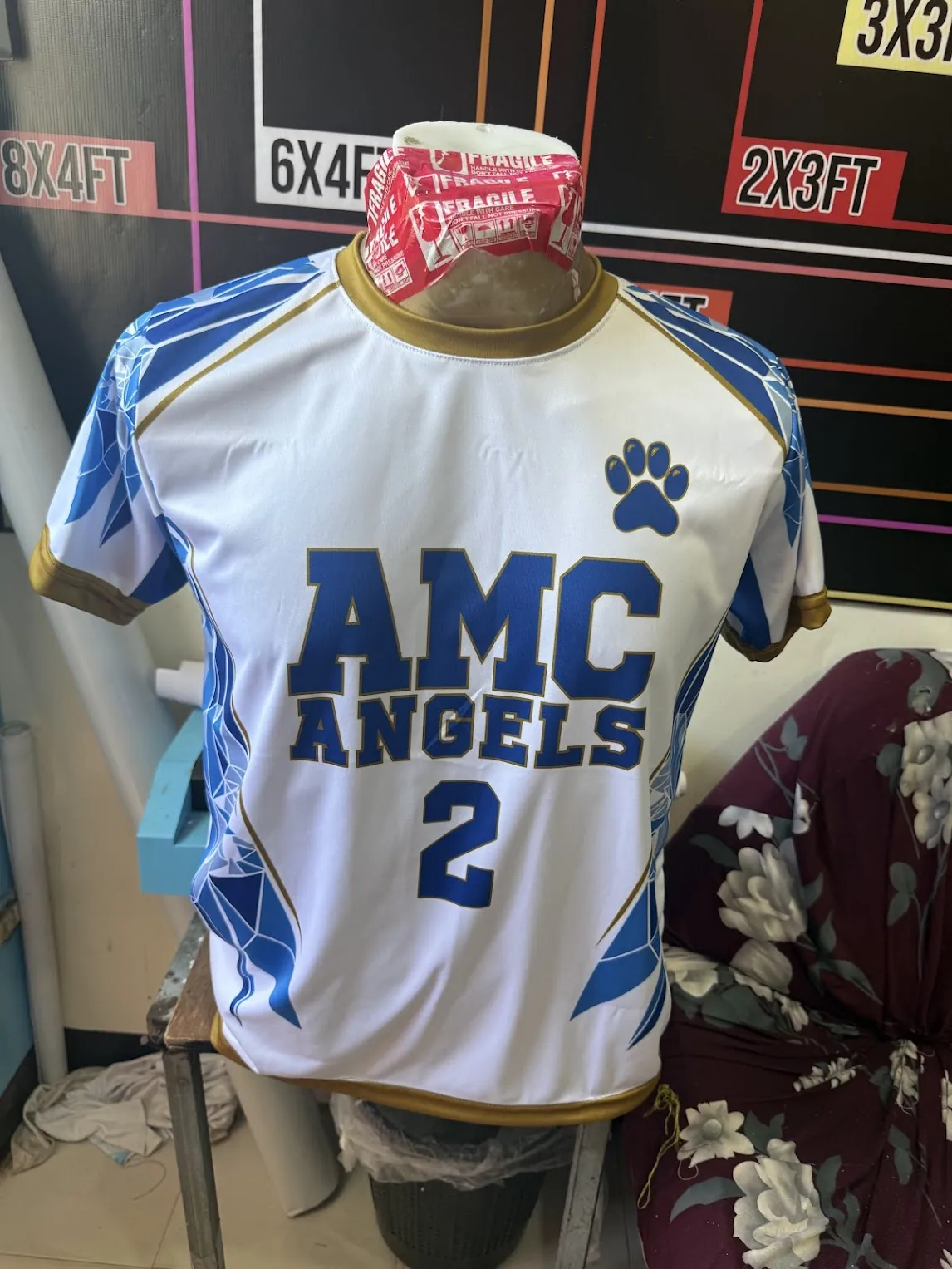
From Reference to Delivered Set
You send the idea, we return a mock up, then we print the whole run with one color profile.
Share a logo, a photo, or even a rough sketch. We clean the artwork, lay it out on the front, back, and sleeves, and send back a digital mock up for approval. Once you sign off, we run the size list and print the full set in one batch so the colors match piece to piece, then bag and label each shirt by name and size for easy distribution.
Because the print is full color at no extra setup cost, a design with ten colors and a design with one color carry the same print cost. That is the practical difference between sublimation and screen printing when the artwork is complicated.
Artwork Specifications for a Clean Print
Good artwork is the difference between a shirt that looks sharp on the first wash and one that looks sharp on the hundredth. These are the values we ask for on a sublimation order.
Build at 300 DPI in sRGB
Work at 300 DPI at the final print size, not at a smaller size that gets enlarged later. Use the sRGB profile for the most predictable color, and supply the file as PNG or TIFF. Where a logo exists as a vector, send the AI, EPS, SVG, or PDF so it stays crisp at any scale.
Oversize at the seams
A shirt stretches over the body, so artwork that ends exactly at a seam can show a thin gap when worn. Oversize the design slightly past the seam line, and keep text and logos inside a comfortable safe area so nothing important wraps around a curve.
Do not build around white ink
Any white in the artwork becomes the shirt fabric showing through. Design with that in mind: either let the fabric carry the white, or lay down a light tint where you want a deliberate pale area. This is the rule that decides whether a design is a good fit for sublimation at all.
Choose the print zones
You can print the full garment front and back, a single placement, or an allover pattern that runs across the body and sleeves. Tell us the coverage you want and we build the panel layout around the shirt pattern so the artwork follows the seams correctly.
More detail on file preparation and print zones lives in the sublimation design guidelines.
Garment Styles and Size Range
The print method is the same across styles. What changes is the cut, the collar, and the sleeve, so a team can match the shirt to the occasion.
Round neck T shirt
The default sublimation shirt. A ribbed crew collar with a straight body, used for team uniforms, PE shirts, and event tees. This is the style most orders choose.
Raglan T shirt
Raglan sleeves run the seam from the collar to the underarm, which gives the shoulder more room and gives the artwork a natural color block to follow along the sleeve.
V neck T shirt
A V neckline version for casual and corporate casual use. The neckline is bound rather than ribbed, and the print zone on the chest stays the same.
Long sleeve T shirt
Full length sleeves for cooler venues, outdoor work, and layered uniforms. The design continues down the sleeve, so the artwork is planned as one continuous panel.
Sublimated polo
A collared, placketed version for corporate, LGU, and school staff use. City seals, department marks, and name panels sit cleanly on the chest and back.
Kids and youth sizes
Smaller cuts for elementary and high school students and for youth programs. The same color profile runs across adult and youth sizes so a family set matches.
- Standard size range
- Adult XS to 3XL as stock, with up to 5XL on request
- Youth sizing
- Available for school and youth program orders, mapped to the adult size chart
- Fabric weight
- 140 to 180 gsm polyester, chosen against the intended use
- Sleeve options
- Short sleeve, long sleeve, or sleeveless depending on the style
- Collar options
- Ribbed crew, bound V neck, or a full placket and collar for a polo
- Color base
- White or very pale polyester, because the fabric is the white base of the print
What Drives the Cost of a Sublimation T Shirt
There is no single price for a sublimation shirt, because the blank, the coverage, and the quantity all move the number. Here is the typical price per piece, what actually changes the quote, and where to buy.
- Quantity
- The unit price falls as the run grows, because the setup and the artwork preparation are spread across more pieces
- Fabric weight
- A heavier 180 gsm knit costs more than a light 140 gsm knit, and the two feel different in the hand
- Coverage
- A single chest placement uses less paper and ink than a full front and back allover print
- Color count
- No effect on price. Sublimation prints unlimited colors at one cost, unlike screen printing which charges per screen
- Size spread
- A wide size range can need extra cutting and sorting, which is a small labor factor rather than a material one
- Artwork preparation
- Existing vector artwork costs nothing extra. Redrawing a low resolution logo adds a design step
- Delivery
- Pickup in Tagum City, or courier and cargo delivery quoted by destination and weight
- PHP ₱320.00 Philippine Peso
- USD $5.10 US Dollar
- EUR €4.45 Euro
- GBP £3.85 British Pound
A typical custom sublimation T shirt is 320 Philippine Pesos per piece, about 5.10 US Dollars, 4.45 Euros, or 3.85 British Pounds at the exchange rate shown. Prices convert live in the header currency switcher and the cart settles in the selected currency at checkout. Team and bulk runs fall below the single piece rate as the quantity rises, and every order still receives a written quotation on the exact specification.
What the price covers
Full color print across the garment, the artwork preparation, and the digital mock up for approval. There is no per color setup fee, so a ten color design costs the same to print as a one color design. Delivery is quoted separately by destination and weight, and bulk team orders are priced on the final size list and the coverage you choose.
Who Orders Sublimation T Shirts
Full color print suits any group that needs to look like one team and wants artwork that would be expensive to screen print. These are the orders we run most often.
Teams and leagues
Basketball, volleyball, football, and esports teams that want names, numbers, and sponsor marks on a single shirt. One batch, one color profile, matching pieces. See sublimation jersey pricing.
Schools and universities
PE uniforms, intramurals shirts, org shirts, and batch reunion prints. Youth sizing runs alongside adult sizing so a whole school can order in one pass. See cheer dance and intramural sets.
Barangay and LGU programs
Volunteer shirts, city event tees, and department prints with an agency seal. Ideal for programs that need a clean, uniform look across many people. See Tagum City services.
Companies and events
Company outings, sports fests, product launches, and anniversary shirts where the brand palette has to reproduce exactly. See Misamis Oriental coverage.
Fraternities and alumni
Reunions, jubilees, and civic club prints built around a crest and a motto. The fraternity and organization tiles in the design board above come straight from this work.
Races and festivals
Fun runs, festivals, and citywide celebrations where the shirt is also the keepsake. Bright, allover artwork is the norm, and short lead times matter. See sublimation shorts for matching sets.
Caring for a Sublimation T Shirt
A sublimation print is durable because the dye is inside the fiber, which means care is simple. The goal is to protect the fabric itself, since the print follows the fabric.
Cold wash, inside out
Turn the shirt inside out and machine wash cold on a gentle cycle with a mild detergent. Skip the bleach and skip fabric softener, which coats the fiber over time and dulls the hand of the knit.
Hang dry in the shade
Hang the shirt to dry away from direct sun. A high heat tumble dry stresses the polyester and can shorten the life of the garment even though the print itself will hold.
Never iron the print
Do not run a hot iron across the printed area. If the shirt needs pressing, turn it inside out and use a low setting on the reverse, or place a cloth between the iron and the fabric. No dry cleaning.
Longer guidance is in the sublimation jersey care instructions.
Frequently Asked Questions
Straight answers to the questions buyers ask before placing a sublimation T shirt order in the Philippines.
Is a sublimation print really permanent?
The dye bonds inside the polyester fiber rather than sitting on the surface, so the print does not have an edge to lift or a film to crack. Over a long service life the fabric itself will wear out before the print separates from it. This is why sublimation is the standard for team uniforms that get washed every week.
Can you sublimate onto cotton?
Not onto ordinary cotton. The dye needs synthetic fiber to bond with, so a cotton shirt only takes a sublimation print when it carries a polyester coating, and even then the wash durability is lower than pure polyester. For black or colored cotton shirts the correct method is DTF. Ask us and we will recommend the right process for the blank you have in mind.
Why does the shirt have to start white?
Sublimation uses no white ink. Any white in the design is the fabric showing through, so a white or very pale blank is required. If the shirt starts dark, the dark base mixes with the print and the design reads muddy. Plan the artwork around the white base and the result stays bright and accurate.
Does a design with many colors cost more?
No. Sublimation prints full color at one cost, so a ten color design and a single color design carry the same print price. The saving against screen printing grows quickly as the color count rises, because screen printing charges for every screen it has to set up.
How much does a custom sublimation T shirt cost in the Philippines?
A typical custom sublimation T shirt is 320 Philippine Pesos per piece. At the exchange rate shown that is about 5.10 US Dollars, 4.45 Euros, or 3.85 British Pounds, and the header currency switcher converts the cart automatically. The final number depends on the fabric weight, the print coverage, and the quantity, and team and bulk runs fall below the single piece rate as the volume rises. Send us your quantity and artwork and we will issue a written quotation with the actual unit cost so you can compare suppliers on the same specification.
What is the minimum order and how long does production take?
Minimums depend on the garment and the artwork, and small runs are possible, so tell us your piece count and we will confirm. A short run can be ready in as little as 2 to 3 working days, while a bulk team set is scheduled against your event date. Share the date when you inquire and we will confirm whether it can be met before you commit.
Can you match our exact logo colors?
We match flat spot colors as closely as the blank and the print profile allow, and we send a digital mock up for approval before production. Exact Pantone level matching depends on the polyester blank and the color profile, so treat the mock up as the reference rather than a screen color. Confirm any critical brand color with us before the run.
Request a Sublimation T Shirt Quote
Send the quantity, the fabric preference, and your artwork or reference. We will return a mock up direction and a written quotation with the unit cost, the coverage, and the lead time.