
Your custom windproof fleece coat supplier for bulk, OEM, and private label programs
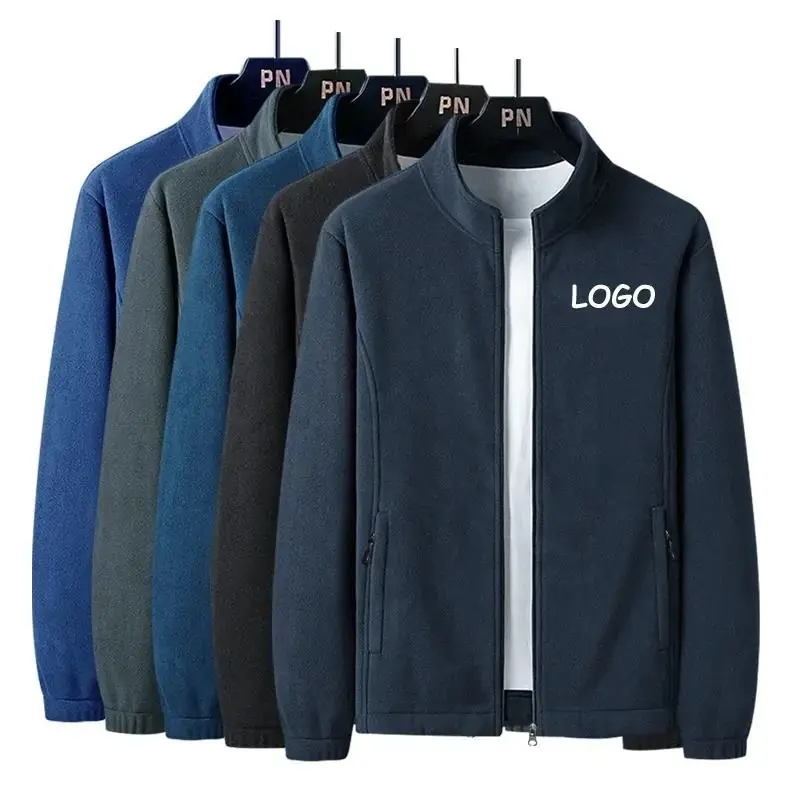
RB Advertising is a Philippine garment manufacturer that cuts and sews windproof fleece coats to your spec in the longer silhouettes that buyers ask for when a hip length jacket is not enough. We build the coat around your climate, your wind exposure, and your uniform standard, from a knit fleece core through to a bonded face with a wind blocking layer behind it. Every coat is produced in house in Tagum City and Cagayan de Oro, so the fabric, the cut, the hardware, and the logo all come from one production floor and one point of contact.
- 20 PiecesLow minimum
- 200 to 300 GSMFleece weights
- Bonded FaceWind barrier
- 7 to 12 DaysBulk production
Wind resistance scale for fleece coats
The marker shows where a bonded fleece coat face lands on the scale, before a membrane is added behind it.
- In house cut and sew One floor, one quality standard
- Bonded face options Wind blocking without weight
- 20 piece minimum Per style and colorway
- Export ready packing Size sorted cartons
Why a plain fleece coat does not stop wind
A standard fleece is a brushed knit with thousands of open loops. Those loops trap still air, which is what makes fleece warm, but they also let moving air pass straight through the fabric. That is why a fleece jacket feels cosy on a still morning and cold the moment the wind picks up. A windproof fleece coat solves that by changing the face of the fabric, not by making the coat heavier.
Three layers of defence, chosen to match the job
Wind resistance in a fleece coat comes from the outer face. A bonded face means the fleece is laminated to a smooth woven or knit surface that the wind cannot push through. Add a membrane behind the face and the coat becomes fully wind blocking as well as resistant to light rain. Keep the body as a dense anti pill knit and the coat stays soft and quiet but only handles light shelter.
Because our cutting and sewing sit under one roof, we can tailor the barrier to the wearer. A driver who steps in and out of a cab wants a bonded face with good breathability so the coat does not turn clammy. A guard standing on an exposed gate for a full shift needs the bonded face plus membrane so the wind never reaches the body. Send the working conditions and we will map the coat to the right construction instead of defaulting to the heaviest option.
Review the full range alongside our softshell jackets and the wider jackets and outerwear catalog.
| Construction | How wind is blocked | Breathability tradeoff | Best use |
|---|---|---|---|
| Open air knit | No barrier. Moving air passes through the loops. | Highest breathability | Indoor teams, promotional layers, still air |
| Dense knit fleece | A tighter, heavier knit slows the wind across the surface. | High breathability | Light shelter, active work, shoulder seasons |
| Bonded fleece face | Fleece is bonded to a smooth face fabric that wind cannot pass. | Moderate, still vents heat | Commuting, logistics, event and site staff |
| Bonded face plus membrane | A membrane sits behind the face for full wind blocking and light rain defence. | Lower, built for static wear | Exposed gates, cold storage, winter export programs |
The coat length ladder and what each length is for
The length of the coat changes who it suits as much as the fabric does. A longer coat covers more of the body against wind, but it also changes how the wearer moves and how the coat packs. The ladder below is the one we use to place a program before cutting.
- Hip length Uniform fleets, indoor and outdoor layering, easy movement. The most mobile length and the simplest to size across a mixed team.
- Mid thigh Commuting, warehouse and logistics work, event staff. Adds coverage over the hips while keeping the coat easy to sit in.
- Knee length Exposed sites, cold storage, long outdoor shifts. The most wind protection across the body and the best pick for static duty in winter weather.
Collar and hood options
The collar and hood decide how much wind reaches the neck, which is where a coat loses most of its warmth. We offer three standard configurations on the same coat body.
Stand collar
The cleanest look and the lowest cost. A raised stand collar seals the neck when the zip is closed and holds a chest crest or a left breast logo without clutter. Best for corporate and retail programs where the coat is worn open as often as closed.
Zip through with hood
A three panel hood attached behind the collar with a drawcord and a chin guard. The hood packs flat against the back when not in use and adds real protection on an exposed site. Add a rear logo placement so the hood carries the brand too.
Removable hood
A hood that detaches on a zip or a snap so one coat serves two dress codes. The wearer keeps the hood for field duty and removes it for a formal presentation. Confirm the attachment method with us early, because it changes the collar construction.
How to evaluate a windproof fleece coat supplier
A windproof fleece coat is only as good as the supplier behind it. A low quoted price hides risk if the cutting is subcontracted, if the decoration is sent out, or if the documentation arrives too late for your accounting team. Use the checklist below to compare suppliers on the things that decide whether the program ships on time and to specification.
- In house cuttingAsk whether the coat is cut and sewn in the supplier's own facility. Subcontracted cutting loses control of the measurement chart and the seam quality.
- Decoration capabilityConfirm the supplier embroiders, prints, and applies patches in house. Sent out decoration is the most common cause of a late reorder and a shade mismatch.
- Sample turnaroundAsk how fast a physical pre production sample can reach you. A supplier that samples in 3 to 5 days can usually hold a bulk date as well.
- DocumentationConfirm official invoices, packing lists, and any material certificates you need. Documentation provided per order should be named up front, not promised after the invoice.
- Export packingAsk how the coats are packed for shipping. Size sorted cartons with a packing list protect the program and speed up receiving at the other end.
- Single point of contactOne named contact who owns the order from mockup to carton. A chain of handoffs is where deadlines and change requests get lost.
- Fabric and color controlAsk how the supplier holds a shade across a reorder. A colour reference kept on file with your order is what keeps the second run matching the first.
- Inline quality checksConfirm the inspection points. Fabric inspection, inline sewing checks, and a final audit before packing catch problems while the run is still open.
See how RB Advertising answers each of these on our production process page and in our certifications and compliance overview.
Minimums, sampling, lead time, and packing
The terms a sourcing buyer needs before opening a purchase order. Final costing depends on coat length, fleece weight, the wind barrier, and the decoration, so send your brief for an exact figure.
Low minimum per style and colorway. Pricing improves with volume, and a single pre production sample is available before the bulk run.
A physical pre production sample lets your team check the coat length, the collar and hood, the wind barrier, and the logo placement. Mockups are usually ready within a day.
Bulk manufacturing after sample approval, depending on order size, coat length, and decoration method. We confirm the date against your deadline before you commit.
Official invoices issued in your chosen currency. BIR 2307 withheld tax certificates accepted for corporate accounting.
Each coat is trimmed, steamed, and individually polybagged, then packed into cartons sorted by size and colour with a packing list included.
Woven neck labels, size and care tags, branded zipper pulls, and hangtags so the coat ships as your own product.
Documentation and compliance for your order
Documentation is part of the deliverable, not an afterthought. We prepare the commercial papers your accounting and clearing teams need, and we route material certificate requests through the pages that describe them accurately.
Commercial documents
Official invoices, packing lists, and the shipping papers your forwarder needs for export clearance. Corporate buyers can settle against BIR 2307 withholding certificates.
Material certificates
Certified yarn and fabric options are available per order. Recycled polyester options certified under the Global Recycled Standard come with transaction certificates supplied per order. See our certifications overview.
From brief to packed carton
A fixed workflow keeps a coat program on schedule and gives your team a clear approval gate before the cutting table starts.
- 1
Brief and quote
Send the quantity, coat length, fleece weight, wind barrier choice, and logo files. We return a costed quote and a recommended construction.
- 2
Mockup
A digital mockup and a size chart arrive within a day for approval before any fabric is cut.
- 3
Sample
A physical pre production sample in 3 to 5 days lets your committee check the length, the collar, the barrier, and the logo.
- 4
Bulk run
Cut, sew, embroider, and finish across the lines with inline checks at each stage.
- 5
Pack and ship
Size sorted cartons, a final audit, and dispatch nationwide or to your freight forwarder.
Windproof fleece coat sourcing FAQ
How much wind does a fleece coat actually block?
A plain open knit fleece stops very little wind because air passes straight through the loops. A bonded fleece face cuts most of it, and a bonded face with a membrane behind it blocks the rest. Tell us the wind exposure your team faces and we will recommend the construction that matches it without making the coat feel clammy.
Does blocking wind make the coat less breathable?
Yes, there is always a tradeoff. The tighter the barrier, the less moisture vapour escapes. For active work we usually keep a dense knit or a light bonded face so heat can leave. For a static coat on an exposed site or in cold storage we accept lower breathability and add a membrane because the wearer is not generating much sweat.
Should we choose a knit face or a laminated face?
A knit face gives a softer hand, quieter movement, and a lower cost, and it takes embroidery well. A laminated face, where the fleece is bonded to a smooth face fabric or a membrane, is the better pick when wind and light rain are the main problem. Many programs combine both, with a bonded face on the body and a knit fleece under the arms.
Which coat length should we order?
It depends on how much of the body you need to shield. Hip length is the most mobile and works for uniform fleets and layered use. Mid thigh adds coverage over the hips for commuting, warehouse work, and event staff. Knee length gives the most protection for long shifts on exposed sites and in cold storage.
How should a windproof fleece coat be washed and cared for?
Wash in cold or warm water on a gentle cycle, use a mild detergent, and avoid fabric softener because it coats the fibres and reduces loft. Close the zips and fasten the hook and loop before washing. Tumble dry on low or line dry. Skip chlorine bleach and skip ironing on any bonded or membrane face.
Can you embroider our logo on a bonded fleece face?
Yes. A bonded face is actually easier to embroider than an open knit because the surface does not swallow the stitches. We run a backing and a topping so the crest stays raised and flat. For logos with fine gradients we may suggest a woven patch instead of thread.
What is the minimum order for a windproof fleece coat?
Our minimum is 20 pieces per style and colorway. We also make a single pre production sample so your team can check the coat length, the collar, the wind barrier, and the logo placement before the cutting table starts.
How does sampling work?
Send your specification and artwork and we return a digital mockup, then a physical pre production sample in about 3 to 5 days. The sample is the approval gate. Nothing moves to bulk until you sign it off, and the approved sample is kept as the reference against every finished piece.
What is the production lead time after approval?
Bulk production runs 7 to 12 business days after the sample is approved, depending on quantity, coat length, and the decoration method. Mockups are usually ready within a day. Tell us your deadline and we will confirm whether it is achievable before you commit.
How are the coats packed for export?
Each coat is trimmed, steamed, and individually polybagged, then packed into export cartons sorted by size and colour. Cartons carry a packing list, and we prepare the shipping documents your forwarder needs. For retail programs we can add hangtags and branded polybags.
Explore the wider fleece and outerwear range
A coat program rarely stands alone. These pages cover the fabric bases, the branding route, and the sibling outerwear styles a sourcing buyer usually reviews alongside it.
Request a windproof fleece coat quote
Send your quantity, target coat length, fleece weight, wind barrier choice, and logo files. Our manufacturing desk in Tagum City replies with pricing, a lead time, and a mockup schedule.