
Fleece (플리스 / 뽀글이) Manufacturing in the Philippines 플리스, 후리스, 뽀글이를 위한 필리핀 생산 거점
A working dossier for Korean brands, importers, and factory investors. It explains what fleece is, how the pile is engineered, what Seoul means by 플리스, 후리스, and 뽀글이 (Bboguri), and how a Philippine plant can serve the Korean winter calendar. It also sets out the investment case: 100 percent foreign ownership in export manufacturing, a 20 percent corporate income tax path under CREATE MORE, and preferential entry into Korea under the free trade agreement in force since 31 December 2024.
What Seoul means by 플리스, 후리스, and 뽀글이
The three words are not interchangeable in a technical pack. Two describe the fabric family, one describes a surface and a silhouette. Getting the term right at the brief stage prevents a sampling round that never had a chance.
The standard Korean retail and technical term for a brushed synthetic knit. It covers microfleece, polar fleece, and the heavier pile weights. On a Korean product page it usually signals a zip jacket or a pullover, not a fabric roll. In a tech pack, pair the word with a GSM and a pile height.
A colloquial transliteration of fleece, common in marketplaces, resale listings, and social commerce. It is broader and looser than 플리스 and can describe a fleece jacket, a fleece blanket, or a fleece lining. Treat it as a demand signal, not a specification. The factory still needs the construction detail.
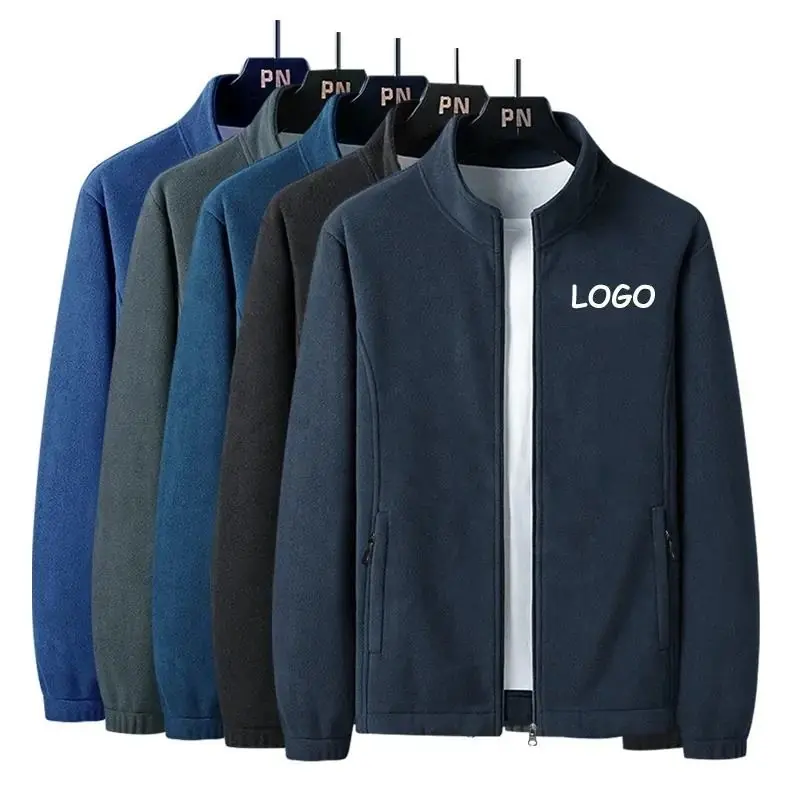
A descriptive word for a curly, fluffy surface, used in apparel for high pile fleece, sherpa, and the zip jackets built from them. It describes a hand feel and a silhouette rather than a fixed fabric weight. Korean buyers use it for the soft, rounded, slightly retro jacket that returns to the streetwear cycle every few seasons.
Literally wool, and often used loosely for sherpa or shearling look fabrics. It is not a polyester fleece specification. If a brief says 양털, confirm whether the buyer means a synthetic sherpa pile, a wool blend, or a bonded faux shearling before any yarn is booked.
The fleece grades a Korean programme actually orders
Weight alone does not describe a fleece. Pile height, yarn denier, brushing passes, and the backing all change the hand, the warmth, and the price. The table below is the working range we quote most often, not a catalogue limit.
| Grade | Weight | Pile | Korean brief term | Typical use |
|---|---|---|---|---|
| Microfleece | 100 to 160 GSM | Low, fine | 마이크로 플리스 | Linings, lightweight zip tops, travel layers, kids wear |
| Midweight polar | 200 to 260 GSM | Medium, even | 플리스 자켓 | Office layering, team wear, corporate gifting, retail essentials |
| Heavyweight polar | 280 to 320 GSM | Dense, short | 헤비 플리스 | Cold storage, outdoor programmes, export winter ranges |
| High pile and sherpa | 330 to 450 GSM | Curly, long | 뽀글이 | Fashion zip jackets, vests, linings, retro and gorpcore styling |
| Bonded softshell | 280 to 340 GSM | Smooth face, fleece back | 소프트쉘 | Wind resistant outerwear, bike and commute jackets |
| Recycled rPET fleece | 180 to 300 GSM | Medium, even | 리사이클 플리스 | GRS or RCS certified ranges, campus and corporate sustainability programmes |
Weights are fabric only. A 300 GSM fleece with a 40 GSM tricot lining behaves differently from a 300 GSM bonded laminate, even though both are sold as 300 GSM. State the backing separately.
How a fleece surface is built, and where it goes wrong
Fleece is a knitted polyester loop that is brushed open, sheared level, and heat set. The sequence is short, but each step decides whether the jacket still looks new after ten washes. These are the six controls that matter on the factory floor.
Yarn selection
Filament polyester, usually 75D to 150D, dull or semi dull. Dope dyed yarn resists shade drift on dark colours. Recycled chip needs a certified mass balance trail from the pellet to the roll.
Circular knit
Loop pile or cut pile on a circular knitter. Gauge and stitch length set the density. A loose knit brushes up soft but pills faster, so the target hand and the pilling grade are decided together.
Raising
Wire card clothing pulls fibre to the surface. Two passes give an even, low pile. Three or more passes build the curly high pile that Korean buyers call 뽀글이, at the cost of more loose fibre.
Shearing
Rotary blades level the pile to a fixed height and cut away the longest fibres. An uneven shear reads as shade banding under warehouse light, which is why panels are cut in one direction.
Anti pill finish
Heat setting and a resin or silicone finish lock the surface. We test to ISO 12945-2 and treat grade 4 at 2000 rubs as the floor for a retail programme, not a premium extra.
Cut and sew
Ball point or light ball point needles, matched thread, and a stitch density that does not crush the pile at the seam. Binding, zip tape, and pocket mouths are the first places a cheap fleece fails.
The Korean fleece calendar and what it demands from a factory
Korea does not buy fleece all year. Demand clusters around the first cold snap, the campus semester, and the year end gifting window. A factory that understands the calendar ships ahead of the peak instead of apologising through it.
- March to MayRange planning and fabric development. Korean brands lock the silhouette family, the colour card, and the target GSM. Lab dips and hand feel trials happen here.
- June to JulyFit samples and wear testing. Size sets are graded to the Korean 95, 100, 105, and 110 curve. Trims, zips, and labels are confirmed.
- AugustTech pack freeze and fabric booking. This is the last safe point to change a colour or a pile height without air freight later.
- September to OctoberBulk production and sea freight. Ships must leave Manila or Batangas in time to clear Busan or Incheon before the retail set.
- November to DecemberFirst cold snap and gifting peak. Replenishment is decided on sell through, often in small repeat runs rather than a second full production.
- January to FebruaryEnd of season clearance and Lunar New Year. Korean offices slow down, so approvals and payments need a cut off agreed in advance.
What the Korean buyer checks first
- Silhouette: oversized drop shoulder, cropped boxy fit, half zip anorak, or a clean vest.
- Colour: black, charcoal, cream, sage, cobalt. A tight card beats a wide one.
- Hand feel: soft but not limp. The jacket must hold a shoulder line on a hanger.
- Pilling: a grade 4 surface after repeated wash, verified on the bulk fabric.
- Label: Korean fibre composition, country of origin, and care instructions.
- Price architecture: a landed cost that still leaves room for a 50 to 60 percent retail margin.
Where it sells
Musinsa and the Naver Smart Store ecosystem carry the fashion led volume. Coupang and 11st move the value and replenishment tiers. Offline, Hongdae and Seongsu set the styling that the rest of the market copies six weeks later. A programme that only looks at last season’s bestseller will arrive one season late.
Decoration on pile: what holds, what crushes, what fails
A fleece surface is uneven by design. Every decoration method that works on a flat cotton tee has to be re tested on pile. The failures are predictable, and they usually appear after the first wash, not on the sample table.
| Method | Behaviour on pile | Best placement | Watch out for |
|---|---|---|---|
| Embroidery | Reads well if density is reduced and a backing is used | Left chest, sleeve, back yoke | Small text under 6 mm fills in; high density crushes the pile and leaves a halo |
| Chenille patch | Matches the surface and stays soft | Left chest, back, sleeve | Patch weight can pull the pile flat; border stitch must be planned |
| Woven patch | Crisp on smooth face, fussy on high pile | Smooth face panels, bonded softshell | Adhesive alone will lift; sew the border on high pile |
| Silicone badge | Clean and premium on a flat surface | Smooth face, sleeve, zip pull | Heat press can melt or flatten the pile; use low temperature or sew |
| Screen print | Bridges the pile and cracks at the base | Bonded softshell and smooth face only | Plastisol does not bond to loose fibre; avoid on high pile |
| Heat transfer vinyl | Poor adhesion on brushed surfaces | Smooth face and flat woven panels | Lifts at the edge after washing; not a retail solution on fleece |
For a logo that must survive retail washing, embroidery with a reduced stitch count or a sewn chenille patch is the safer route. Send the artwork and the fabric article together so the proof is made on the real surface.
The gates a fleece programme has to pass before it is packed
These are the tests a Korean retail buyer or an export inspector will ask for. Fixing them at the fabric stage is cheap. Fixing them after the cartons are sealed is not.
ISO 12945-2 Martindale at 2000 rubs, or ASTM D4970. Test the brushed face and the seam allowance, not only the flat body.
ISO 105 C06 at 40 degrees. Dark navy and black are the shades that bleed into a cream sibling in the same carton.
ISO 105 X12, dry and wet. A high pile surface has more loose fibre, so wet rub is the harder test.
ISO 6330 domestic wash and tumble. Fleece relaxes after the first wash; the pattern has to allow for it.
Pull test the armhole, side seam, and pocket mouth. A crushed pile at the seam is a strength failure waiting to happen.
Cycle the slider to the zipper maker’s rating, typically several thousand cycles. Check the tape stitch, not only the teeth.
Fleece sheds microfibre in the wash. Run a domestic wash with a capture bag and compare the shed mass across fabric articles.
AQL 2.5 major, 4.0 minor. Measure the flat, check the pile direction, and photograph every carton label before sealing.
Certification is separate from testing. OEKO-TEX Standard 100 covers harmful substances, GRS and RCS cover recycled content and chain of custody, and bluesign covers mill level chemical management. A test report is not a certificate, and a certificate is not a test report for your lot.
The Philippine base: Mindanao cut and sew, plus ecozone corridors
Our own fleece production runs from Tagum City and Cagayan de Oro. For a brand that wants its own plant, the country offers several industrial corridors with different port, labour, and incentive profiles.
Pattern and grading
Korean size curve, drop shoulder and boxy blocks, marker efficiency for pile direction.
Cut and sew
Circular knit fleece, bonded softshell, sherpa, and tricot lining on one floor.
Decoration
Tajima embroidery, chenille and woven patches, silicone badges, and heat press.
Finishing
Pressing, thread trimming, metal detection, folding, and export carton packing.
Where a locator looks
- CALABARZON: the deepest apparel and textile supplier base, close to Manila and Batangas ports.
- Clark and Central Luzon: freeport logistics, direct Clark airport access, and a growing technical textile cluster.
- Metro Cebu and Mactan: mature export manufacturing, a strong sewing labour pool, and an international airport.
- Davao del Norte and Misamis Oriental: our own base, with lower industrial land cost and feeder links to Manila and Batangas.
A PEZA registration is site specific. Confirm the zone, the available lot, and the utility capacity before committing to a lease.
Why a Korean fleece brand should look at a Philippine plant
The case is not only labour cost. It is ownership, tax, tariff access, English language project management, and a shipping lane that reaches Busan faster than a domestic truck reaches some Korean warehouses.
CREATE MORE
A 20 percent corporate income tax path for registered business enterprises, up to 27 years of combined incentives, duty free capital imports, VAT zero rating on export inputs, and enhanced deductions for training and power.
Foreign equity
Export manufacturing can be 100 percent foreign owned. The amended Foreign Investments Act removed the old domestic equity requirement for enterprises that export at least 60 percent of output.
PEZA ecozone
A single investment promotion agency, a bonded customs regime, and streamlined import and export clearance for locators inside a special economic zone.
Investors’ Lease Act
Long term industrial land leases for foreign investors, typically 50 years and renewable, which turns a factory into a balance sheet asset rather than a monthly expense.
Tatak Pinoy
A national industrial policy that supports skills, technology upgrading, and integration into global value chains, with procurement and capability programmes behind it.
Korea access
The Philippines and Korea FTA entered into force on 31 December 2024 and eliminates tariffs on 94.8 percent of goods. Apparel lines follow the schedule, so confirm the HS line and the rules of origin.
This page summarises the instruments for orientation. It is not legal, tax, or customs advice. Confirm the current text, the implementing rules, and your specific registration path with the Philippine Economic Zone Authority, the Board of Investments, the Bureau of Customs, and a licensed adviser.
From a Mindanao cutting table to a Seoul retail floor
Fleece is bulky but light. That makes sea freight unusually efficient and air freight unusually expensive. The programme should be built around the sea lane, with air reserved for samples and a genuine replenishment emergency.
Manila or Batangas to Busan New Port, direct or with one feeder. Add port clearance and inland haulage.
Incheon New Port serves the Seoul capital area. The shorter inland leg can offset the extra sailing day.
Clark or Manila to Incheon International Airport. Door to door is usually 2 to 4 days after booking.
Chuseok and Lunar New Year move both factory and customs capacity. Agree the cut off date before the tech pack is frozen.
Cartons are packed to the forwarder’s specification with a packing list, style and colour breakdown, and carton mark. We ship FOB Manila or Batangas, or work with your nominated forwarder from the Mindanao container terminal.
How a fleece programme is quoted
Fleece does not have one price, because a 200 GSM microfleece and a 400 GSM recycled sherpa do not share a cost base. The quote follows the fabric article, the decoration, and the quantity, in that order.
Per style and colourway. Single pre production samples are available so a committee can inspect the actual hand and fit.
After the tech pack, fabric article, and artwork are complete. A digital mockup usually arrives within one day.
After sample approval, depending on quantity and decoration. Fabric booking time is separate and is confirmed with the article.
Cost drivers are GSM, pile type, recycled content, zip brand, decoration stitch count, labelling, and carton specification.
No unit price is published on this page. A published price would be wrong for most briefs and would force a revision conversation before the first sample. Send the specification and the quantity, and the quotation returns with the fabric article named.
Fleece sourcing questions Korean buyers ask first
Fabric, decoration, tariff, ownership, and the practical sequence from a tech pack to a carton.
What is 뽀글이, and is it different from 플리스?
플리스 is the standard word for the fleece fabric family. 뽀글이 describes a curly, fluffy surface, usually a high pile fleece or sherpa, and by extension the zip jacket made from it. In a brief, treat 뽀글이 as a request for a high pile hand and a soft silhouette, then confirm the GSM, pile height, and composition before costing.
What GSM fleece should a Korean winter jacket use?
For a Seoul winter layer that is worn indoors and on a commute, 200 to 260 GSM is the working range. For outdoor, cold storage, or a garment that has to hold shape in a strong wind, move to 280 to 320 GSM. For a fashion 뽀글이 jacket, 330 to 450 GSM high pile gives the surface the market expects, but it is warmer and heavier than most buyers initially estimate.
Can you produce recycled fleece with GRS or RCS certification?
Yes, when the yarn supplier holds a valid scope certificate and the transaction certificates follow the order. GRS covers recycled content plus social and environmental criteria. RCS covers recycled content alone. The certificate has to name the correct product category and the chain of custody must reach our cutting floor, so send the target certification before the yarn is booked.
How do you embroider on high pile without crushing it?
Reduce stitch density, add a suitable backing, and use a topping that can be removed cleanly. Keep fine text above 6 mm and avoid large solid fills that flatten the pile into a visible panel. A sewn chenille or woven patch is often the better answer on a 380 GSM sherpa, because it follows the surface instead of fighting it.
What is the minimum order and the sampling sequence?
The minimum is 20 pieces per style and colourway. A digital mockup usually arrives within one day, a physical pre production sample takes 3 to 5 business days after the tech pack and fabric article are complete, and bulk production takes 7 to 12 business days after sample approval, depending on quantity and decoration.
Does the Philippines have a free trade agreement with Korea?
Yes. The Philippines and Korea Free Trade Agreement entered into force on 31 December 2024 and eliminates tariffs on 94.8 percent of goods, with staging for sensitive lines. The ASEAN Korea Free Trade Area and the Regional Comprehensive Economic Partnership also apply. A preferential rate requires the correct Certificate of Origin and compliance with the rules of origin for the specific HS line.
Can a Korean company own 100 percent of a Philippine factory?
Yes, for an export enterprise. Under the amended Foreign Investments Act, an enterprise that exports at least 60 percent of output may be 100 percent foreign owned. A PEZA locator also receives a single agency registration path, a bonded customs regime, and the fiscal package attached to the registration.
What incentives does CREATE MORE provide?
CREATE MORE, or Republic Act 12066, offers a 20 percent corporate income tax path for registered business enterprises, up to 27 years of combined incentives, duty free importation of capital equipment, VAT zero rating on local purchases directly attributable to export operations, and enhanced deductions for training and power. The exact package depends on the registration and the location.
How do you control pilling and microfibre shedding?
Pilling is controlled at the yarn, brushing, shearing, and finishing stages, then verified to ISO 12945-2 grade 4 at 2000 rubs. Shedding is reduced by a tighter knit, a shorter and more uniform pile, and a proper heat set. We also run a domestic wash with a capture bag to compare articles, because the lowest shedding fabric is not always the softest one on the sample table.
What labelling does a fleece garment need for Korea?
Korean fibre composition, country of origin, and care instructions, in Korean, attached to the garment. Children’s products under 13 also fall under the KC certification regime. Send the target label text and the age range at the brief stage, because a label change after bulk cutting is a rework cost.
Where the fleece desk sits
Fabric swatches, pile samples, and finished garments can be inspected at the two active offices. Overseas buyers can request an insured sample dispatch instead.
Mankilam, Tagum City
Naungayan Building, Aala Road, Barangay Mankilam, Tagum City, Davao del Norte 8100, Philippines. Pattern development, cutting, sewing, decoration, and finishing.
Iponan, Cagayan de Oro
Ficcoville, Iponan, Cagayan de Oro City, Misamis Oriental 9000, Philippines. Client coordination, sampling, and feeder logistics toward Manila and Batangas.
Send the fleece brief, or the factory question
Include the target GSM, pile type, composition, quantity per colourway, decoration, and the Korean retail window. For an investment enquiry, include the ownership structure, the target export share, and the preferred corridor. We reply in English and coordinate with your Korean team.
Operating hours: Mon to Sat, 8:30 AM to 5:00 PM (PHT). Same day response for a complete tech pack.
Sources and scope. Statutory references: Republic Act 12066 (CREATE MORE Act), Republic Act 11647 (Foreign Investments Act amendment), Republic Act 7652 (Investors’ Lease Act), Republic Act 7916 (Special Economic Zone Act), and Republic Act 11981 (Tatak Pinoy Act). Trade references: the Philippines and Korea Free Trade Agreement, in force 31 December 2024, the ASEAN Korea Free Trade Area, and the Regional Comprehensive Economic Partnership. Test methods: ISO 12945-2, ISO 105 C06, ISO 105 X12, ISO 6330, and ISO 13935-2. Figures are a summary for orientation, not legal, tax, or customs advice. Confirm the current implementing rules and your specific HS line before committing capital.